peak demand solar
Solar Cuts Peak Demand Charges for Businesses
2026-04-01T00:00:00.000Z•9
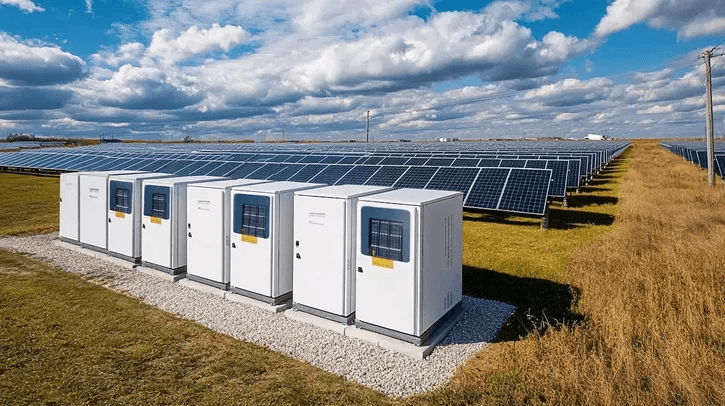
Solar panels directly reduce peak demand charges by generating electricity during the same hours your building consumes the most power, lowering the peak kW your facility draws from the grid.

When your grid draw drops, your utility charges less, and this single benefit alone can cut your commercial electricity bill significantly.
Learn how Earthwave designs commercial solar systems built for this exact outcome.
Peak demand charges can
account for 30 to 70% of a commercial electricity bill,
billed on your highest 15-minute grid draw each month
Solar generation peaks
between 10 AM and 4 PM
, which directly overlaps with most commercial buildings' peak consumption windows
Solar-only systems reduce demand charges by a
median of 19%
, with some building types
achieving over 40% reduction
Solar combined with battery storage can achieve demand charge reductions of
25 to 70%
Commercial buildings in India face industrial tariffs of ₹8 to ₹16 per unit, with demand charges adding an additional 20 to 30% on top. See the full breakdown in our
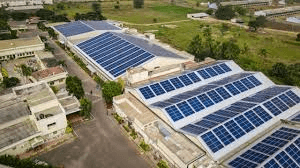
Peak demand charges are fees based on the highest amount of power your building pulls from the grid in any single 15-minute interval during a billing cycle, not on total energy consumed.
This is a critical distinction most facility managers overlook.
Your electricity bill has two components:
Energy charge (kWh):
What you pay for total electricity consumed
Demand charge (kW):
What you pay for your highest instantaneous power draw
Even if you only hit a high peak once in the entire month, your utility locks in that demand level for the full billing cycle.
In states like Gujarat, Time of Day (ToD) based demand charges apply, meaning spikes during peak grid hours cost even more. Read the Gujarat Rooftop Solar Policy 2026 for state-specific tariff structure details.
State electricity regulatory commissions set these charges independently:
Maharashtra:
₹400 to ₹500/kVA for industrial consumers
Karnataka:
₹200 to ₹250/kVA for commercial establishments
Gujarat:
ToD-based demand charge structure
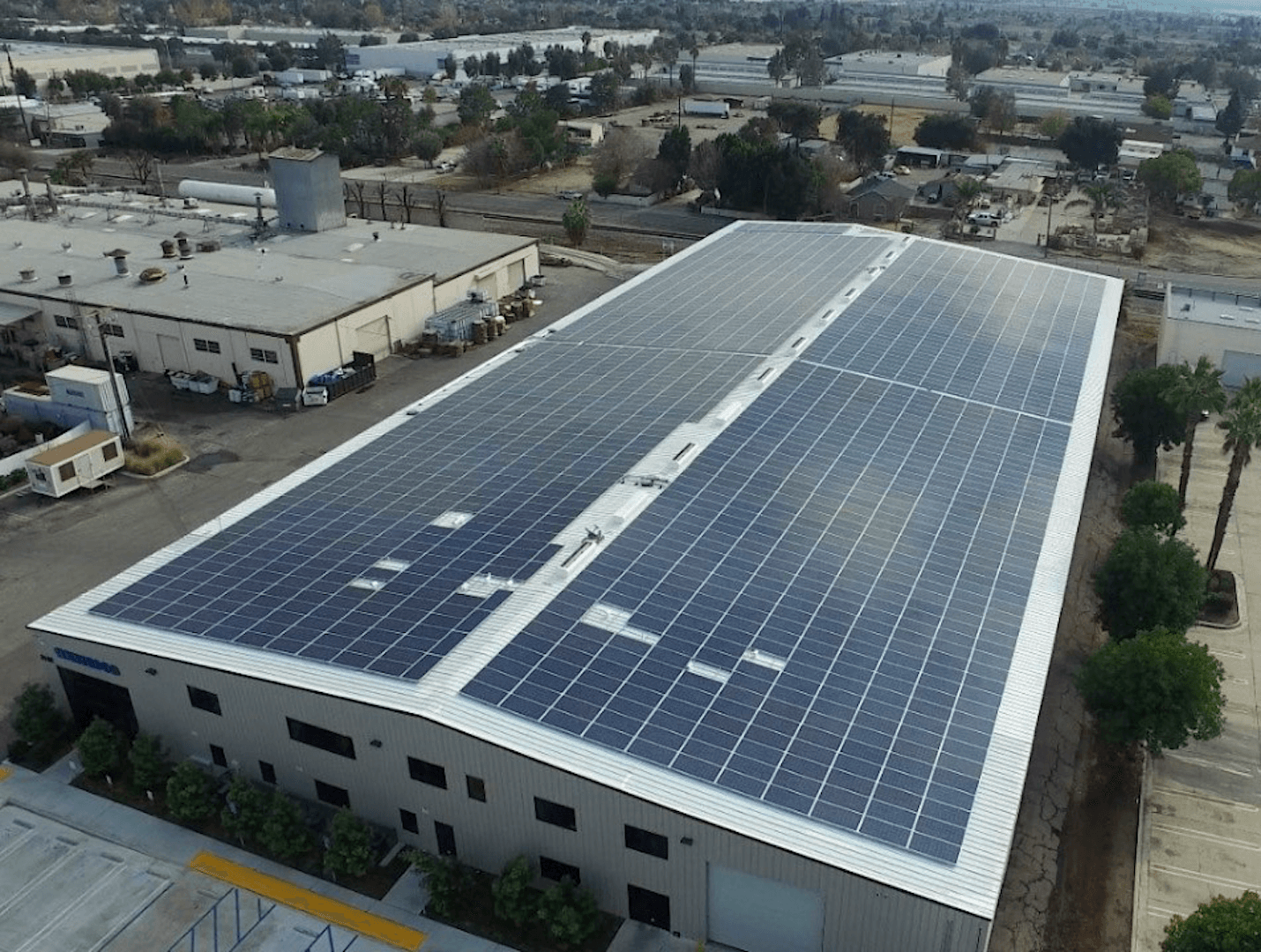
Most commercial buildings create avoidable demand spikes because of simultaneous equipment startup and unmanaged load patterns.
Common causes of high peak demand:
HVAC systems
cycling on simultaneously during morning startup
Industrial machinery and compressors
starting together at shift change
Elevators, pumps, and chillers
drawing surge current at the same time
Server rooms and data centers
with constant high-load operation
The result is a narrow window of extreme grid draw that sets your demand charge for the entire month. Explore how commercial solar addresses these energy cost challenges in detail.

Solar reduces your peak demand charge by supplying power directly to your building during the highest consumption hours, cutting how much you pull from the grid.
See how rooftop solar is structured for commercial and industrial buildings.
This works because solar generation peaks from 10 AM to 3 PM, precisely when most commercial buildings also experience their highest operational loads.
The principle is straightforward: power you generate on-site is power you do not pull from the grid, and you cannot be charged a demand fee for power you never drew.
Solar panels generate power during daytime hours
Your building consumes that solar power first, before drawing from the grid
Grid draw drops during your peak consumption window
Your measured peak kW is lower
Your demand charge for that billing cycle falls
According to research from Lawrence Berkeley National Laboratory and NREL, solar-only systems reduce commercial demand charges by 19% in the median case and by 40% or more for buildings with afternoon-peaking load profiles such as schools, offices, and IT parks.
Solar alone is effective, but solar combined with battery storage (BESS) maximizes demand charge reduction by covering morning startup spikes and evening peak hours that solar panels cannot address.
Learn about Earthwave's Wave Hybrid inverter systems and compare your options in the On-Grid vs Off-Grid vs Hybrid Solar guide.
Battery storage works alongside solar to:
Absorb excess solar energy
generated at midday when consumption is lower
Discharge during morning ramp-up
when equipment starts simultaneously and creates load spikes before solar generation begins
Cover afternoon and evening peaks
that extend beyond solar generation hours
Smooth out brief demand spikes
that would otherwise set the demand charge for the full month
Strategy | Demand Charge Reduction | Best Suited For |
Solar Only | 19% to 40% | Daytime-heavy operations |
Solar + BESS | 25% to 70% | Mixed shift, 24/7 facilities |
Battery Only | 20% to 30% | Evening/night-heavy operations |
Here is a realistic scenario for a mid-size commercial building in Gujarat.
Monthly electricity bill: ₹12 lakhs
Demand charges (30% of bill): ₹3.6 lakhs/month
System installed: 300 kW rooftop solar
Solar covers peak daytime load, reducing grid draw during peak hours
Measured peak demand drops by approximately 35%
Monthly demand charge savings: ₹1.26 lakhs
Annual demand charge savings: approximately ₹15 lakhs
Energy unit savings (kWh): approximately ₹4.2 lakhs/month
Combined monthly savings (energy + demand): approximately ₹5.46 lakhs
Annual total savings: approximately ₹65 lakhs
Payback period: 3 to 5 years with 25+ years of system life
Want to understand your payback timeline more precisely? Read our guide on Solar Payback Period in India 2026. For financing options, also see CAPEX vs RESCO: Which Solar Model Suits Your Business?
Buildings with high daytime loads and spiky consumption patterns see the greatest reduction in peak demand charges.
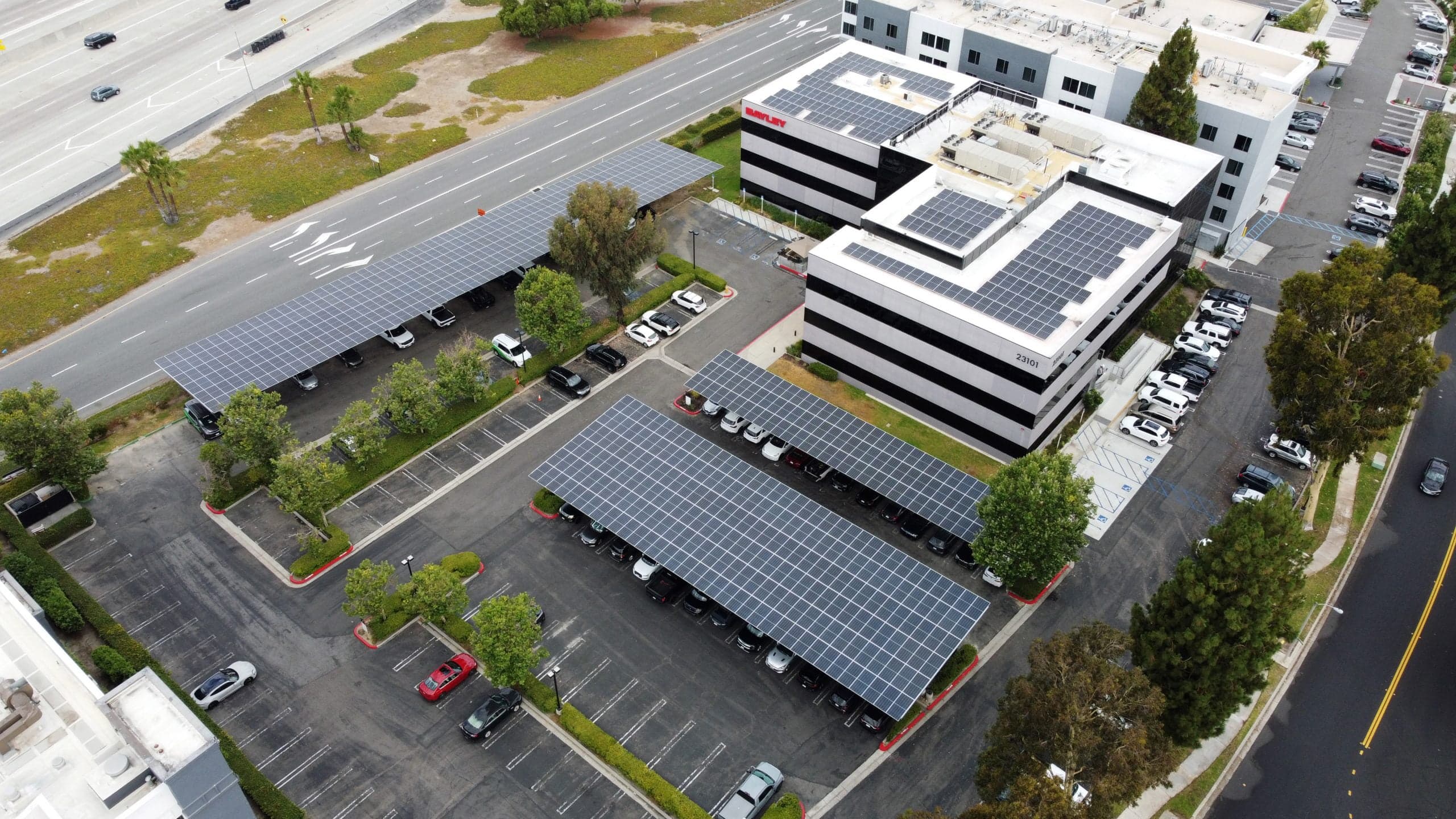
Constant HVAC, server rooms, and lighting keep demand high from 9 AM to 6 PM. Solar generation aligns directly with this operational window, delivering consistent peak shaving throughout business hours.
Explore how solar cuts energy costs in data centers and IT facilities.

Heavy machinery creates some of the highest demand spikes in any industry.
Shift changeovers and simultaneous machine startups drive brief but costly peak demand events.
A 170 kW solar installation at a textile manufacturing unit, for example, reduces power expenses by 30 to 40%.
Read how solar is helping textile units in Surat reduce power costs by 30 to 40%.

Hospitals run high-load equipment around the clock: HVAC, surgical equipment, medical imaging, and sterilization units.
Solar + BESS ensures peak demand is managed even through shift changes and equipment cycling.
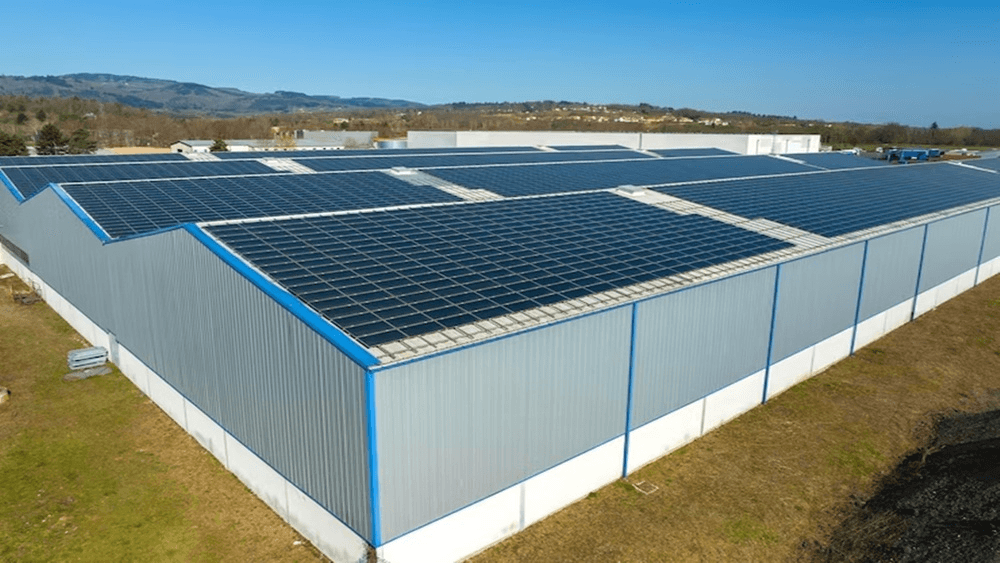
Refrigeration compressors draw consistent high loads during the day. Solar directly offsets this continuous demand, reducing both energy consumption and peak demand simultaneously.
Not sure whether rooftop or ground mount suits your facility? Read the Rooftop vs Ground Mounted Solar guide for industrial buildings.
Schools and colleges follow one of the most favorable demand patterns for solar: high afternoon loads that align perfectly with peak solar generation.
NREL research identifies schools as the building type with the highest solar-driven demand charge reductions.
Earthwave Solar is a Gujarat-based EPC (Engineering, Procurement, and Construction) solar company with operations in Gujarat and Madhya Pradesh, delivering complete commercial solar solutions from site assessment to final handover.
for Commercial and Industrial Buildings: Custom-designed systems for factories, warehouses, IT parks, and commercial complexes, built to handle high energy demands with real-time monitoring
:** For facilities with limited roof space, ground-mounted installations on durable steel structures optimize sun exposure and allow future expansion
:** In-house manufactured inverters with up to 97% efficiency, covering 2.5 kW to 125 kW, with a 10-year warranty and smart smartphone monitoring
Initial consultation to assess energy needs
Site visit and technical assessment
Detailed system design and transparent quotation
Complete documentation and approvals
Certified technician installation
Final handover with full operational guidance
True Colors, Palsana: 2 MW digital printing facility
Pari Textile, Diamond Nagar: 170 kW
Sahaj Textile, Sachin: 120 kW
Mota Mandvada, Bagasra: 80 MW ground mount
Clients include Goldi Solar, Torrent Power, Mahindra Susten, and DGVCL.
If your commercial building carries a monthly electricity bill above ₹5 lakhs, a significant portion is likely peak demand charges you can eliminate. The right solar system, properly sized for your load profile, targets exactly that.
Request a free energy audit to understand your current demand charge exposure
Get a custom feasibility report showing your peak shaving potential
Talk to Earthwave's commercial solar team to explore system sizing, ROI projections, and installation timelines
Contact Earthwave Solar at info@earthwavetech.in or call +91 90336 07212 (Gujarat) / +91 90336 02156 (Madhya Pradesh).
Visit earthwavetech.in to learn more about commercial solar solutions built for your industry.
A peak demand charge is a fee based on the highest power level (kW) your building draws from the grid during any 15-minute interval in a billing cycle. It is separate from your energy consumption charge (kWh). Even one brief spike during the month sets your demand charge for that entire billing period.
Solar-only systems reduce peak demand charges by a median of 19%, and by 40% or more for buildings with afternoon-heavy load profiles. Adding battery storage pushes this range to 25 to 70%, depending on your facility's specific consumption pattern.
Solar directly reduces daytime demand charges since panels generate power from sunrise to around 4 PM. For morning startup spikes or evening loads, battery storage is needed to extend peak shaving capability beyond solar generation hours.
Buildings with daytime-heavy operations benefit most: IT parks, textile factories, schools, offices, hospitals, and cold storage facilities. These facilities see the strongest overlap between solar output hours and their peak consumption windows.
For most commercial installations in India, payback periods range from 3 to 5 years, depending on system size, electricity tariff, and demand charge exposure. After payback, energy and demand charge savings continue for 20 or more years.
FAQS
Can't find the answer you're looking for? Our team is here to help.
SUBSCRIBE NEWSLETTER
Switching to solar is easier than you think. Let us guide you to cleaner, more affordable energy.
