Solar Maintenance India
How Do You Maintain a Solar System in India
2026-04-02T00:00:00.000Z•9
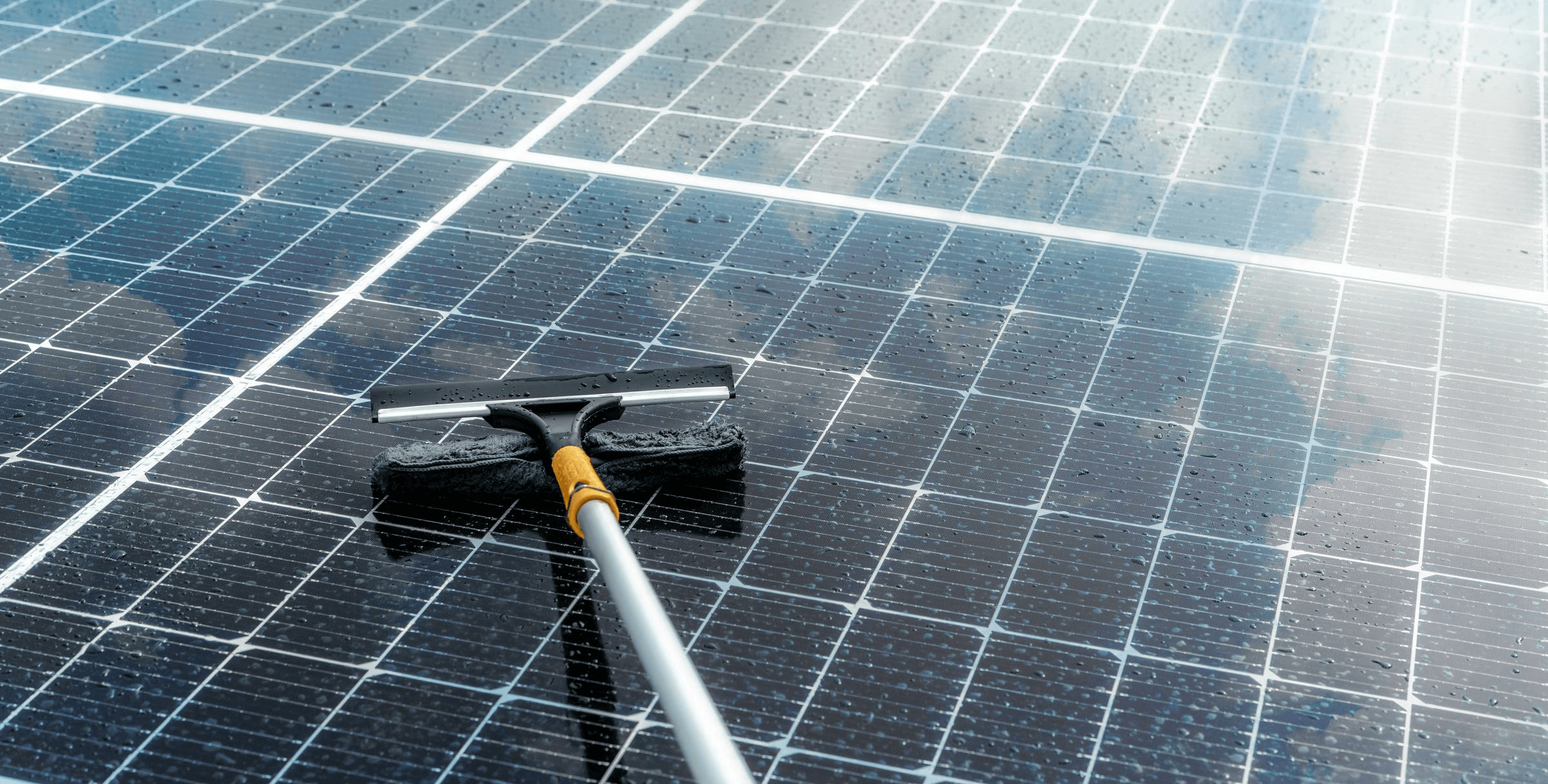
Clean your panels every 10 to 20 days, inspect your inverter monthly, and track your generation data weekly.
These three habits prevent 15% to 30% avoidable energy loss and protect your solar ROI across the full 25-year system life.
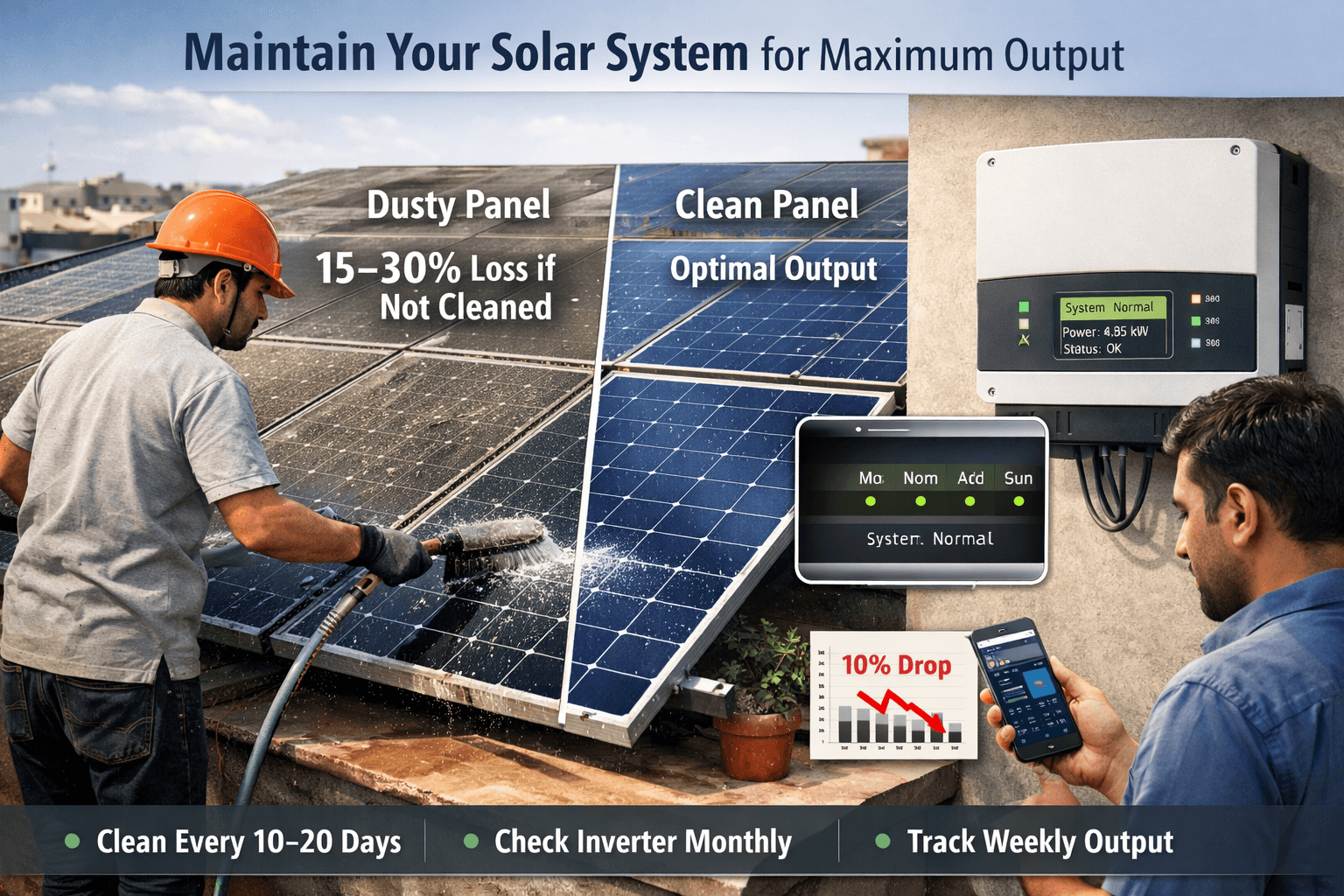
Dust and soiling in India reduce solar output by 15% to 30% if panels stay uncleaned for weeks
Monthly cleaning, inverter health checks, and generation tracking are the three core pillars of solar maintenance
A 10% week-over-week drop in output is a red flag that needs immediate investigation
Most output loss issues start as small, easy-to-fix faults and become expensive only when ignored
An Annual Maintenance Contract (AMC) from a certified EPC provider removes the guesswork entirely
Skipping maintenance costs you more output than any weather factor.
India's climate, especially in Gujarat, Rajasthan, and Madhya Pradesh, creates year-round high-dust conditions.
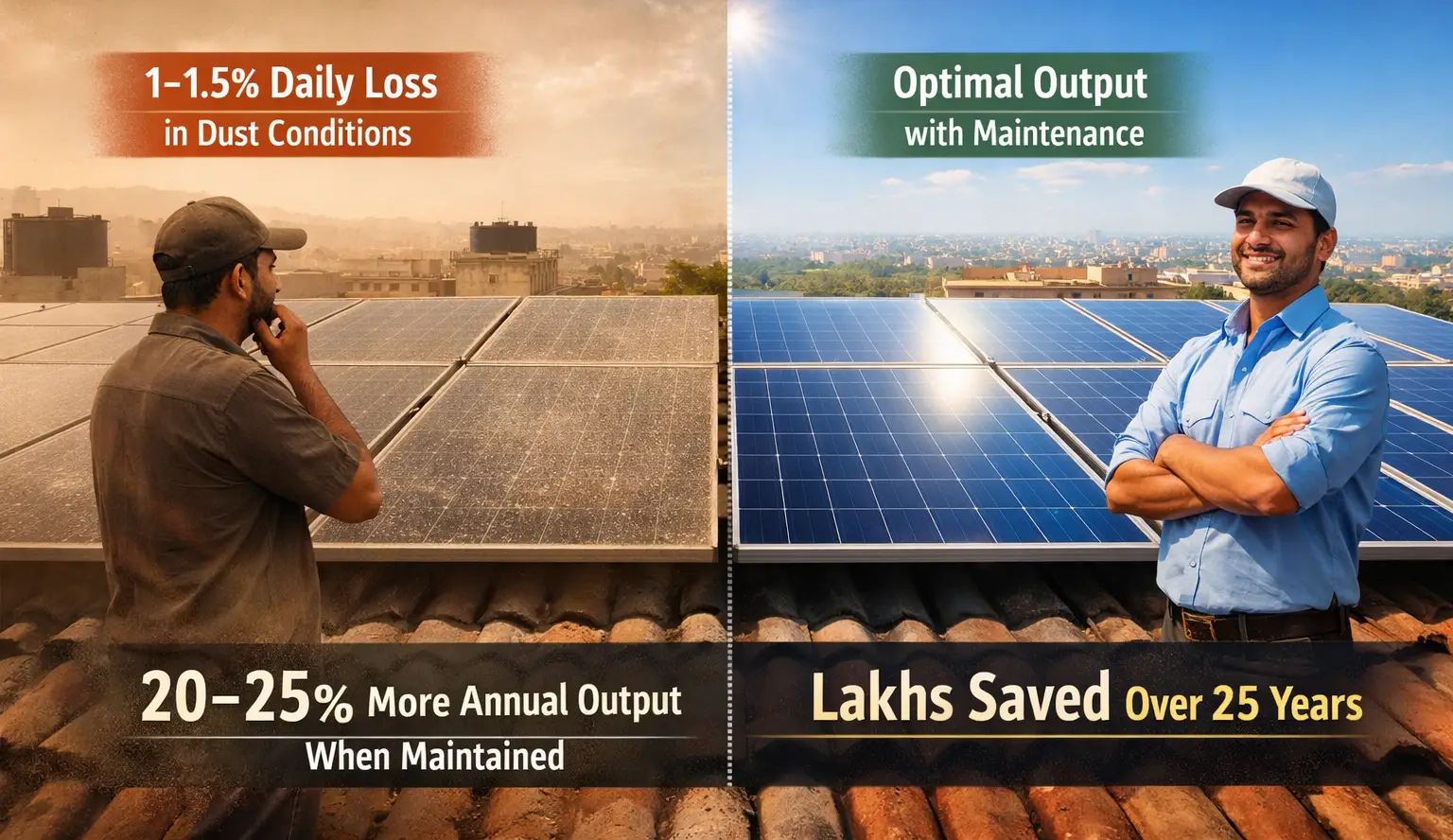
Solar panels in these regions lose 1% to 1.5% output per day during peak dust months if not cleaned regularly.
A well-maintained system generates 20% to 25% more electricity annually than a neglected one.
Over a 25-year system life, that gap translates to lakhs of rupees in lost savings.
The good news: a proper maintenance routine takes less than 30 minutes per month for a standard rooftop system.
Your monthly routine covers four areas: panel cleaning, visual inspection, inverter check, and generation monitoring.
Miss one consistently and problems compound silently. Handle all four and your system stays at near-peak output all year.
Dirty panels are the single biggest cause of avoidable output loss in India.
Dust, bird droppings, pollen, and construction debris form a film on the glass surface that blocks sunlight from reaching the solar cells underneath.
Clean early morning or evening, never under direct afternoon sun (thermal shock risks micro-cracks)
Use a soft cloth or soft-bristle brush with plain water
Avoid detergents, abrasive pads, or high-pressure jet wash directly on the panel surface
Use a long-handle mop for rooftop systems to stay safely on the ground
Wipe dry with a microfiber cloth to prevent water spots
Region | Conditions | Cleaning Frequency |
Gujarat, Rajasthan, MP | High dust | Every 10 to 15 days |
Maharashtra, Karnataka | Moderate dust | Every 15 to 20 days |
Northeast, coastal areas | Rain-washed | Every 20 to 30 days |
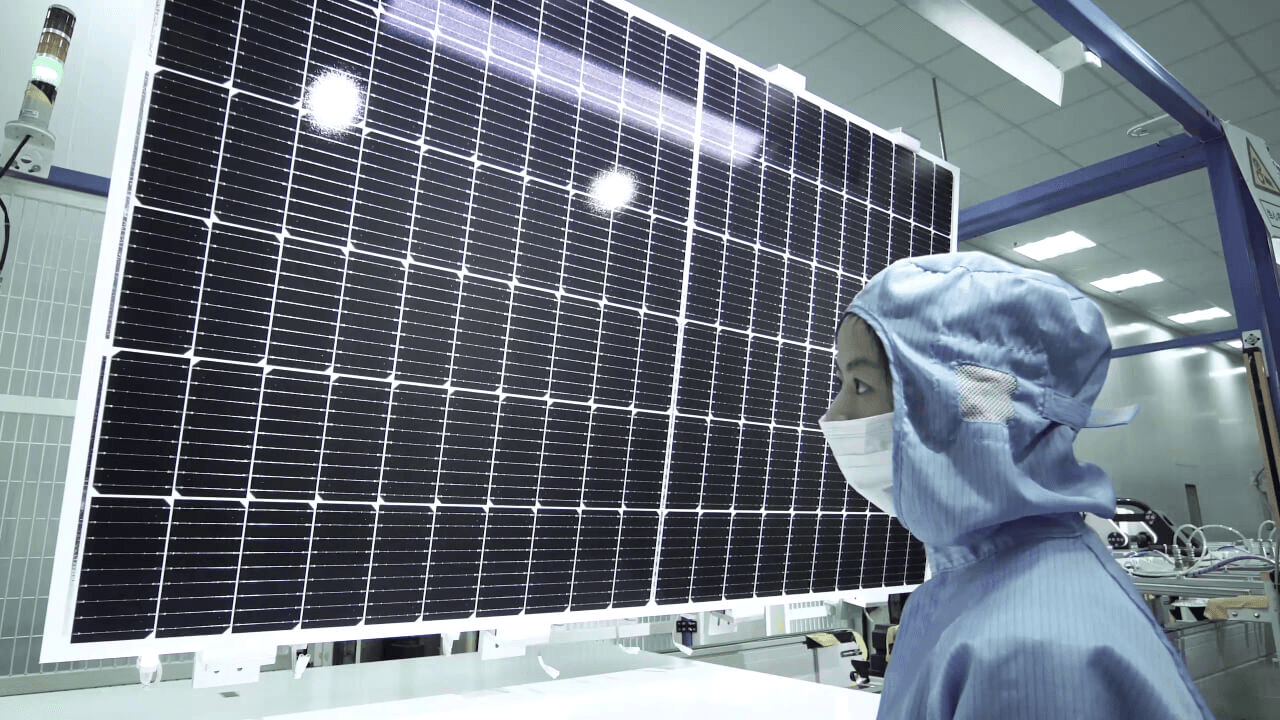
A 5-minute monthly walk-around prevents 80% of long-term faults.
Stand at a safe vantage point and look at your panels, cables, and mounting structure. You do not need tools for this check.
Cracks or discoloration on panel glass
Bird nesting under or between panel rows
Loose or corroded wiring at panel junction boxes
Rust or loosened bolts on the mounting frame
New shading from tree branches or added structures nearby
Water pooling on panels (signals an incorrect tilt)
If you spot cracks or burned marks (hot spots), contact a certified technician immediately.
A single cracked cell can reduce that panel's output by 25% to 30%.
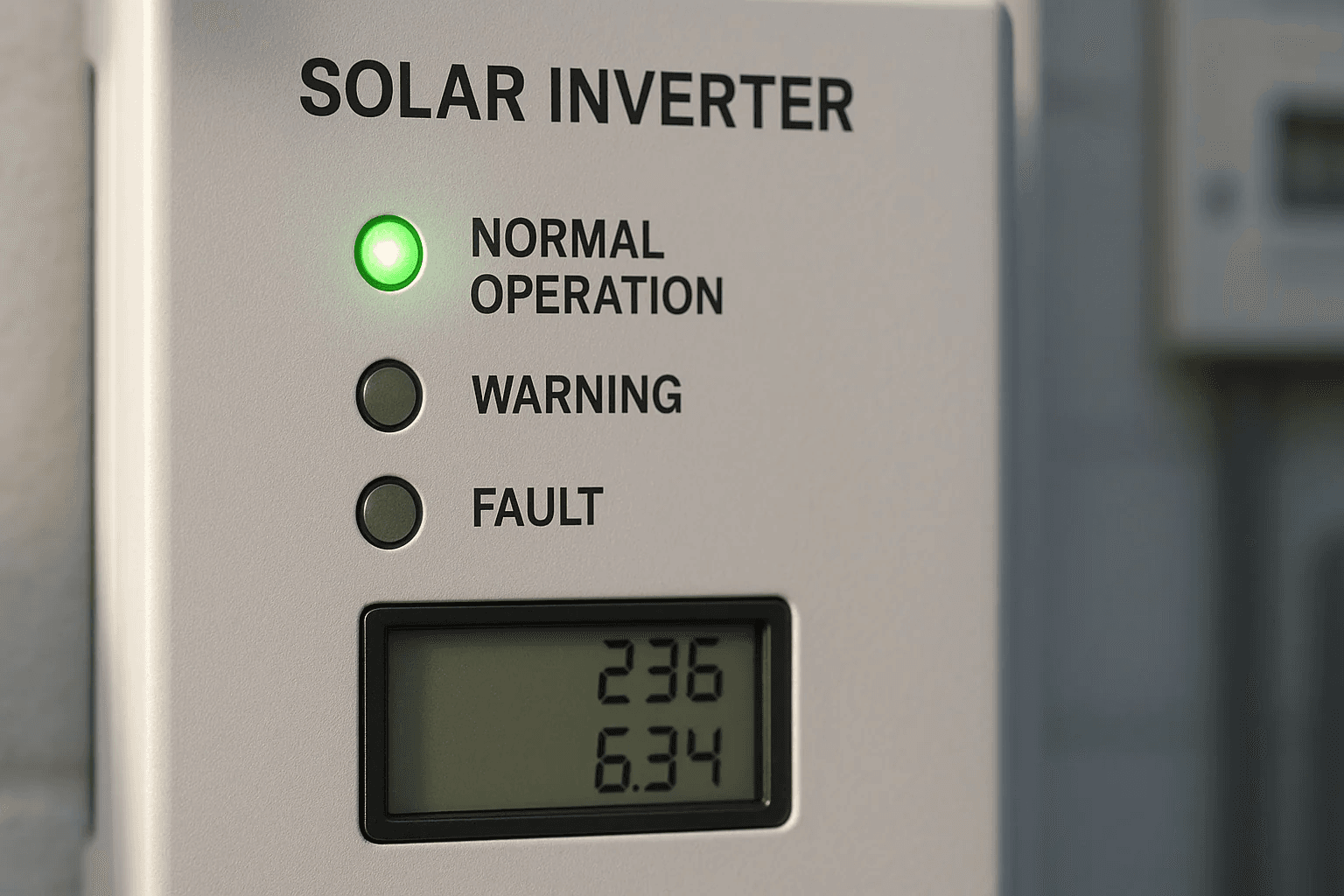
Most solar system faults show up on the inverter display first.
Your inverter converts DC solar power into usable AC power.
It is the most sensitive component after the panels. Modern inverters like the Wave series from Earthwave Solar display real-time fault codes, generation data, and warnings directly on an OLED display and a connected smartphone app.
Confirm the inverter is in "Normal" or "Running" mode, not error mode
Check the display or app for fault codes (grid voltage fault, isolation fault, etc.)
Clear any obstructions around the inverter for ventilation. Blocked airflow causes overheating
Listen for unusual fan noise or buzzing
Verify that AC and DC isolator switches are properly closed
Wave series inverters support WiFi, LAN, and RS485 communication, letting you view generation and fault status from your phone in real time.
A sudden unexplained dip in output on your app is your first cue to dig deeper.
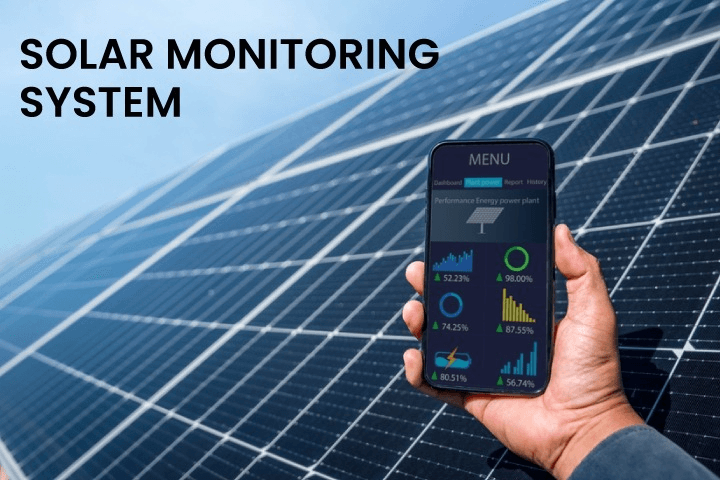
Track your generation weekly, not just monthly.
A 10% drop in output week-over-week without a weather explanation is a direct red flag.
Your system's actual output should stay within 5% to 8% of the expected benchmark for that month and season.
Daily units generated (kWh)
Specific yield: units per kWp of installed capacity
Performance ratio: actual vs. expected output for your location
on your monthly DISCOM electricity bill
Season | Expected Daily Output |
Summer (March to June) | 45 to 55 kWh per day |
Monsoon (July to September) | 25 to 35 kWh per day |
Winter (October to February) | 35 to 45 kWh per day |
If your numbers consistently fall short of this range without a weather reason, schedule a site inspection.

Quarterly checks protect your system's structural and electrical health for the long term.
Add these tasks every 3 months:
Torque-check all panel mounting bolts and DC cable connections
Clean inverter ventilation grille with a dry cloth or compressed air
Verify earthing and lightning protection continuity
Cross-check net meter reading against your inverter's generation log
Look for hot spots by observing unusually cool sections on panels during midday production
Once per year (pre-summer or post-monsoon), add:
Thermal imaging scan to detect internal hot spots not visible to the eye
Professional cleaning of MC4 connectors
Inverter firmware update if available from the manufacturer
Full structural inspection of mounting frame and anchor bolts
Most performance drops have a clear, fixable cause.
Issue | Output Loss | Fix |
Dust and soiling | 10% to 30% | Regular cleaning |
New shading from tree or structure | 5% to 40% | Trim obstruction or reposition panel |
Inverter fault code | 20% to 100% | Check app, call technician |
Loose DC cable connection | 5% to 15% | Retighten connections |
Cracked panel cell | 10% to 30% per panel | Panel replacement |
Inverter overheating | 5% to 10% | Clear ventilation, check fan |
Catching these early keeps repair costs low. Ignoring them lets one small fault degrade your entire string's performance.
Earthwave Solar delivers not just installation but long-term system performance.
Earthwave Solar is a Surat-based EPC company handling complete solar projects across Gujarat and Madhya Pradesh.
Their portfolio includes residential communities, textile factories, and large-scale industrial installations.
Here is what Earthwave provides beyond commissioning:
Wave Inverters with Smart Monitoring:
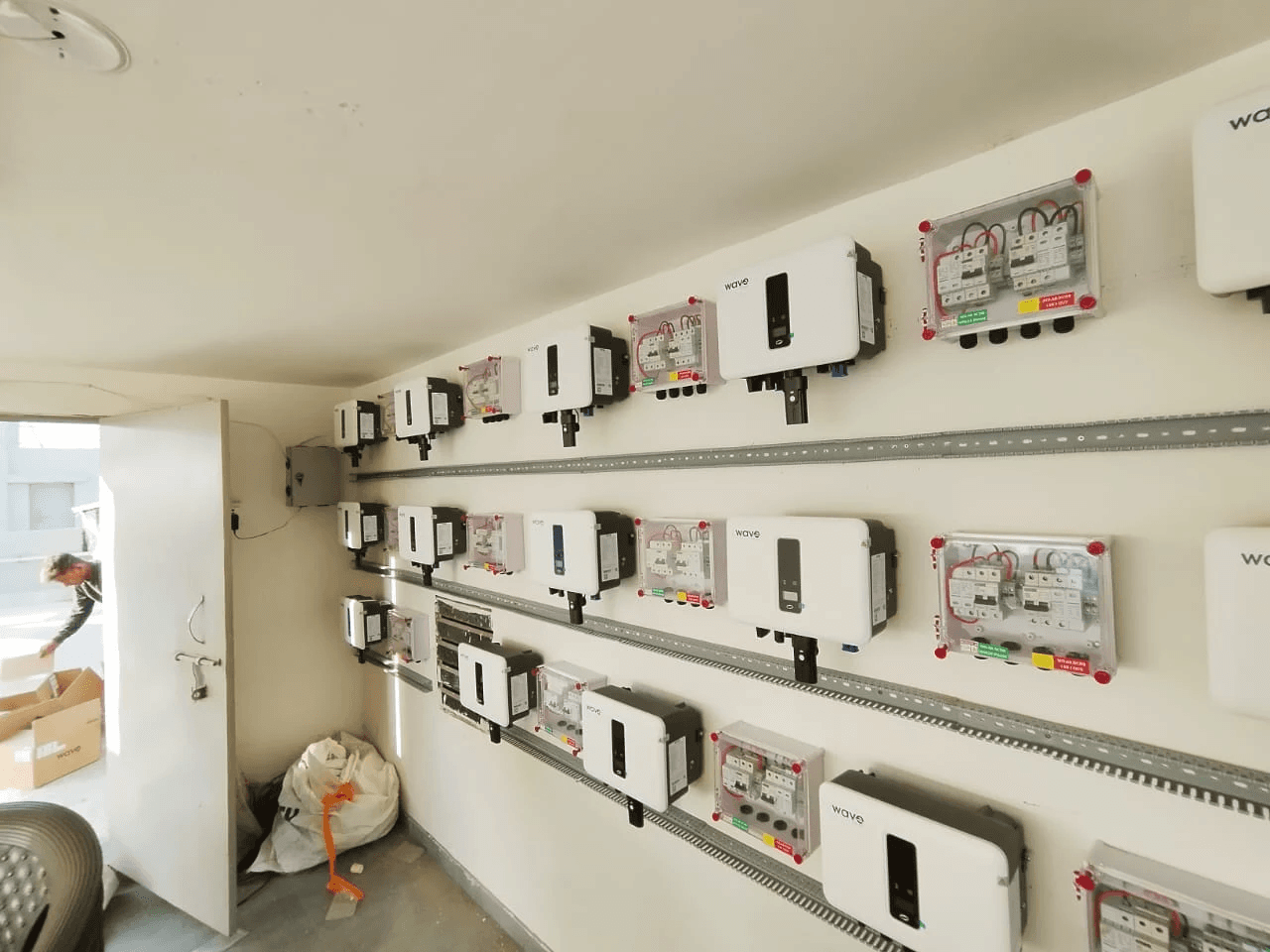
Wave series inverters deliver up to 98.6% efficiency and come with real-time smartphone monitoring. You track daily generation, fault alerts, and performance ratio without stepping on the rooftop.
Transparent Final Handover:
After every installation, E
s walk you through the monitoring app, explain fault codes, and hand over a specific maintenance schedule for your system.
AMC (Annual Maintenance Contract):
Earthwave's AMC covers scheduled cleaning visits, performance audits, inverter health checks, and priority fault response. This is ideal for factory owners and commercial clients who cannot afford downtime.
Pan-Gujarat and MP Support:
With offices in Surat and Bhopal,
Earthwave provides fast on-ground support
across both states.
In high-dust regions like Gujarat and Rajasthan, clean every 10 to 15 days. In moderate-dust states like Maharashtra, every 15 to 20 days works well. Coastal areas with regular rainfall may need cleaning only once every 3 to 4 weeks.
You can clean them yourself using a soft cloth, a brush, and plain water for residential systems. For large commercial or industrial rooftops with multiple rows, professional cleaning with demineralized water and soft brushes gives better results and reduces the risk of accidental panel damage.
Monitor daily generation in your inverter app. If output drops 10% to 15% below your normal baseline without a weather reason, your system needs inspection. A healthy 10 kW system in Gujarat should generate 40 to 55 kWh per day in non-monsoon months.
Most quality on-grid inverters last 10 to 12 years. Wave series inverters from Earthwave Solar come with a 10-year warranty. Inverter replacement is a routine, planned cost and does not affect your panel warranty. Budget for one replacement during the system's 25-year life.
For commercial and industrial users, yes, without question. Downtime on a factory solar system costs more per day than the entire annual AMC fee. For residential users, AMC from Earthwave Solar provides scheduled maintenance, performance monitoring, and priority fault support, which protects the full savings potential of your system.
Your solar system generates power for 25 years. A 30-minute monthly routine is the lowest-effort, highest-return habit you can build as a solar owner.
If you want a professional team to handle maintenance, monitoring, or a brand-new solar installation for your home or business,.
Earthwave Solar is your certified EPC partner across Gujarat and Madhya Pradesh.
Visit earthwavetech.in or call +91 90336 07212 to enquire about AMC plans or book a free site consultation today.
FAQS
Can't find the answer you're looking for? Our team is here to help.
SUBSCRIBE NEWSLETTER
Switching to solar is easier than you think. Let us guide you to cleaner, more affordable energy.
