Hospital Solar Solutions
Solar for Hospitals in Gujarat | 24/7 Power
2026-04-02T00:00:00.000Z•8
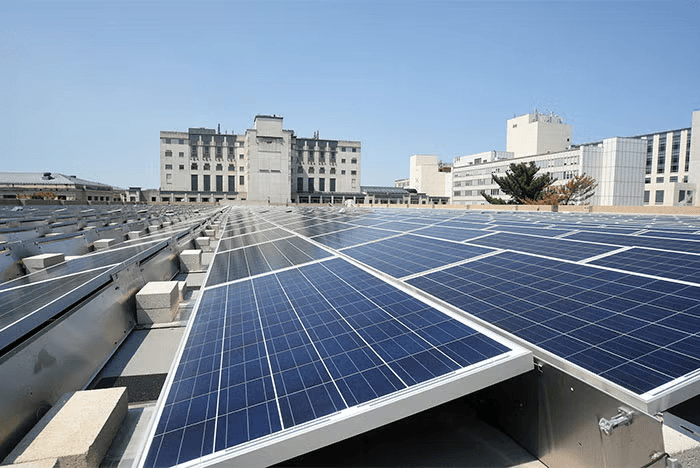
A hybrid solar system combining rooftop solar, battery storage, and your existing grid connection gives hospitals in Gujarat reliable 24/7 power while reducing diesel generator dependency by 60 to 70%.

This directly cuts operational costs without risking the uninterrupted power supply your critical equipment demands.
India spends ₹12,000 crore annually on diesel for hospital generators, funds that could be redirected to patient care
Diesel generates electricity at ₹18 to ₹25 per kWh; solar brings that cost down significantly after a payback period of 4 to 6 years.
A properly designed hybrid solar system keeps ICUs, ventilators, OT lights, and diagnostic equipment running even during grid failures
Solar + battery systems reduce voltage fluctuation damage to medical devices by as much as 86%, from 21% incidence to 3% post-installation
KMC Hospitals now sources nearly 78% of its total energy from clean power, reporting ₹8 million in cost savings

A single power failure in a hospital can put lives at risk. It is the operational reality for every facility manager running ICUs, operation theaters, and neonatal units.
Consider what loses power during an unplanned outage:
Ventilators and life-support systems
in ICUs
MRI and CT scan machines
mid-procedure
Oxygen generation plants
and vacuum systems
NICU incubators
and warming units
Cold chain storage
for vaccines and blood products
OT lighting and surgical equipment
In Gujarat specifically, commercial and industrial electricity tariffs are among the highest in India, and the Time of Day (ToD) structure means peak-hour consumption costs even more.
Read about Gujarat's rooftop solar policy and tariff structure for 2026.
Most hospitals in Gujarat rely on diesel generators as their primary backup. This approach has worked, but its cost is rising every year and its reliability is structurally limited.
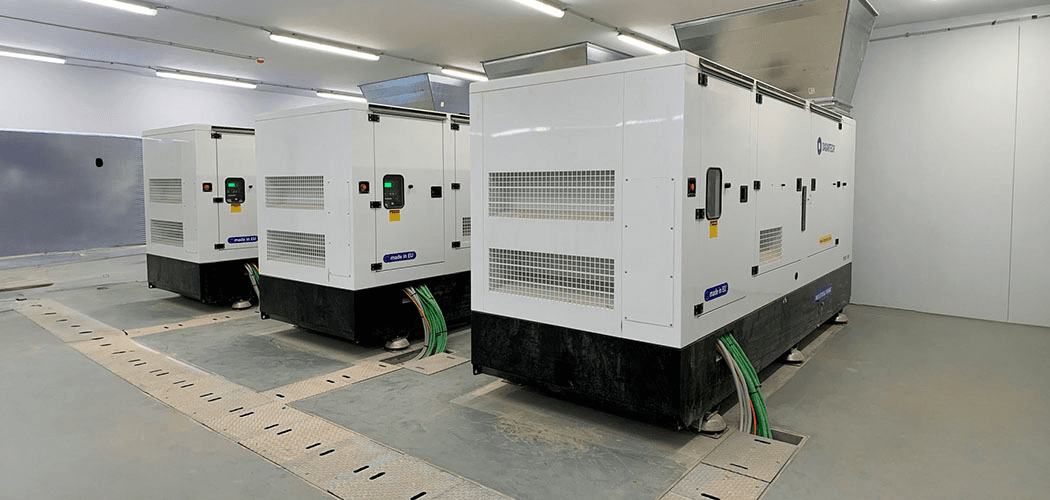
A typical 500 kVA DG set burns over 100 litres of diesel per hour of operation
Diesel-generated electricity costs ₹18 to ₹25 per kWh at current fuel prices, compared to grid power at ₹8 to ₹12 per unit
Monthly diesel bills for mid-size hospitals in Delhi NCR have been documented at ₹6 to ₹8 lakh, and Gujarat hospitals face comparable pressures
India as a whole spends ₹12,000 crore annually on diesel just for healthcare generators
Diesel generators require 30 seconds to 2 minutes to start after a grid failure
That transfer gap is dangerous for NICU patients, patients on ventilators, and those mid-surgery
Fuel price volatility makes budget forecasting unreliable
Emission regulations are tightening across India's urban areas, adding compliance risk
Understanding your system architecture options is the first step. Compare on-grid, off-grid, and hybrid solar systems to find the right fit for your facility.
Solar does not replace your backup system. It works alongside your existing grid connection and DG setup to form a four-layer hybrid power architecture.
Solar PV (primary daytime generation):
Rooftop panels generate power from 8 AM to 5 PM, covering the hospital's highest daytime loads directly from on-site generation
Battery Storage (BESS) via Wave Hybrid Inverters:
Stores excess solar energy generated at midday, discharges during evening loads or brief outages without engaging the generator
Grid Connection:
Acts as a supply source during nighttime or cloudy periods when solar and battery are insufficient
Diesel Generator (last-resort backup only):
Operates only when all three above sources are unavailable, drastically reducing runtime hours and fuel consumption
This architecture means your DG set runs far less. Solar and battery together handle the majority of load, especially during high-demand daytime hours.
When the grid goes down:
Battery storage provides
instant switchover
, with zero transfer gap for connected critical loads
Solar panels continue generating if daylight is available
DG set starts only if battery charge falls below a set threshold
Critical loads such as ICU, OT, and NICU are prioritized automatically
This eliminates the 2-minute startup delay that makes pure diesel backup dangerous for neonatal and surgical care.
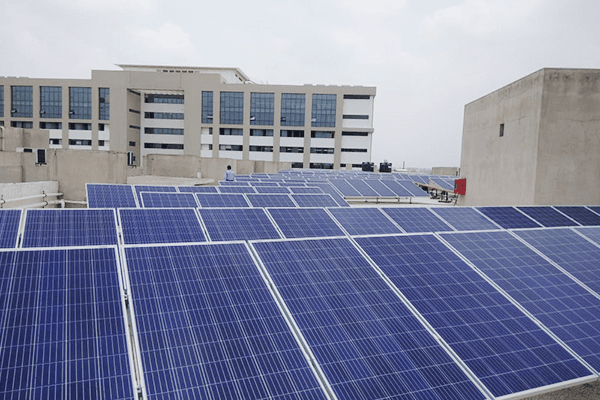
A well-designed solar hybrid system is sized to cover all critical and semi-critical hospital loads.
ICU monitoring equipment and ventilators
Operation theater lighting and surgical tools
NICU incubators and warming lamps
Oxygen plant and vacuum pumps
Emergency lighting and fire systems
HVAC and central air conditioning:
Often the single largest electricity consumer in a hospital, running 16 to 24 hours daily
MRI and CT scan machines:
High-draw diagnostic equipment that runs during scheduled daytime slots, aligning directly with peak solar generation hours
Laboratories and pathology units:
Continuous low-to-medium loads well-suited for solar coverage
General ward lighting and ceiling fans
Hospitals that align their diagnostic scheduling with solar peak hours (10 AM to 3 PM) see the greatest cost reduction without any compromise to operations.
Explore how Earthwave designs commercial solar systems around high-demand operational loads.
The results from Indian hospitals that have adopted solar hybrid systems are well-documented.
KMC Hospitals (India):
Now sources nearly 78% of total energy from clean power, reporting cost savings of over ₹8 million with a target of reaching 100% renewable energy.
AIIMS Madurai (India):
A 4 MW solar and 1.8 MW wind hybrid system delivers power at ₹6.2/kWh, which is 40% cheaper than the local grid tariff.
Sanvi Child Care Hospital (UP):
Installed a 24 kW hybrid solar system that now runs the entire facility including NICU and OT with zero transfer delay during power cuts. Monthly electricity and diesel expenses dropped substantially.
Want to understand the financial return for your own facility? Read the Solar Payback Period India 2026 guide for detailed calculations.
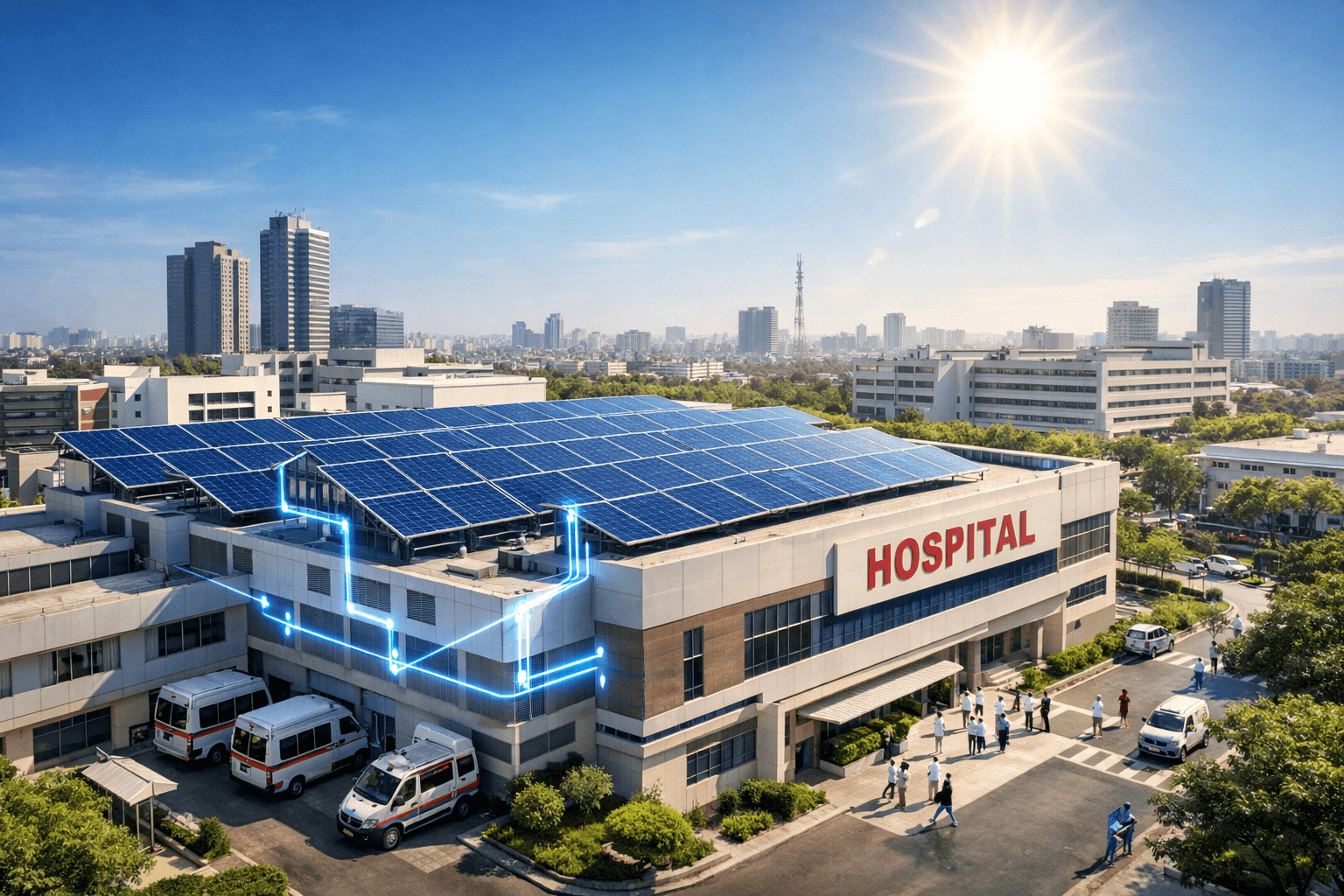
Gujarat is one of India's highest solar irradiance states, with peak sun hours exceeding 5.5 to 6 hours daily across most districts.
This means a rooftop solar system here generates more electricity per panel than the national average, improving both economics and reliability.
Additional Gujarat-specific advantages:
Strong state solar policy support and grid infrastructure built for renewable integration
Time of Day tariff structure means daytime solar generation offsets the most expensive grid electricity.
Growing healthcare infrastructure in Ahmedabad, Surat, Vadodara, and Rajkot creates a large addressable base for commercial medical solar
Earthwave Solar operates with established EPC capabilities across Gujarat, ensuring local project execution support
See how solar reduces electricity bills for Gujarat commercial buildings.
Earthwave Solar is a Gujarat-based EPC (Engineering, Procurement, and Construction) company delivering complete solar solutions for commercial and industrial facilities across Gujarat and Madhya Pradesh.
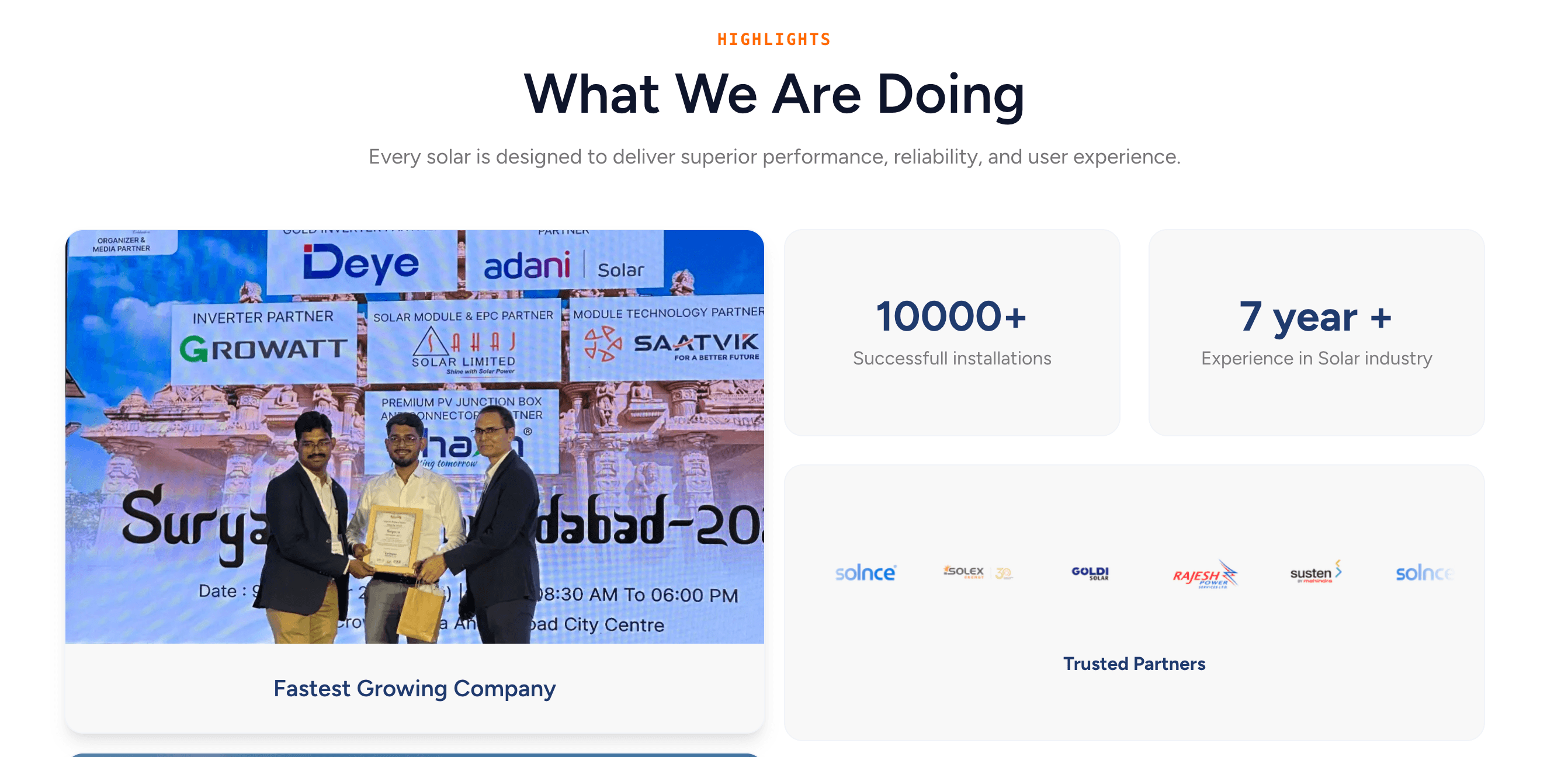
Commercial and Industrial Rooftop Solar:
Custom-designed systems for high energy-demand facilities with real-time monitoring and system sizing based on load analysis
Wave Hybrid Inverters:
In-house manufactured inverters with up to 97% efficiency, covering 2.5 kW to 125 kW, with a 10-year warranty and smart monitoring via smartphone
Ground Mount Systems:
For hospital campuses with available land, offering greater flexibility for expansion
Full EPC Support:
Site visit, load assessment, system design, documentation, DISCOM approvals, certified installation, and final handover with operational guidance
If your hospital is currently spending on diesel fuel every month or facing rising electricity bills, a solar feasibility assessment is the most direct way to understand your savings potential.
Here is what to do next:
to assess your hospital's current load profile and diesel consumption
Explore Earthwave's commercial solar services
designed for high-demand facilities
Learn about hybrid solar systems
that integrate with your existing DG backup
Contact Earthwave Solar at info@earthwavetech.in or call +91 90336 07212 (Gujarat). Visit earthwavetech.in for full service details.
Yes, but not solar alone. A hybrid solar system with battery storage can power critical loads instantly during grid failure with zero transfer delay, unlike a diesel generator which takes 1 to 2 minutes to start. The system is designed to prioritize ICU, OT, and NICU loads automatically.
Solar generates power only during daylight hours, but battery storage retains surplus energy for nighttime use. For extended overnight loads, the grid or DG set operates as the backup layer, meaning solar significantly reduces but does not eliminate grid or DG usage.
A well-designed solar hybrid system reduces diesel generator usage by 60 to 70%. The DG set shifts from a primary backup to a last-resort layer, operating only when solar, battery, and grid are all unavailable simultaneously.
For commercial solar hybrid systems in India, payback periods typically range from 4 to 6 years. After payback, daytime power is generated at near-zero cost, and diesel savings continue for the full 20 to 25-year panel lifespan.
No. Professional EPC installations are designed to work in phases with minimal disruption to hospital operations. Earthwave Solar's installation process is conducted by certified technicians who coordinate with facility management to ensure zero impact on clinical operations during the installation period
FAQS
Can't find the answer you're looking for? Our team is here to help.
SUBSCRIBE NEWSLETTER
Switching to solar is easier than you think. Let us guide you to cleaner, more affordable energy.
