INDUSTRIAL
Industrial Solar Systems Explained: How Large Manufacturers Achieve Energy Stability and Meet ESG Goals
Jan 2025•12 min read
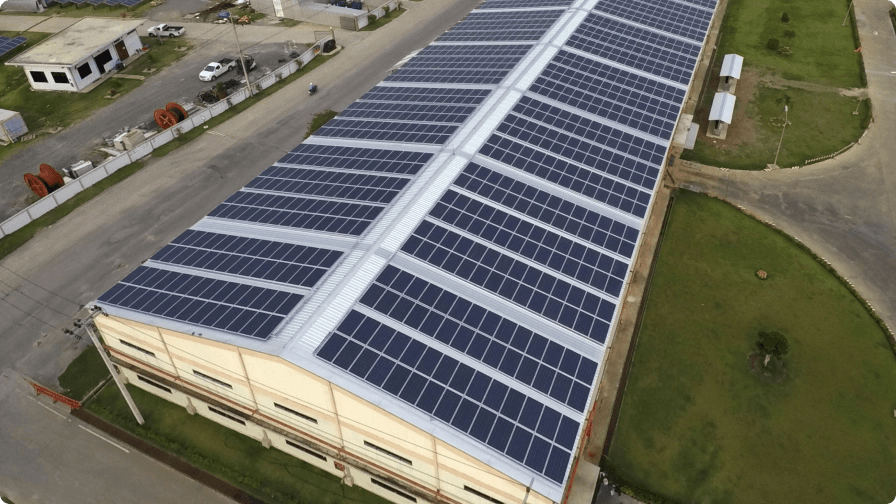
Industrial solar installations are engineered for the demanding requirements of large-scale manufacturing operations.
These are not scaled-up commercial systems but purpose-designed power generation facilities built to handle high-load, multi-shift production environments.
The systems convert sunlight into electricity through high-efficiency photovoltaic arrays installed on factory rooftops, warehouses, or ground-mounted on industrial land.
Unlike residential or commercial installations, industrial systems range from 100 kW to multiple megawatts.
Energy represents 15% to 40% of total manufacturing costs depending on your industry sector.
Industrial electricity tariffs in India range from ₹8 to ₹14 per unit, with additional demand charges significantly increasing total expenses.
Solar generation delivers power at a fixed levelized cost that remains stable for 25 years, insulating your operations from tariff volatility.
A steel fabrication facility deploying 5 MW solar with battery storage reduced grid dependence from 92% to 34%, cutting monthly demand charges from $48,000 to $28,000.
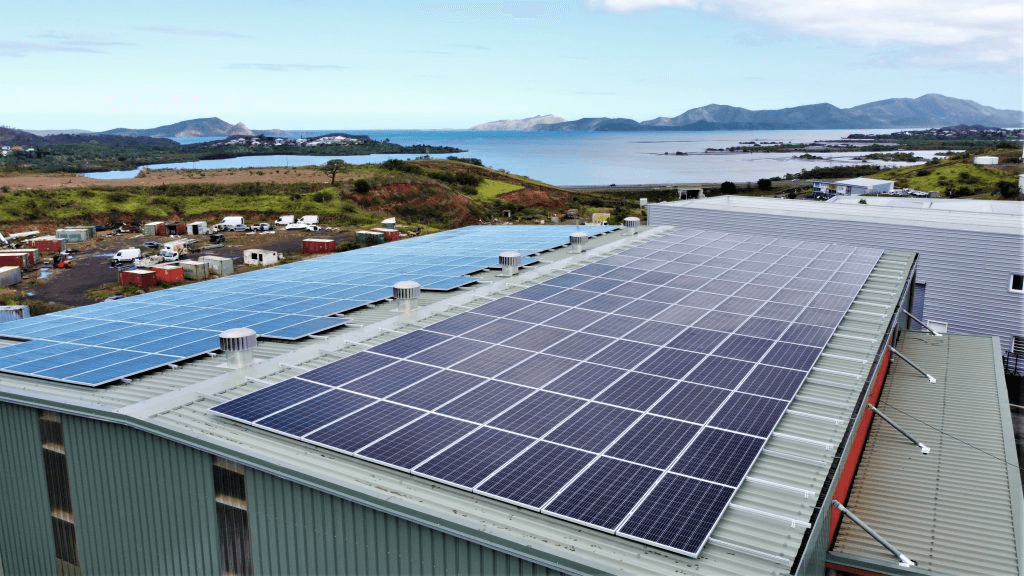
Electricity rates have increased 6% to 8% annually over the past decade.
Solar locks in your energy costs at today's rates, eliminating future escalation risk.
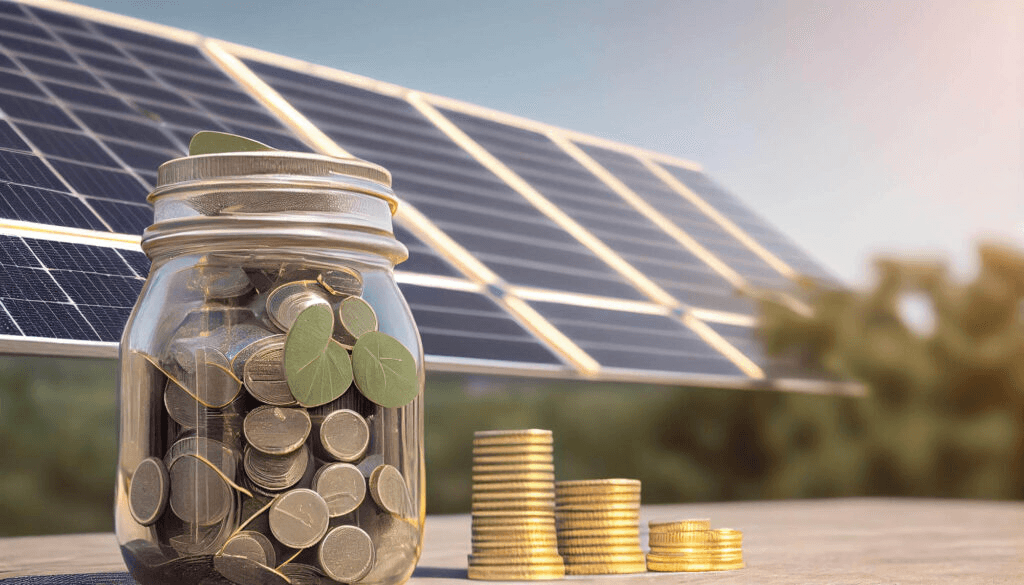
Industrial installations qualify for accelerated depreciation at 40%, significantly reducing tax liability in the first year.
GST input credits on solar equipment further improve project economics.
Net metering allows facilities to earn credits for surplus generation, creating additional value beyond direct consumption.
Industrial tariffs include substantial demand charges based on your facility's peak consumption.
Battery storage enables strategic peak shaving by deploying stored solar energy during high-demand periods.
Energy management systems automatically optimize battery charging and discharging based on real-time production requirements and tariff structures.
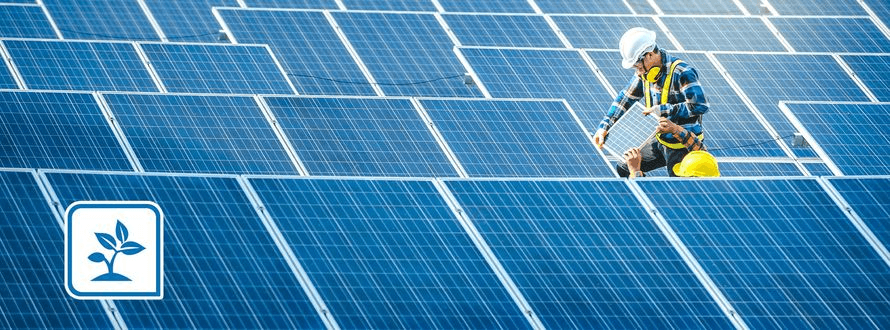
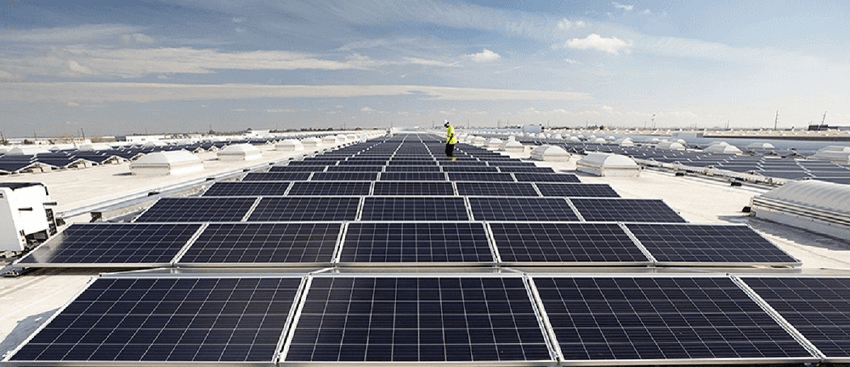
Large warehouse and factory roofs provide ideal locations for multi-megawatt installations.
Facilities with available land can implement large-scale ground-mounted arrays.
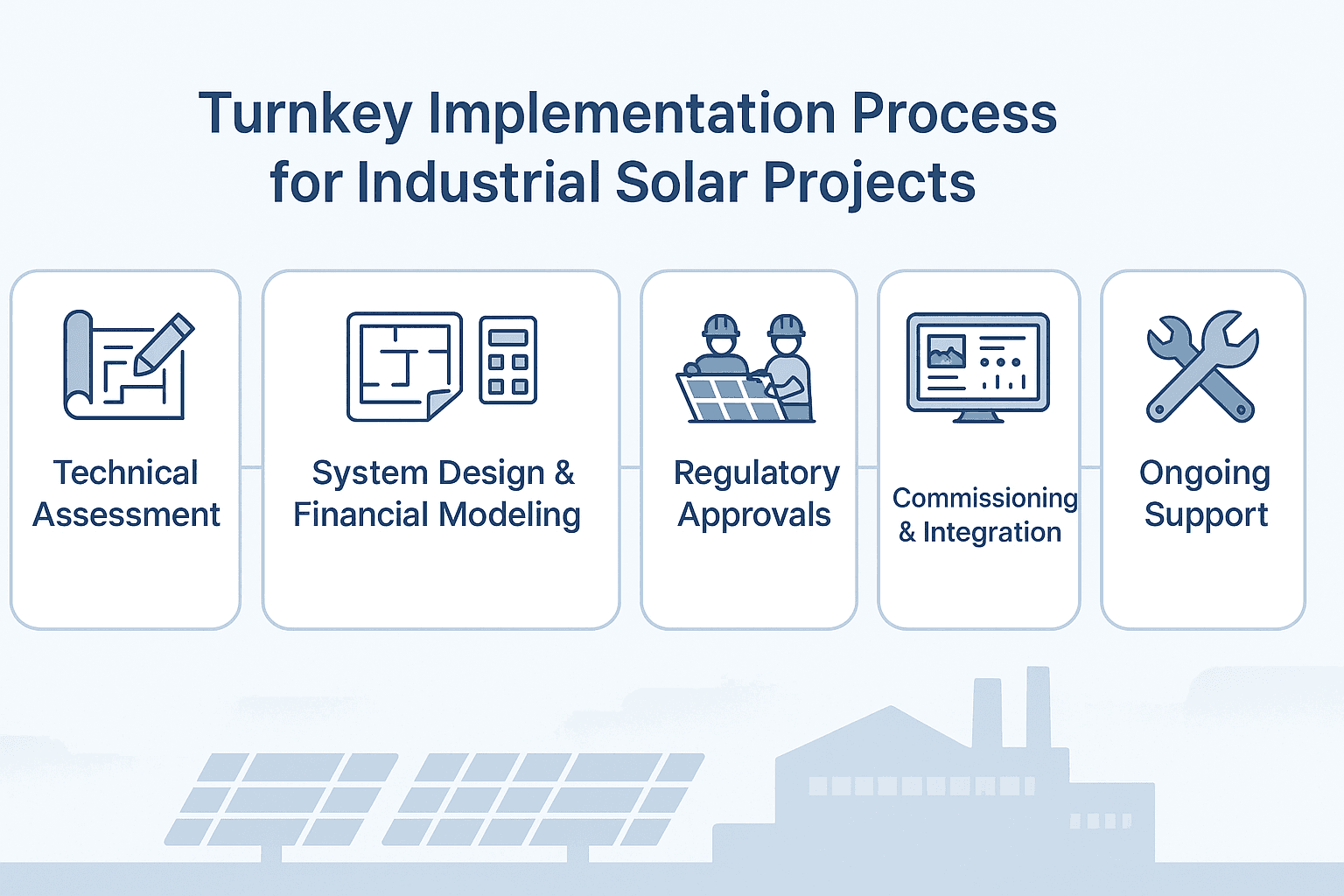
Detailed engineering study evaluating roof loading capacity, electrical infrastructure, and consumption patterns.
Customized design with component-level specifications and comprehensive ROI analysis for board approval.
Complete handling of utility coordination, environmental clearances, and grid connection documentation.
Certified installation teams executing work during planned shutdowns or off-shift hours to minimize disruption.
Comprehensive testing, SCADA integration, and operations training for your maintenance team.
Long-term monitoring, preventive maintenance, and performance optimization.
This end-to-end approach ensures CXOs and operations leaders can approve projects confidently, knowing execution will meet industrial standards.
When presenting solar to senior leadership, focus on strategic value beyond simple cost savings.
Industrial solar has evolved from environmental initiative to strategic imperative delivering profitability, ESG compliance, unmatched reliability, and long-term cost stability.
For CXOs balancing profitability with sustainability, plant heads managing reliability, and operations leaders controlling costs, industrial solar delivers measurable results that strengthen your competitive position while meeting stakeholder expectations.
FAQS
Industrial solar systems typically achieve payback within 2 to 4 years, delivering annual ROI of 18% to 30%. Post-payback, energy costs drop to maintenance-only levels (under ₹0.50/unit) for the remaining 20+ years.
Can't find the answer you're looking for? Our team is here to help.
SUBSCRIBE NEWSLETTER
Switching to solar is easier than you think. Let us guide you to cleaner, more affordable energy.
