GROUND SOLAR

Ground-Mounted Solar Systems: Land Requirements, Income Opportunities, and Investment Economics

Jan 202512 min read
Ground-Mounted Solar Systems: Land Requirements, Income Opportunities, and Investment Economics

What Ground-Mounted Solar Systems Are

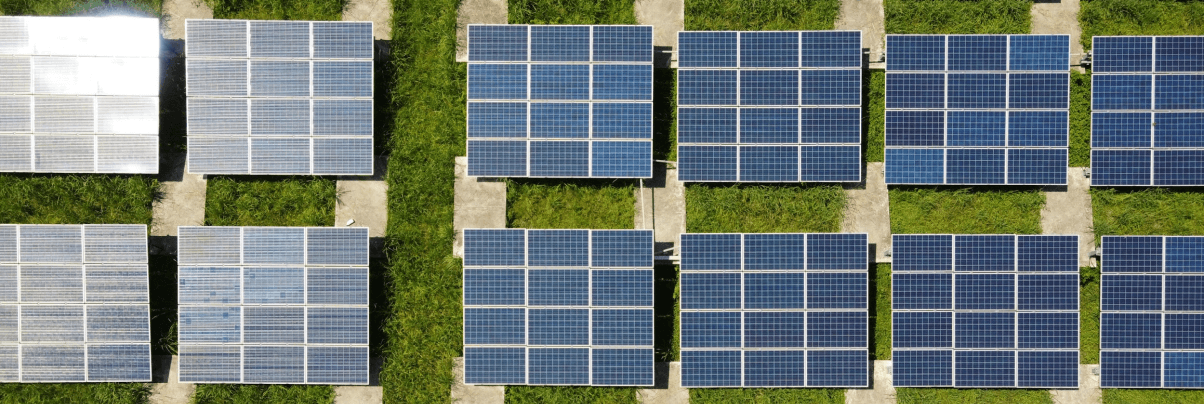
Ground-mounted solar installations are large-scale photovoltaic systems installed directly on land rather than on rooftops. These systems are engineered specifically for utility-scale or commercial energy generation on open plots.

  • Unlike rooftop installations limited by building size, ground-mounted systems can scale to multiple megawatts across available acreage.
  • The panels are mounted on durable steel structures optimized for maximum sun exposure and long-term performance.
  • These systems serve two primary purposes: generating power for sale to the grid through Power Purchase Agreements (PPAs), or producing captive power for industrial facilities with high energy consumption.

Land Requirements for Solar Farms

Understanding land requirements is essential before evaluating any ground-mounted solar opportunity. The space needed depends on your project scale and configuration.

Standard Land Area Calculations

  • 4 to 5 acres per MW of installed capacity
  • Approximately 130 sq ft per kW
  • 1 acre can accommodate 200 to 250 kW
  • Small projects: 5 to 10 acres (1–2 MW)
  • Medium projects: 20 to 50 acres (4–10 MW)
  • Large solar farms: 100+ acres (20+ MW)

A 10 MW solar farm requires approximately 40 to 50 acres including maintenance roads, inverter stations, and buffers.

Site Assessment Criteria

  • Flat terrain with gentle slope under 10 degrees
  • Soil bearing capacity of 10 tons/m²
  • Proper drainage conditions
  • Shadow-free exposure from 9 AM to 4 PM
  • Grid proximity within 5–10 km
  • Road access and water availability for cleaning
  • Clear titles and legal approvals

Income Opportunities for Landowners

Landowners can generate income either by leasing land to solar developers or building their own solar farms.

Solar Land Lease Model

  • ₹20,000 to ₹50,000 per acre annually
  • Government lease programs up to ₹1.25 lakh per acre
  • Premium areas up to ₹2 lakh per acre
  • 3% to 6% annual escalation

A 10-acre land earning ₹50,000 per acre grows to ₹2.39 crore over 25 years with 5% escalation.

Solar Farm Development Model

  • 1 MW annual generation: 1,460 to 1,500 MWh
  • Revenue: ₹30 to ₹35 lakh annually
  • 25-year revenue: ₹7.5–₹8.75 crore
  • Investment: ₹5–₹7 crore
  • Maintenance: ₹5–₹8 lakh per year

Financial Returns Analysis

  • Payback period: 7 to 10 years
  • Annual ROI: 15% to 20%
  • 25-year net profit per MW: ₹4–₹5 crore
  • 10 MW farms generate ₹3–₹4.5 crore annually

Strategic Benefits Beyond Income

  • Land valuation increases with installed solar
  • Solar farms sell at premium with PPAs
  • Dual-use agrivoltaic farming possible
  • Climate-independent farmer income

Tax Benefits and Incentives

  • Accelerated depreciation
  • Income tax exemptions in some states
  • Property tax discounts
  • GST input credits

Investment Costs and Economics

  • Solar panels: ₹2.5–₹3.5 crore
  • Inverters: ₹70 lakh–₹1 crore
  • Structures: ₹50–₹80 lakh
  • Civil & foundations: ₹40–₹60 lakh
  • Grid & approvals: ₹50 lakh–₹2 crore

Regional Cost Variations

  • Rajasthan: ₹4.19–₹4.56 crore/MW
  • Madhya Pradesh: ₹4.22–₹4.55 crore/MW
  • Maharashtra & Gujarat: ₹5–₹6 crore/MW
  • Southern states: ₹5.5–₹7 crore/MW

Essential Steps for Getting Started

  1. Land evaluation
  2. Feasibility study
  3. Lease vs development decision
  4. EPC partner selection
  5. Regulatory approvals
  6. Project financing

Long-Term Performance and Maintenance

  • Quarterly panel cleaning
  • Annual diagnostics
  • ₹5–₹8 lakh annual O&M per MW
  • 90% efficiency after 10 years
  • 80% efficiency after 25 years

Conclusion

Ground-mounted solar represents a transformative opportunity to convert underutilized land into consistent 25-year income while supporting India’s clean energy future.

With 25-year operational life, government support, and proven technology, ground-mounted solar offers a strategic pathway to financial stability while contributing to India's renewable energy future.

FAQS

Your Questions Answered

Minimum viable projects require 5 to 10 acres (1–2 MW capacity). Standard sizing is 4 to 5 acres per MW installed capacity.

Still Have A Question?

Can't find the answer you're looking for? Our team is here to help.

SUBSCRIBE NEWSLETTER

Stay Tuned with latest Updates

Switching to solar is easier than you think. Let us guide you to cleaner, more affordable energy.

EARTHWAVE