ground mounted solar india
Ground Mounted Solar Plant India: Cost & PPA Guide
2026-04-01T00:00:00.000Z•8
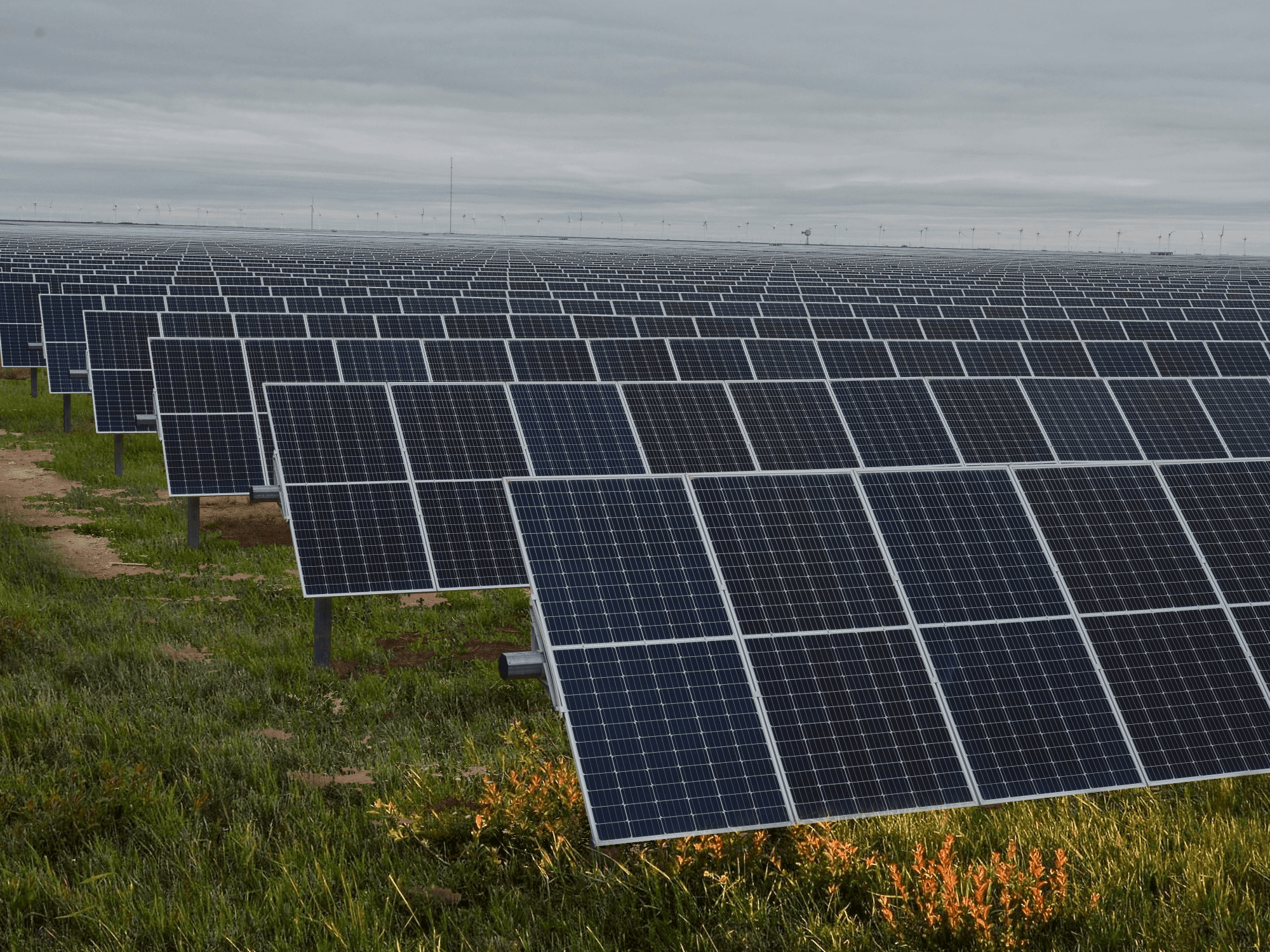
You can start a ground-mounted solar plant in India by securing 4 to 5 acres of land per MW, investing ₹4.5 to ₹6 crore per MW in project capital, obtaining the required regulatory approvals, and locking in a Power Purchase Agreement before construction begins.
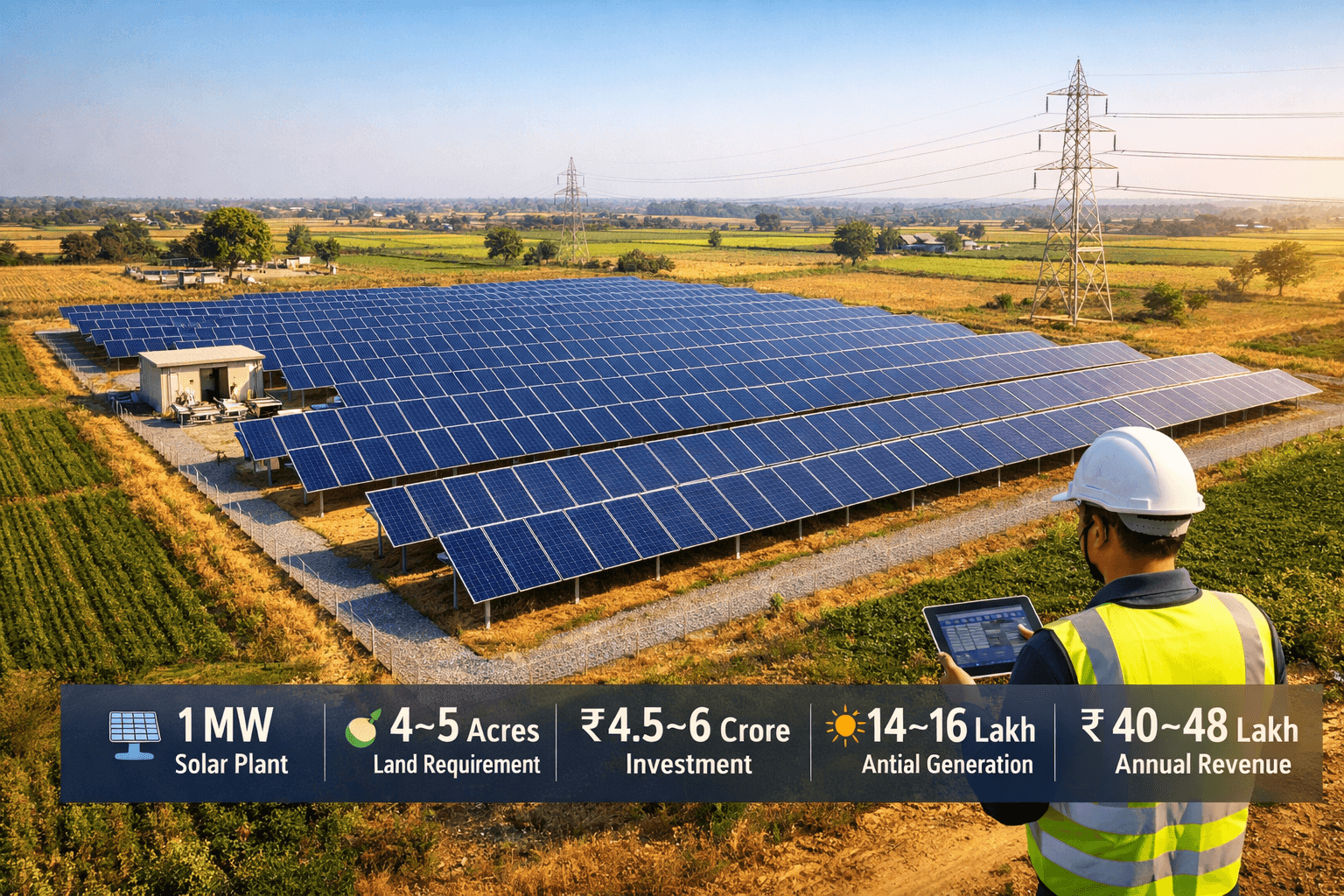
A well-structured 1 MW plant can generate ₹40 to ₹48 lakh in annual PPA revenue with a payback period of 5 to 7 years.
A 1 MW ground-mounted solar plant needs 4 to 5 acres of flat, shadow-free land
Total project investment ranges from ₹4.5 crore to ₹6 crore per MW
PPA tariffs in India currently range from ₹2.50 to ₹3.20 per unit for utility and corporate agreements
A 1 MW plant generates 14 to 16 lakh units per year at peak sun conditions
India added 28.6 GW of utility-scale solar in 2025, confirming strong market momentum
A ground-mounted solar plant is a large-scale photovoltaic (PV) system installed on open land using steel mounting structures, with no dependence on rooftops or building load capacity.
Unlike rooftop solar systems, these systems are not limited by roof size, structural constraints, or panel orientation.
Key characteristics:
Plant sizes range from 500 kW to 100+ MW
Panels can be installed at the ideal tilt angle for maximum generation
Better air circulation keeps panels cooler, improving output by 5 to 12% over rooftop setups
Designed for 25 years of power generation life
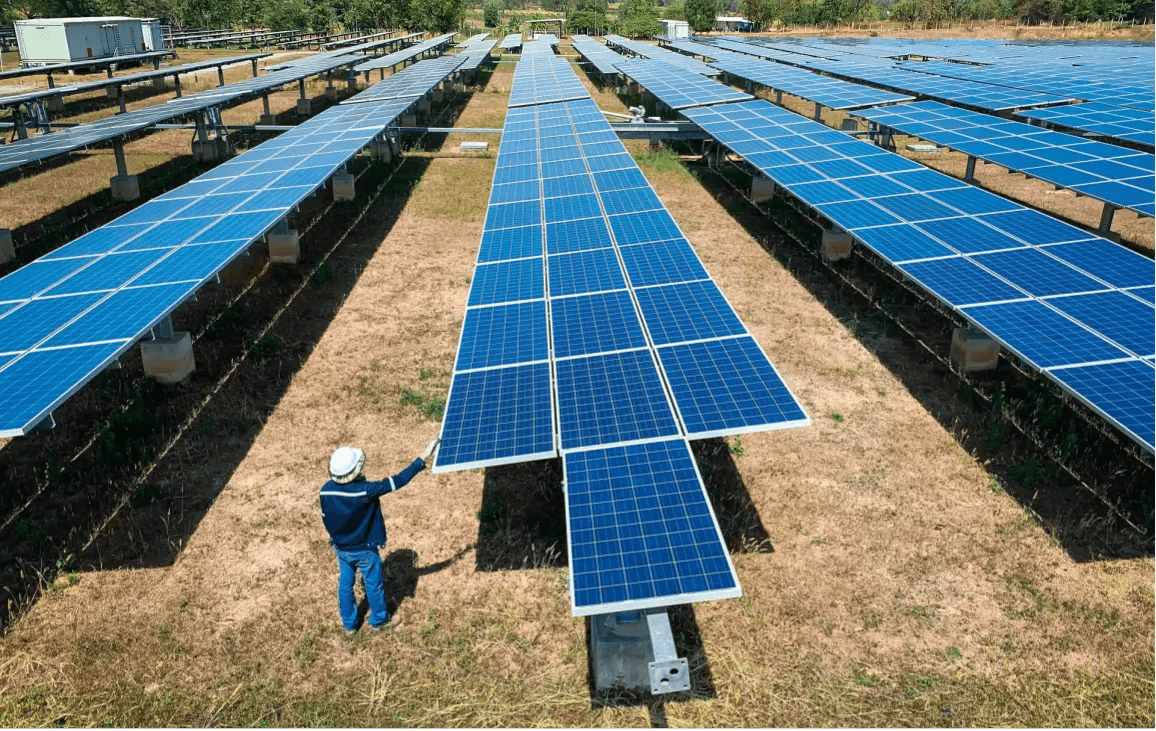
Ground-mounted solar is a long-term power asset, not a cost-saving upgrade. It suits a specific type of investor or developer.
Ideal candidates include:
Landowners
with 2+ acres of unused, shadow-free land in solar-rich regions
Industrial groups and factories with high electricity consumption
and nearby open land
Infrastructure investors and developers
building utility-scale solar parks for DISCOM or corporate offtakers
Energy entrepreneurs
developing captive or open access solar for commercial buyers
EPC companies
executing third-party solar projects under PPA contracts
This is a fundamentally different investment class from rooftop solar. It requires separate land planning, capital structuring, and regulatory handling.
The standard land requirement for a ground-mounted solar plant in India is 4 to 5 acres per MW for a standard fixed-tilt layout.
Plant Capacity | Land Required |
100 kW | 0.4 to 0.5 acres |
500 kW | 2 to 2.5 acres |
1 MW | 4 to 5 acres |
5 MW | 20 to 25 acres |
Module efficiency
: TOPCon and bifacial panels generate more per panel, reducing land use per MW
Tilt angle
: Higher tilt increases row spacing, which increases total land use
Terrain
: Uneven or soft soil adds leveling and structure costs
Internal roads and fencing
: Add roughly 5 to 10% to total footprint
Substation and inverter area
: Needs dedicated space separate from the panel array
Title clarity and absence of disputes
Agricultural land conversion status in that state
Grid connectivity and substation proximity
Shadow-free conditions throughout the day
Road access for construction and O&M vehicles
Regulatory clearance is where most ground-mounted solar projects lose time if not planned early.
DISCOM grid connectivity approval
: Mandatory before interconnection
CEIG clearance
: Required before plant commissioning
Land conversion certificate
: Needed if the plot is classified as agricultural
Open access or net metering registration
: Depends on your consumption model
Environmental clearance
: Required for plants above certain capacity thresholds
Local municipal or panchayat permissions
: For fencing, access roads, and civil works
Start the grid connectivity application process in parallel with land conversion to avoid delays. DISCOM approval timelines are the most common bottleneck in Indian solar project development.
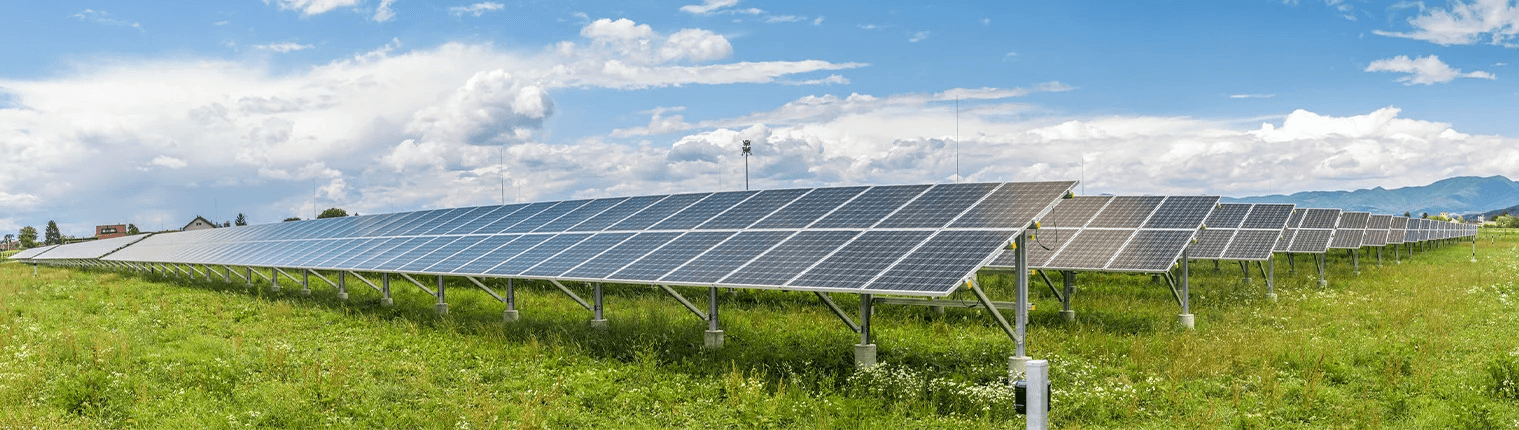
Total investment for a ground-mounted solar plant ranges from ₹4.5 crore to ₹6 crore per MW for standard commercial and industrial captive projects.
Component | Share of Total Cost |
Solar modules | 45 to 55% |
Mounting structures | 12 to 18% |
Inverters | 8 to 12% |
Civil and foundation work | 10 to 15% |
Electrical BOS and cabling | 8 to 12% |
SCADA and monitoring | 2 to 4% |
Approvals, insurance, commissioning | 3 to 6% |
Land leveling and development charges
Grid evacuation line cost if the substation is far
Land acquisition premium or annual lease cost
Financing charges if the project is partially debt-funded - explore how
CAPEX vs RESCO solar financing models
affect your actual out-of-pocket cost
For a detailed breakdown of module pricing and how it varies by type and brand, read the solar panel cost guide for India.
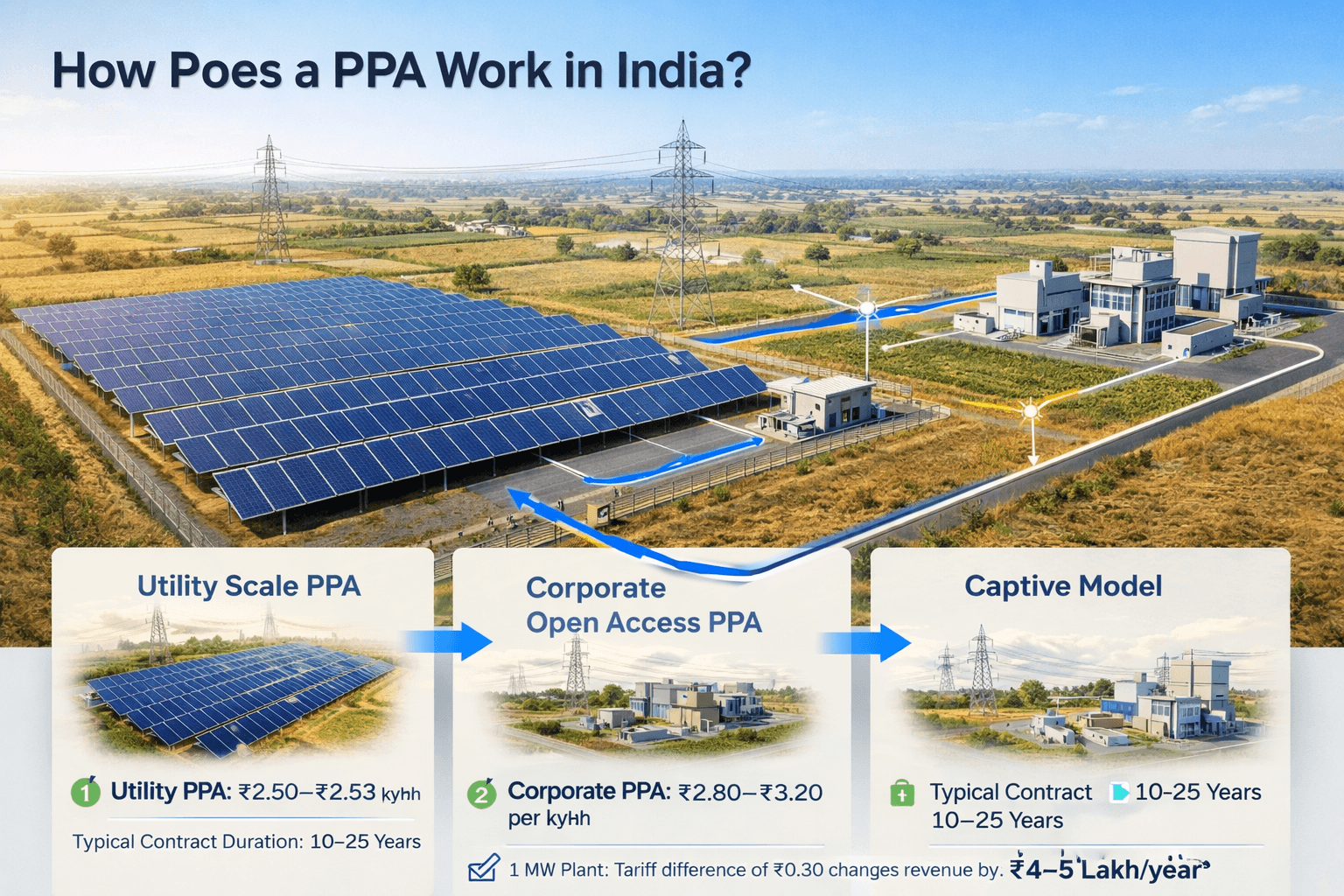
A Power Purchase Agreement (PPA) is a long-term contract where a solar developer sells power to a buyer at a fixed tariff over 10 to 25 years.
Utility-scale / DISCOM PPA
: Developer sells power to the state or central grid at CERC or SERC-approved tariffs
Corporate / Open access PPA
: Developer supplies power directly to a private industrial or commercial buyer through grid wheeling
Captive model
: Generator and consumer are related entities; power is used for self-consumption with DISCOM as the wheeling intermediary
CERC-approved utility tariffs are around ₹2.50 to ₹2.53 per kWh for large SECI-linked projects
Corporate open access PPAs typically range from ₹2.80 to ₹3.20 per unit depending on state and buyer profile
A ₹0.30 per unit tariff difference on a 1 MW plant changes annual revenue by ₹4 to ₹5 lakh
Choose your PPA model based on land location, grid infrastructure, buyer availability, and state-specific open access regulations.
A 1 MW ground-mounted solar plant in India generates approximately 14 to 16 lakh units (kWh) per year based on an average of 5 peak sun hours per day.
PPA Tariff | Annual Generation | Gross Annual Revenue |
₹2.50/unit | 15 lakh units | ₹37.5 lakh |
₹3.00/unit | 15 lakh units | ₹45 lakh |
₹3.20/unit | 15 lakh units | ₹48 lakh |
After deducting O&M costs (typically ₹5 to ₹8 lakh per MW per year), financing charges, and insurance, net annual returns vary but remain positive throughout the 25-year plant life.
Industrial captive projects
: 5 to 7 years
Utility-scale DISCOM projects:
6 to 8 years
For a detailed year-by-year payback calculation based on plant size and state, read the solar payback period guide for India 2026.
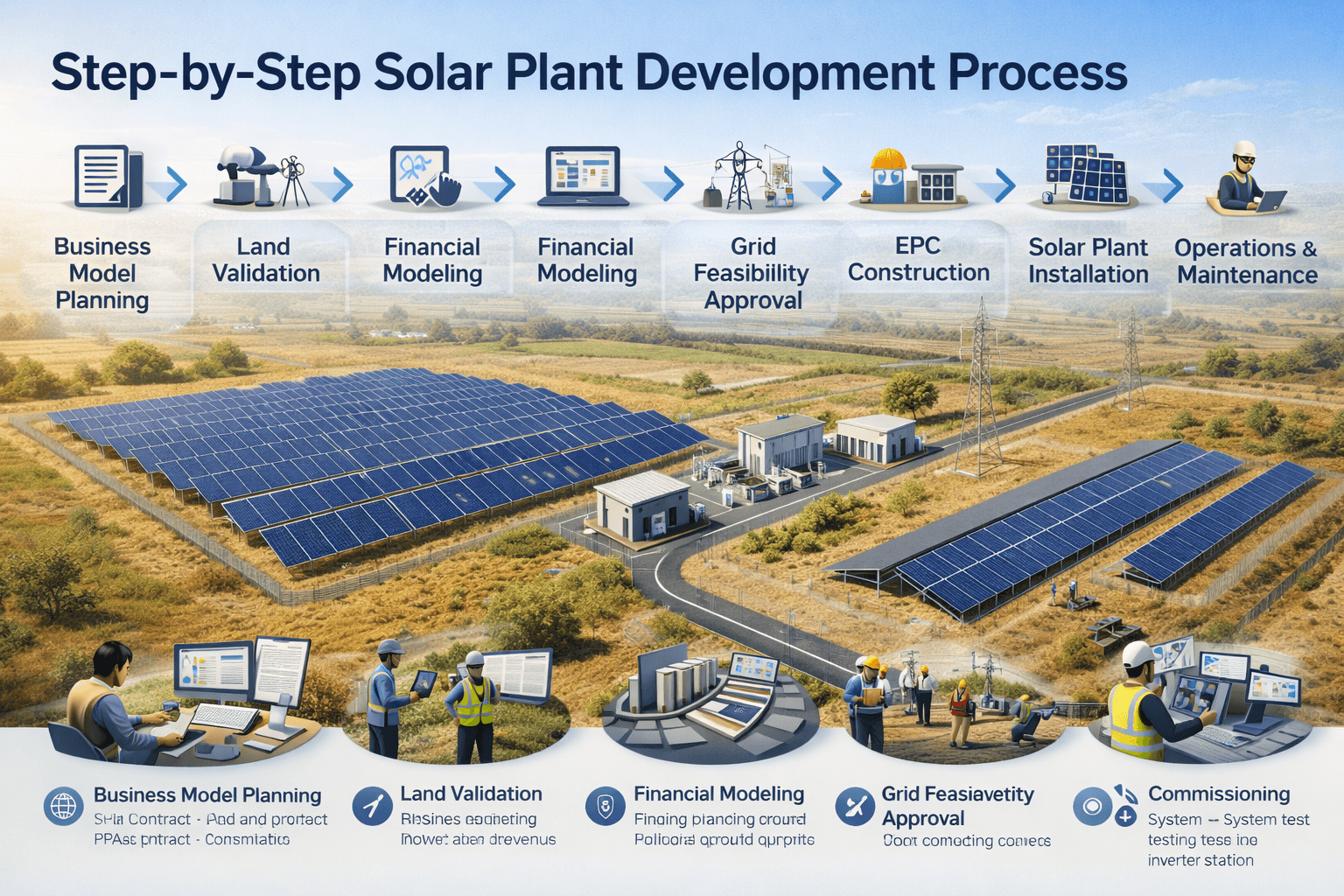
Follow this sequence to avoid costly execution mistakes:
Define your business model
: Captive, open access, group captive, or utility-scale PPA
Validate land
: Title clarity, shadow analysis, soil condition, grid proximity
Build a financial model
: Model at least three tariff scenarios; calculate IRR and payback period
Apply for grid feasibility
: Get DISCOM connectivity feasibility in writing before spending on land
Obtain land conversion approval
: Run this in parallel with grid approval
Select an EPC partner
: Prioritize real MW-scale ground-mount execution experience
Secure PPA or offtake agreement
: Lock in tariff before construction begins
Execute civil, structural, and electrical work
: Foundations, piling, module mounting, wiring
Commission and connect to grid
: After CEIG inspection and DISCOM sign-off
Activate O&M program
: Monitor plant performance and maintain assets consistently
Earthwave Solar is a Gujarat-based EPC company that handles ground-mounted solar projects from site assessment through commissioning and long-term operations support.
Their ground-mounted solar service addresses key execution challenges:
Optimized land layouts
engineered to maximize solar yield per acre
Durable steel mounting structures
designed for open-field wind and weather loads
Full permit management
handling DISCOM, CEIG, and documentation work
Transparent fixed pricing
with no hidden costs or mid-project surprises
25+ year power generation design life
with 24/7 monitoring and support
Explore their ground-mounted solar service: earthwavetech.in/services/grounded
Before investing in land or equipment, run a proper feasibility study.
A free site assessment from an experienced EPC partner like Earthwave Solar can save months of planning time and prevent costly structural or financial mistakes.
Contact Earthwave Solar for a free ground-mount project assessment today. Their team covers site evaluation, financial modeling, and regulatory guidance from the first call to commissioning.
A 1 MW ground-mounted solar plant typically requires 4 to 5 acres of flat, shadow-free land. This range varies based on panel efficiency, tilt angle, row spacing, and site terrain. Higher-efficiency TOPCon or bifacial panels can reduce land use per MW compared to older polycrystalline technology.
Total project cost for a 1 MW ground-mounted solar plant ranges from ₹4.5 crore to ₹6 crore, depending on component quality, civil work, grid evacuation distance, and land conditions. Utility-scale projects with centralized procurement typically come in at the lower end of this range.
A PPA is a long-term power sale contract where a solar developer sells electricity to a buyer such as a DISCOM, corporate, or government entity at a fixed tariff over 10 to 25 years. The developer builds and owns the plant; revenue flows through recurring unit-based payments over the contract period. Tariffs differ between government and corporate buyers.
A 1 MW solar plant generates approximately 14 to 16 lakh units per year. At a PPA tariff of ₹3.00 per unit, that equals ₹42 to ₹48 lakh in gross annual revenue before operating costs and financing charges. Net returns depend on your specific tariff, O&M expenses, and debt structure.
Key approvals include DISCOM grid connectivity, CEIG commissioning clearance, land conversion certificate for agricultural plots, and open access or net metering registration. Large solar parks above specific capacity thresholds also require environmental clearance.
FAQS
Can't find the answer you're looking for? Our team is here to help.
SUBSCRIBE NEWSLETTER
Switching to solar is easier than you think. Let us guide you to cleaner, more affordable energy.
