Industrial Solar Solutions
Rooftop vs Canopy vs Carport Solar for Factories
2026-05-13T00:00:00.000Z•8
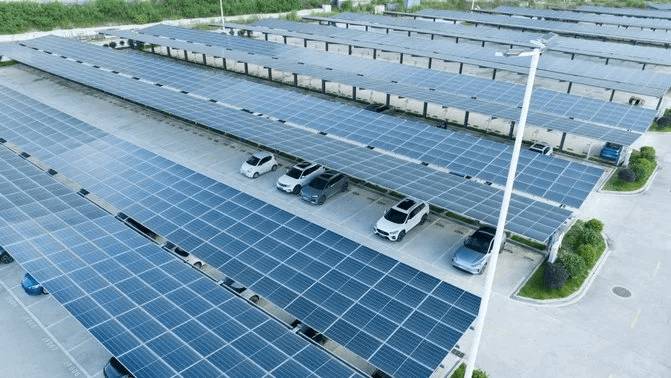
Choose rooftop solar when your factory has a strong, shadow-free roof and you want the lowest-cost option.
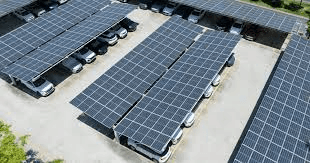
Choose canopy or carport solar when the roof cannot take the load, the roof is crowded, or your parking and utility areas can generate better value.
Rooftop solar usually gives the best economics when the roof is usable and structurally sound.
Canopy solar works well over utility areas, walkways, or open spaces where you need both shade and generation.
Carport solar fits parking-heavy factories and adds usable value to employee or visitor parking.
The right choice depends on roof strength, shadow-free area, space availability, wind load, electrical distance, and safety access.
ROI improves when you reduce civil work, limit cable runs, and avoid roof reinforcement unless needed.
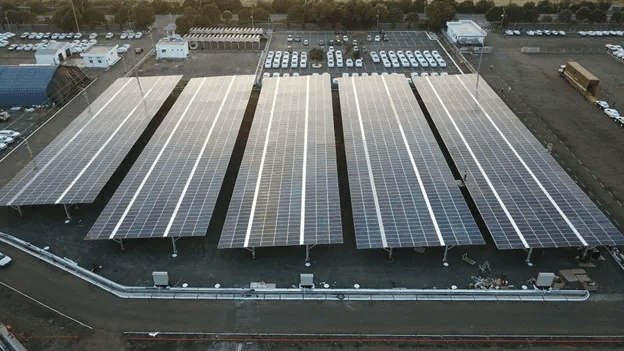
Factory solar planning is not just about adding panels. It is about matching the structure to your roof space, land use, loading, operations, and expansion plans.
A plant with a large, strong roof may get the fastest payback from rooftop solar.
A site with limited roof strength may need a canopy or carport to avoid structural risk and production disruption.
so it helps to compare rooftop solar with
For factory owners, the real question is simple. Which option gives you the best mix of savings, safety, and long-term flexibility ?
Each option serves a different site condition. The best decision starts with a clear definition.
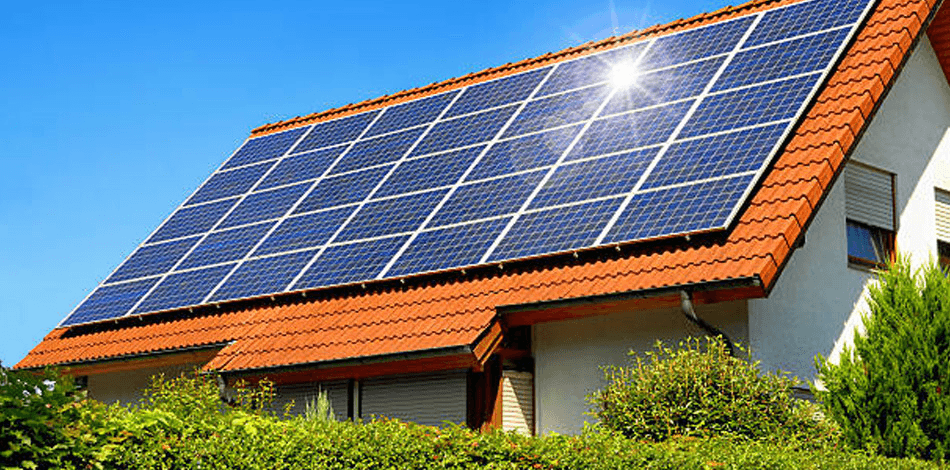
Rooftop solar means panels installed on the factory roof. This works best when the roof is strong, usable, and free from major shading,
Which aligns with the use case explained in Rooftop Solar Service and Rooftop vs Ground Solar for Industry.
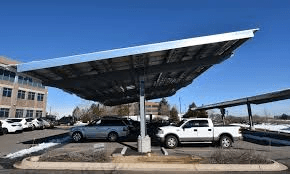
Canopy solar means a raised solar structure built over open utility areas, walkways, or work zones. It gives shade below and power above.
Read our Ground Mounted Solar solution for open-space solar structures.
Carport solar is a solar canopy built over parking spaces. It protects vehicles while generating electricity for the factory.
and in those cases you can also review Earthwave’s commercial solar solutions and ground-mounted solar services for broader industrial site planning.
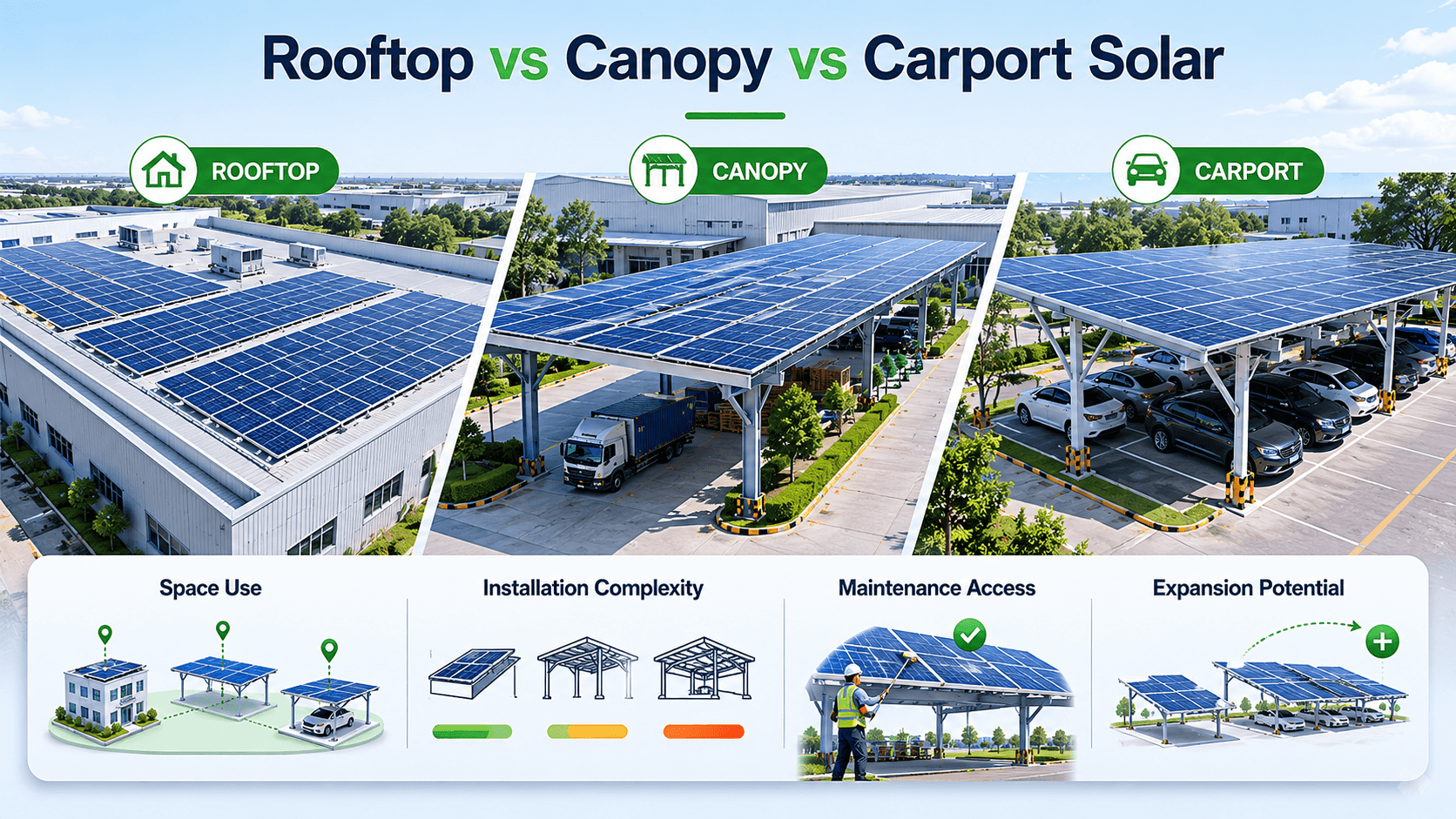
Rooftop, canopy, and carport solar differ most in space use, structure cost, and site flexibility.
That is why the cheapest-looking option is not always the cheapest final project, a point also reflected in Earthwave’s industrial comparison blog and commercial savings guide.
Rooftop uses existing roof space.
Canopy uses open utility or circulation areas.
Carport uses parking space and turns it into an energy asset.
Rooftop is usually simpler if the roof is accessible and strong.
Canopy needs more steel, civil work, and structural design.
Carport often needs wider spans, taller supports, and stronger foundations.
Rooftop can be harder to clean and inspect.
Canopy and carport usually offer better access underneath and around the structure.
Good access improves O&M and lowers long-term hassle.
Rooftop depends on remaining roof area.
Canopy and carport can expand in phases if land or parking space stays available.
This matters for factories expecting load growth.
The right solar type depends on how your factory uses space. A factory should not choose by trend. It should choose by site condition.
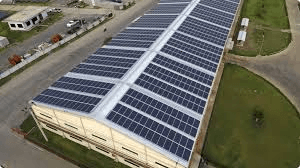
Rooftop solar fits factories with strong RCC or metal roofs, low shading, and enough free area for modules and maintenance access.
If your factory has a strong roof, read our Rooftop Solar Service.
Example: a textile unit with a flat, load-bearing roof and limited parking will usually get the best value from rooftop solar.
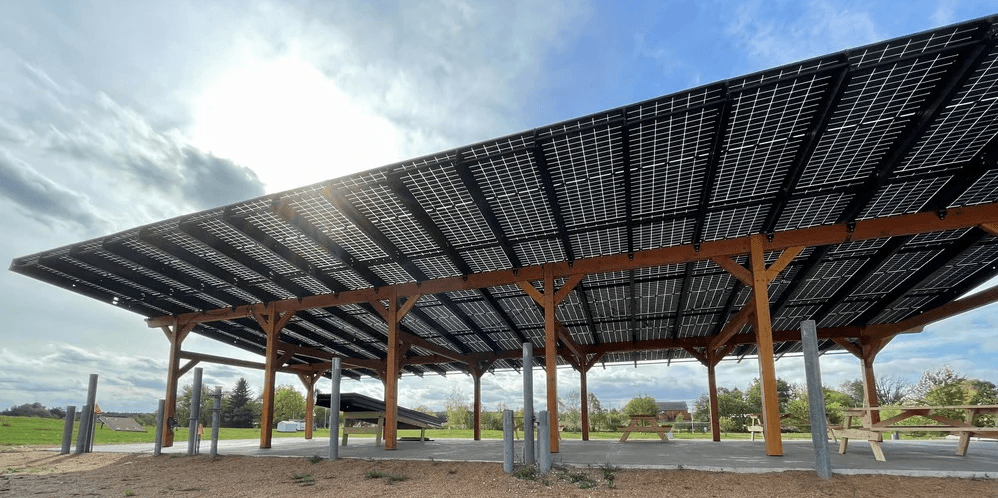
Canopy solar fits plants that have service corridors, open yards, loading areas, or walkways where a raised structure will not block operations.
Example: a warehouse with wide internal circulation space may use canopy solar to create shade while generating power.
Carport solar fits sites with large staff, visitor, or fleet parking areas. It adds comfort, protects vehicles, and uses space that would otherwise sit idle.
Example: a corporate manufacturing campus with daily vehicle movement can treat parking as an energy asset.
The best type depends on your roof, land, and operating pattern. Here is the simplest rule set.
The roof is strong and reasonably new.
The roof area is free from heavy shading.
The roof has enough access for cleaning and service.
You want the lowest project complexity.
The roof cannot take extra load.
You have open but usable space on the ground.
You need shade over utility or movement areas.
You want a structure that also improves site usability.
Parking space is large and underused.
You want to protect vehicles from heat and rain.
You want a visible ESG or sustainability asset.
You may later add EV charging.
For industrial savings, see
.
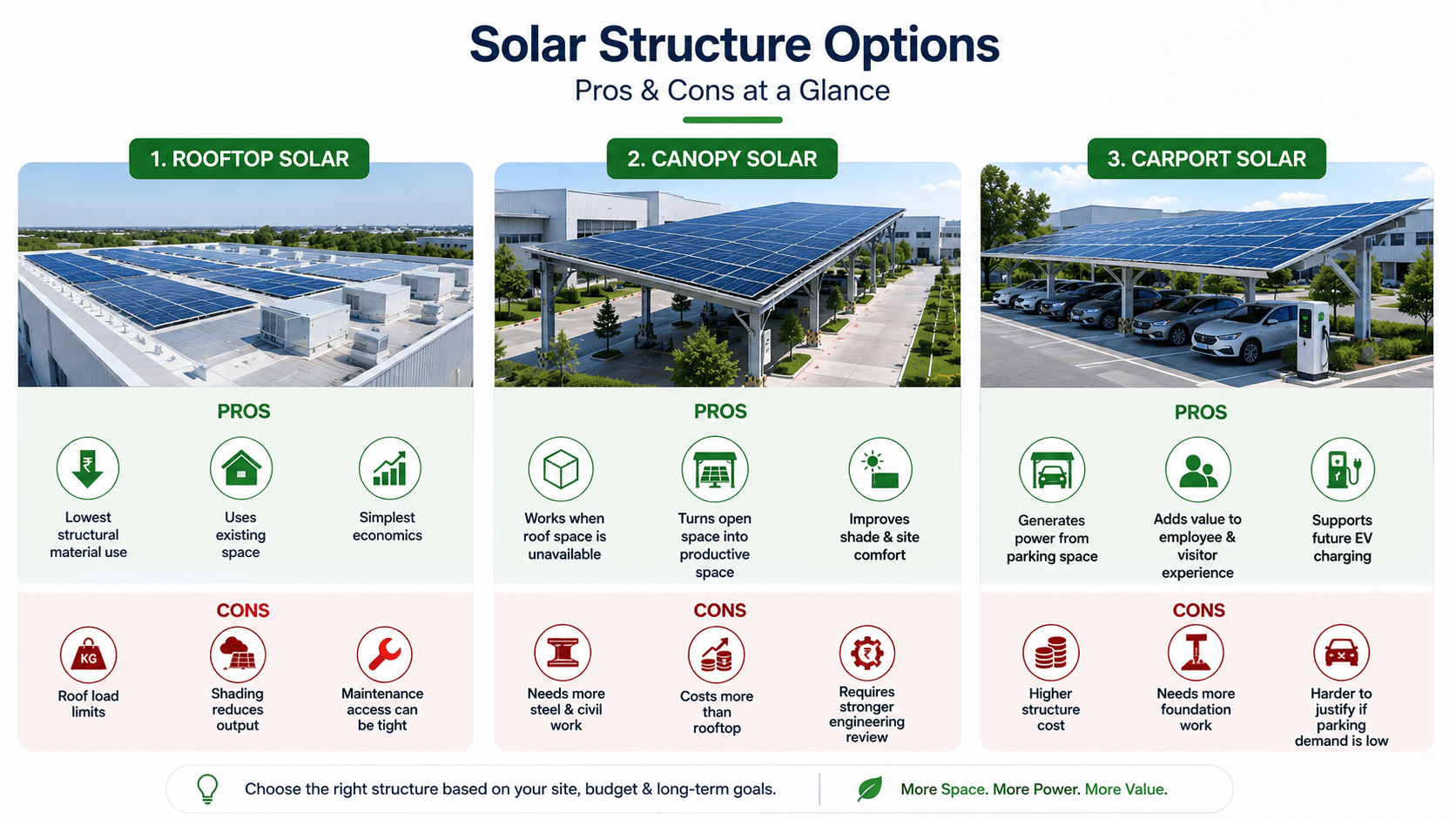
A practical comparison makes the choice easier. Each structure has a clear upside and a clear tradeoff.
Pros:
Lowest structural material use when the roof is already suitable.
Uses existing space.
Usually offers the simplest economics.
Cons:
Roof load limits can block installation.
Shading from vents, tanks, and nearby buildings can reduce output.
Maintenance access can be tight.
Explore Commercial Solar Installation for Businesses.
Pros:
Works when roof space is weak or unavailable.
Can turn open space into productive space.
Improves shade and site comfort.
Cons:
Needs more steel and civil work.
Usually costs more than rooftop.
Requires stronger engineering review.
Pros:
Generates power from parking space.
Adds value to employee and visitor experience.
Supports future EV charging plans.
Cons:
Higher structure cost.
Needs more foundation work.
Can be harder to justify if parking demand is low.
To compare site-based options, visit Rooftop or Ground Solar.
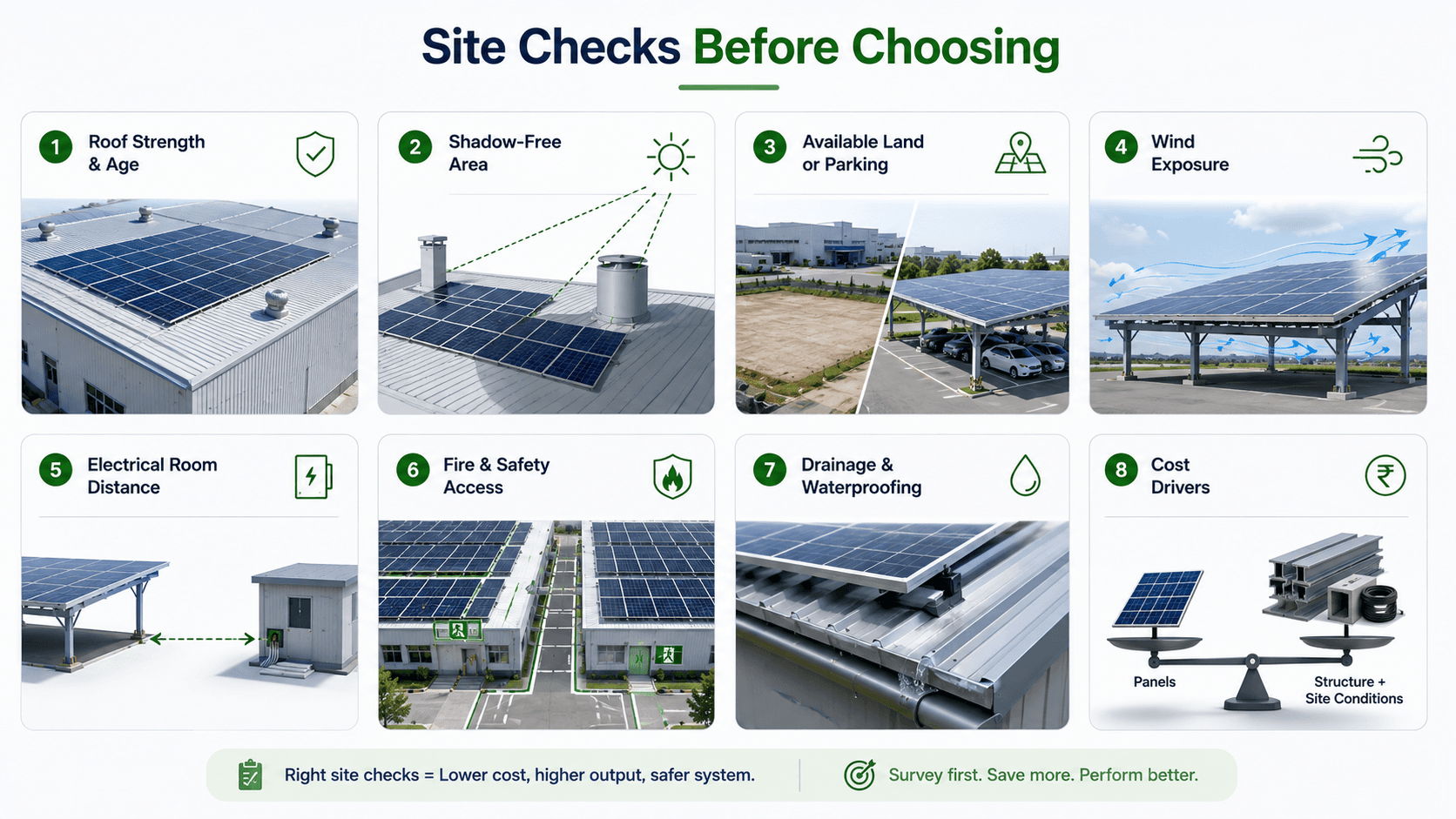
A factory should never choose a solar structure before a proper site survey. The wrong site call can raise cost, delay commissioning, or create safety risk.
Check the roof’s load capacity, construction age, and condition. Old roofs may need repair or reinforcement before solar installation.
Check for chimneys, tanks, neighboring buildings, and future obstructions. Even small shading can reduce output across strings.
Check whether open land, utility space, or parking can support a canopy or carport. If the roof is not enough, ground-adjacent space may unlock better design options.
Check wind speed exposure, edge conditions, and structural anchoring needs. Taller canopy and carport systems need stronger foundations and better engineering.
Check how far the array sits from the inverter room and main panel. Longer cable runs increase material cost and power loss.
Check fire lanes, ladder access, walkways, and emergency exits. Solar should never block safety movement or maintenance routes.
Check roof drainage, water stagnation points, and penetration sealing. Roof leakage risk matters more in rooftop systems than in raised structures.
The cost of rooftop, canopy, and carport solar depends less on panels and more on structure and site conditions.
Two projects with the same kilowatt size can have very different budgets.
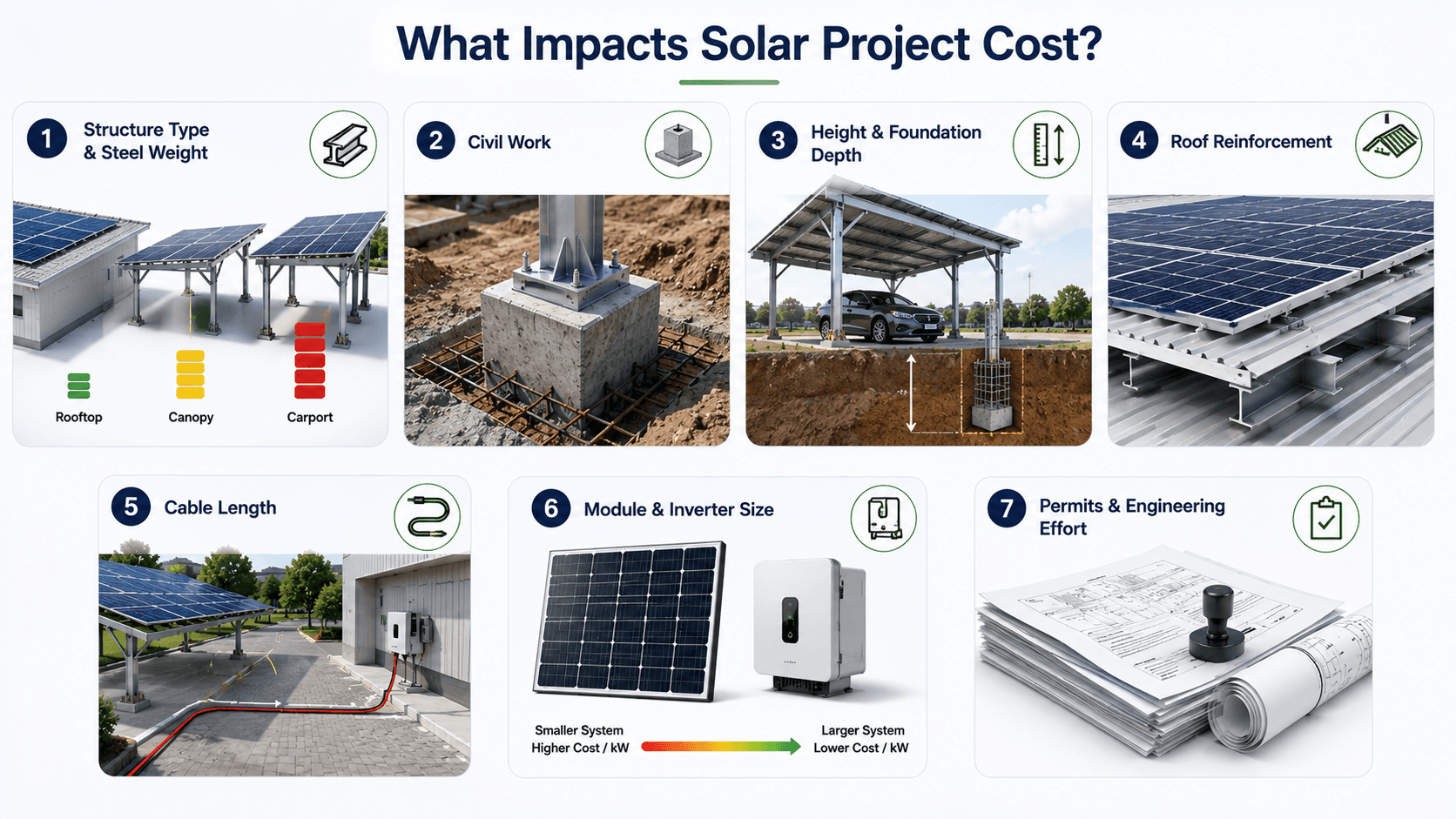
More steel means more cost. Canopy and carport systems usually need heavier structure than rooftop systems.
Foundations, pedestals, and basework raise cost quickly. This is a major factor in canopy and carport projects.
The higher the structure, the stronger the foundation usually needs to be. Carport systems often need this because vehicles must move below them.
If the roof cannot take the load, reinforcement adds cost and time. Sometimes reinforcement makes rooftop solar less attractive than canopy or carport.
Long cable routes raise both cost and technical losses. Good layout planning can save money before execution starts.
Bigger systems reduce per-unit overhead in many cases, but they also increase engineering and balance-of-system design needs.
Complex structures need stronger design checks, approvals, and documentation. That adds professional service cost, but it also lowers execution risk.
ROI comparison should focus on more than installation price. Factories should compare total life-cycle value, not just first cost.
Rooftop usually has the lowest capital cost if the roof is suitable. Canopy and carport often cost more because they need more steel and civil work.
Sometimes a slightly higher-cost structure wins because it produces more usable power or avoids shading losses. The best option is the one that performs well on your site, not in a generic brochure.
Easy access reduces cleaning, inspection, and repair effort. That can improve net returns over the system life.
Industrial solar often targets a payback in the 3 to 6 year range, depending on system design, site condition, and financial structure.
A flexible design can support future load growth. That matters for factories expecting capacity expansion or new equipment.
Option | Best ROI Condition | Why It Wins | When It May Not Win |
Rooftop solar | Roof is strong, usable, and needs no major reinforcement | Uses existing space, lower civil work, lower structure cost, simpler execution, faster payback earthwavetech+1 | Roof is weak, shaded, crowded, or far from the electrical room exolarenergy+1 |
Canopy solar | Roof work is expensive, risky, or impossible, but open utility space is available | Converts unused open space into power generation and can add shade and site utility linkedin+1 | Needs heavier steel, civil work, and usually higher upfront cost than rooftop linkedin+1 |
Carport solar | Parking space is valuable and the factory wants shade plus energy generation | Turns parking into a productive asset and can support EV-ready infrastructure later linkedin+1 | Usually has higher structure cost and longer payback than rooftop linkedin+1 |
Many factories lose money by choosing the wrong structure for the wrong reason. The biggest mistakes are easy to avoid.
Choosing by price only.
Ignoring structural load.
Underestimating shading.
Blocking future expansion.
Skipping maintenance access.
Forgetting cable length and electrical layout.
Overlooking roof waterproofing needs.
Example: a factory may choose rooftop solar because it looks cheaper on paper, then spend heavily on roof reinforcement and waterproofing. That can erase the initial savings.
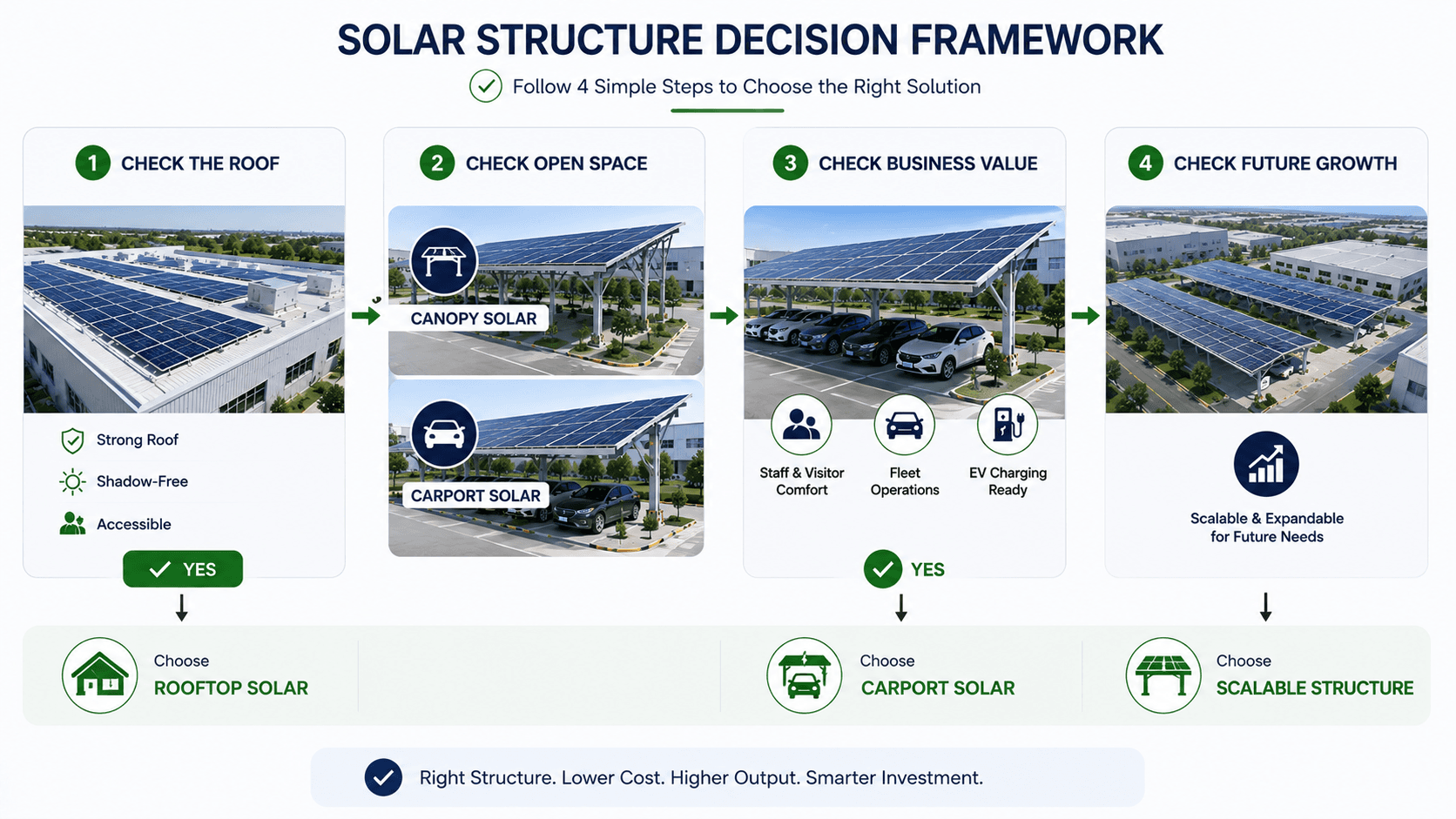
Use a simple decision path. It keeps the choice practical and reduces guesswork.
If the roof is strong, shadow-free, and accessible, rooftop solar is usually the first option to compare.
If the roof is weak or crowded, look at canopy solar over utility areas or carport solar over parking.
If parking creates real value for staff, visitors, or fleet operations, carport solar becomes more attractive.
If you expect expansion, choose the structure that can scale without redoing the site later.
Rooftop solar is the best starting point for factories with strong roofs and simple layouts. Canopy solar fits factories with open areas and weak roofs. Carport solar works best when parking is an asset and the business wants shade plus generation.
The final layout should come from a site survey, structural check, and electrical review. An engineer should confirm load, shading, cable route, fire access, and foundation design before you sign off.
Earthwave Solar delivers EPC solar solutions for residential, commercial, and industrial needs, including rooftop and commercial solar installations.
The company also shows completed projects and a full execution process that covers consultation, site inspection, design, documentation, installation, and handover.
If your factory needs the right solar structure, Earthwave Solar can help with site evaluation, system design, approvals, and installation. Their process is built for businesses that want clear advice, strong execution, and long-term performance.
Rooftop solar is usually the cheapest if the roof is strong and usable. It often avoids the extra steel and civil work needed for canopy or carport systems.
The best long-term value comes from the option that fits the site with the least hidden cost. In many factories, that is rooftop solar, but canopy or carport can win when roof limits exist.
Yes, many factories use a hybrid layout. This works well when the roof supports part of the load and parking or utility areas can support the rest.
Structural load is the first check. If the roof or foundation cannot safely support the system, the project can become expensive or risky.
Industrial solar often pays back in about 3 to 6 years, depending on system size, usage pattern, and site design. Better site fit usually means better payback.
FAQS
Can't find the answer you're looking for? Our team is here to help.
SUBSCRIBE NEWSLETTER
Switching to solar is easier than you think. Let us guide you to cleaner, more affordable energy.
