commercial solar pharma
Solar for Pharma Company in Gujarat: Cut Costs & ROI
2026-04-01T00:00:00.000Z•8

Pharmaceutical companies in Gujarat can reduce electricity costs by 30–40% and achieve full ROI within 5–7 years by switching to industrial rooftop solar.
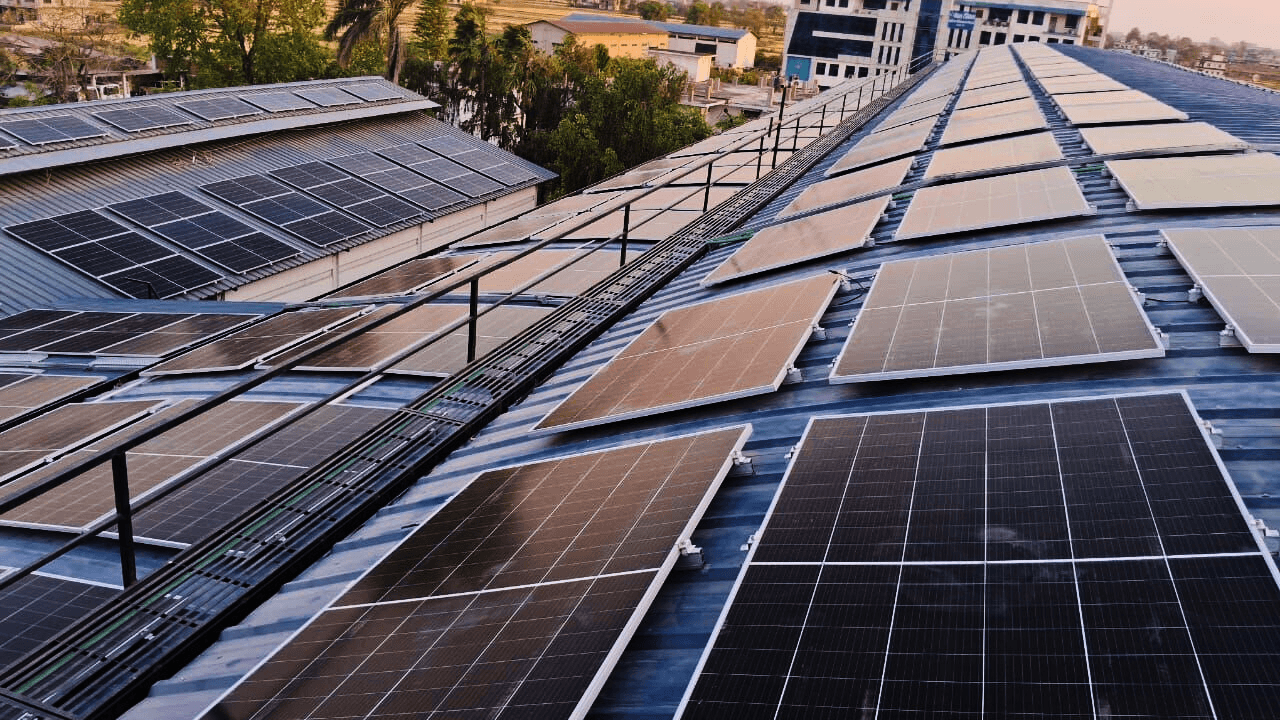
Solar power gives pharma plants the energy stability, cost predictability, and sustainability credentials they need to stay competitive and compliant.
Pharma plants in Gujarat spend several lakhs monthly on electricity, making solar one of the highest-ROI infrastructure investments available
Industrial solar systems reduce power expenses by 30–40% and lock in predictable energy costs for 25+ years
Solar supports 24/7 uninterrupted production by reducing dependence on unstable grid power
A well-designed solar system for a mid-sized pharma plant typically pays back in 5–7 years with 15%+ annual returns
provides end-to-end EPC solar solutions for industrial and manufacturing facilities across Gujarat
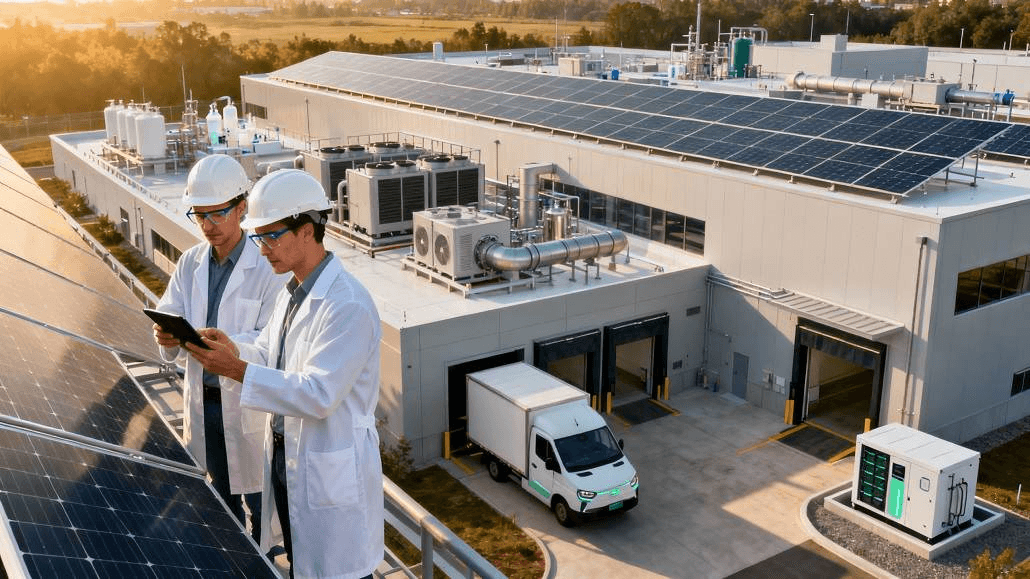
Electricity is one of the biggest operational expenses for any pharma manufacturing plant, and solar directly solves that problem.
Gujarat hosts hundreds of pharmaceutical manufacturers, API production units, and formulation plants.
These facilities run 24/7. HVAC systems, cleanrooms, laboratory equipment, and production lines consume enormous amounts of power every single day.
The result:
Monthly electricity bills ranging from several lakhs to crores, depending on plant size. And with grid tariffs rising every year, this cost only grows.
Solar power changes this equation permanently.
Pharma plants do not just need low-cost power. They need power that never fails.
Unlike textile or metal manufacturing, pharmaceutical production cannot tolerate interruptions. A power fluctuation during a batch process can compromise product quality, trigger waste, and create regulatory issues.
Here is what makes pharma energy requirements different:
Continuous load:Cleanrooms, cold storage, and HVAC run 24 hours, 365 days
Voltage sensitivity:Sensitive analytical instruments and filling machines need stable, clean power
Compliance pressure:Any disruption that affects batch integrity creates documentation problems
Rising grid tariffs:Industrial electricity in Gujarat costs between Rs. 7 to Rs. 10 per unit for
heavy commercial users , and these rates keep increasing
Solar, when designed correctly for industrial loads, addresses all four of these challenges at once.
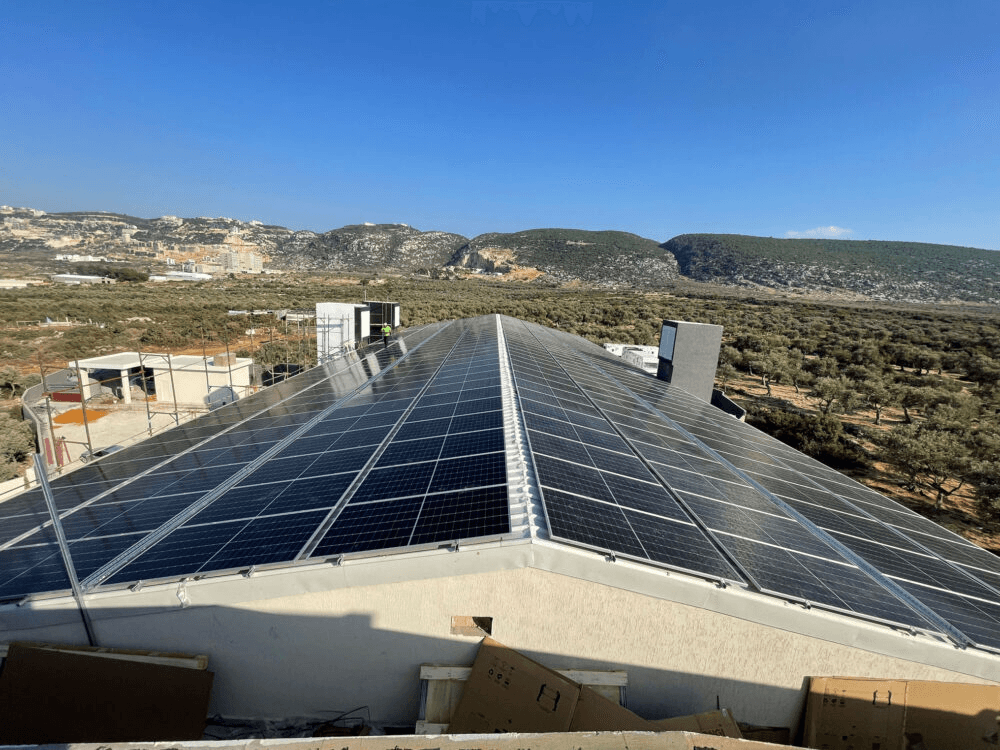
An on-grid solar system reduces your grid dependency during peak daytime hours, which is when pharma plants consume the most power.
Most pharma manufacturing activity peaks between 8 AM and 6 PM. This is exactly when solar generation is at its highest.
Reduced grid dependence
during production hours cuts exposure to grid fluctuations
allows you to export excess solar units and earn credits against your electricity bill
High-quality inverters
ensure clean power conversion without voltage irregularities
Real-time monitoring
gives your energy manager full visibility into generation and consumption
For plants with critical loads, a hybrid solar system with battery backup can further protect sensitive processes against any grid outage.
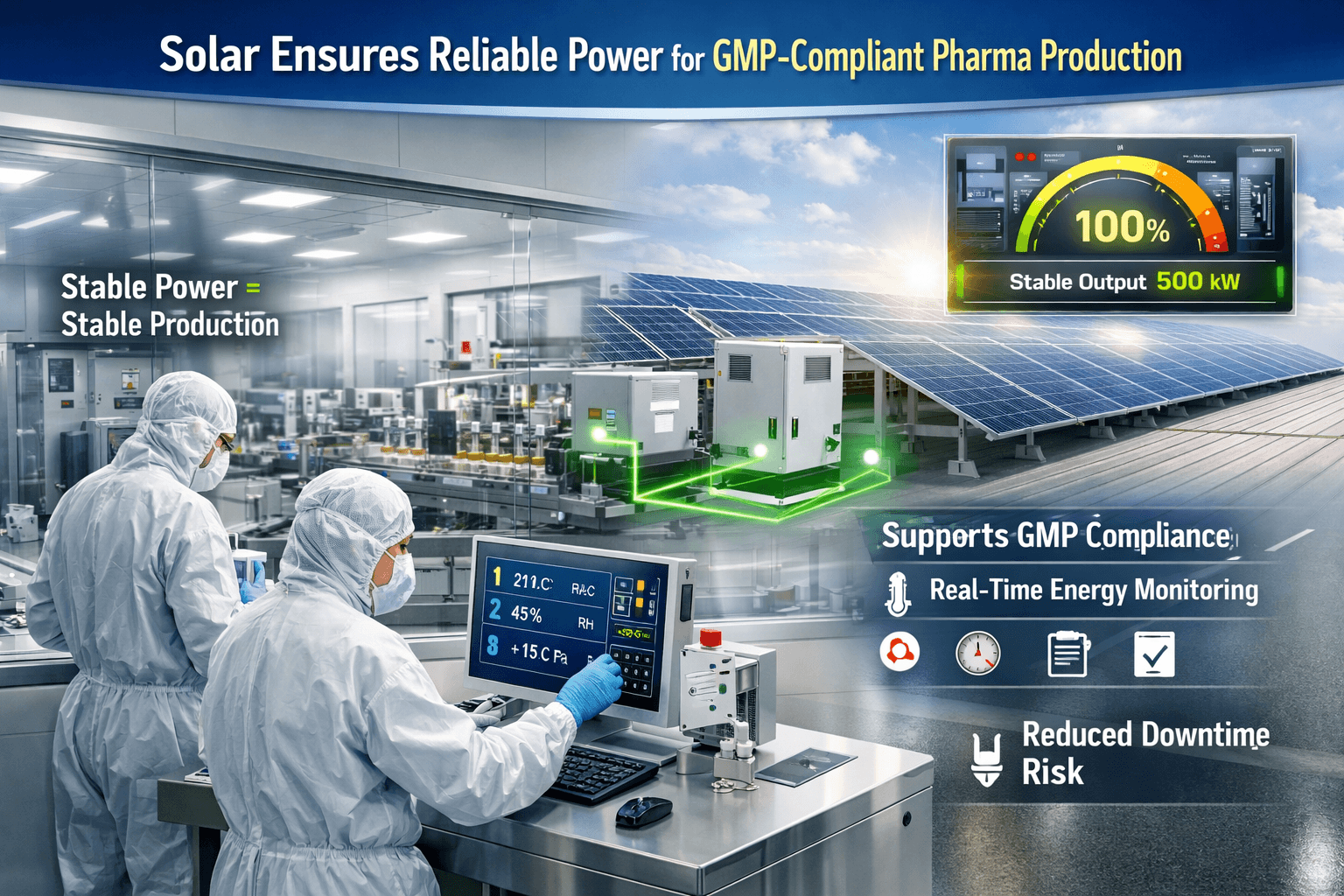
Solar does not disrupt GMP compliance. It strengthens your facility's energy reliability, which is a key part of production quality management.
Pharmaceutical manufacturing in India operates under Schedule M of the Drugs and Cosmetics Act and CGMP guidelines. Energy reliability and environmental control are embedded in compliance requirements.
Here is how solar supports that:
Consistent energy supply
keeps cleanroom pressure differentials and temperature controls stable
Documented energy management
through real-time monitoring supports your facility's energy audit trails
Reduced load shedding risk
protects batch integrity during critical production windows
ESG reporting support
as green energy sourcing is increasingly relevant for export-oriented pharma companies supplying to regulated markets
Solar is not just a cost decision for pharma companies. It is an operational infrastructure decision.
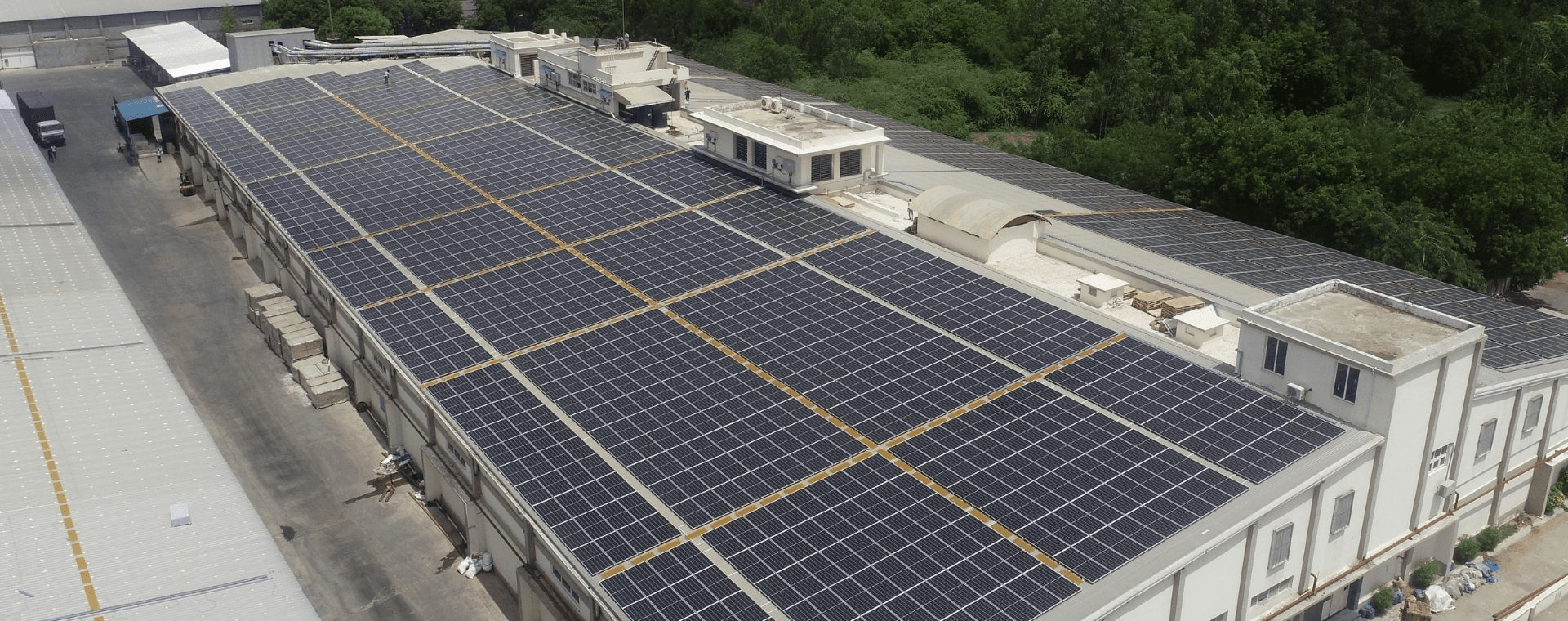
A well-sized solar system for a pharmaceutical plant delivers full ROI within 5–7 years with returns continuing for 20+ years after that.
Here is a realistic illustration based on a mid-sized pharma facility in Gujarat:
Plant type:
Formulation manufacturing unit
Monthly electricity consumption:
1,00,000 units (kWh)
Current electricity tariff:
Rs. 8 per unit
Monthly electricity bill:
Rs. 8,00,000
Recommended solar system size:
300–500 kW rooftop
Year | Annual Saving (Approx.) | Cumulative Saving |
Year 1 | Rs. 28–32 Lakhs | Rs. 28–32 Lakhs |
Year 2 | Rs. 29–34 Lakhs | Rs. 57–66 Lakhs |
Year 3 | Rs. 30–35 Lakhs | Rs. 87–101 Lakhs |
Year 5 | Rs. 32–37 Lakhs | Rs. 1.4–1.7 Crore |
Assumptions: 30–40% electricity bill reduction, 5% annual tariff escalation factored in, net metering active.
Payback period: 5–7 years
Post-payback returns:Free electricity for 18–20 years
System life:25+ years with standard maintenance
Annual return on investment:15–18%
These numbers make solar one of the most predictable and high-return capital investments a pharma company in Gujarat can make today.
Beyond direct electricity savings, solar creates multiple financial advantages for pharma companies.
Accelerated depreciation:
Under Indian tax law, solar assets qualify for
in the first year, significantly reducing tax liability
Stable energy costs:
Your per-unit cost from solar stays fixed for 25 years, unlike grid tariffs that increase annually
ESG value:
Export-oriented pharma companies supplying to EU or US markets increasingly need to show green energy credentials; solar supports that reporting
Property value:
A functioning solar installation adds long-term asset value to your manufacturing facility

Gujarat offers some of the best solar irradiation in India, making it one of the most financially viable states for industrial solar investment.
Average solar irradiation in Gujarat: 5.5–6.0 kWh per square meter per day
Clear, sunny days for 300+ days annually across most industrial zones
Active net metering policy under DGVCL, GETCO, and other Gujarat DISCOMs makes solar even more rewarding. Read the full
Gujarat rooftop solar policy to understand your benefits
.
State-level renewable energy incentives and simplified solar approval processes
Pharma clusters in Ahmedabad, Ankleshwar, Vapi, Surat, Vadodara, and Rajkot all sit in high-solar-yield zones. Your plant's location gives you a natural advantage.
Earthwave Solar is a Gujarat-based full-spectrum EPC solar company with hands-on experience in high-demand industrial installations.
Founded in 2018, Earthwave has grown from its first 100 kW installation to executing projects at the scale of 80 MW for Mahindra Sustain and 2 MW ground mounts for Goldi Solar.
Their industrial portfolio includes projects like Pari Textile (170 kW) and Sahaj Textile (120 kW), demonstrating real expertise in factory-scale solar.
Commercial and Industrial Solar : Systems designed for high energy demands, cutting power expenses by 30–40%
Ground Mount Solar: Flexible installations for plants with limited rooftop space or shaded areas
Wave Inverters : In-house manufactured inverters delivering up to 97% efficiency, available from 2.5 kW to 125 kW, backed by a 10-year warranty and smart smartphone monitoring
End-to-End EPC: Earthwave handles everything from site assessment and system design to documentation, DISCOM approvals, installation, and final handover
If your monthly electricity bill exceeds Rs. 3–5 Lakhs, the economics of industrial solar almost certainly work in your favor.
Ask yourself these three questions:
Does your plant run operations for 8 or more hours daily?
Do you have available rooftop space or unused land near your facility?
Is your monthly electricity bill a top-three operational cost?
If you answered yes to all three, your plant is a strong candidate for solar. The sooner you install, the sooner savings begin.
Yes. A properly designed on-grid solar system with high-efficiency inverters provides clean, stable power suitable for sensitive pharmaceutical equipment. Your energy manager can also set load priority configurations to protect critical circuits.
System size depends on your monthly consumption. A plant using 50,000 to 1,00,000 units monthly typically needs a 150 kW to 500 kW rooftop or ground mount system. A detailed site assessment gives you the exact number.
Minimal disruption. Installation is done in phases with certified technicians. Earthwave's process is designed for active facilities, and the final grid connection switchover takes only a few hours.
With current Gujarat grid tariffs and solar irradiation levels, most pharma plants see full payback in 5–7 years. After that, your solar system generates free electricity for another 18–20 years.
Yes. Industrial and commercial solar installations qualify for 40% accelerated depreciation under Indian income tax rules, which significantly reduces your net system cost in Year 1. Your EPC provider can also guide you through applicable GEDA and central government incentive schemes.
If you run a pharmaceutical manufacturing facility in Gujarat and want a clear picture of how solar fits your energy setup, Earthwave Solar's team can assess your site, model your savings, and give you a complete, transparent proposal.
No sales pressure. Just honest numbers.
Website:
Phone: +91 90336 07212
Email:
Office: Surat, Gujarat
Or explore their complete range of industrial solar services and see how other businesses across Gujarat have made the shift to predictable, lower-cost energy.
FAQS
Can't find the answer you're looking for? Our team is here to help.
SUBSCRIBE NEWSLETTER
Switching to solar is easier than you think. Let us guide you to cleaner, more affordable energy.
