hybrid vs on-grid inverter
Hybrid vs On-Grid Inverter: Power Cut Solution
2026-05-02T00:00:00.000Z•8
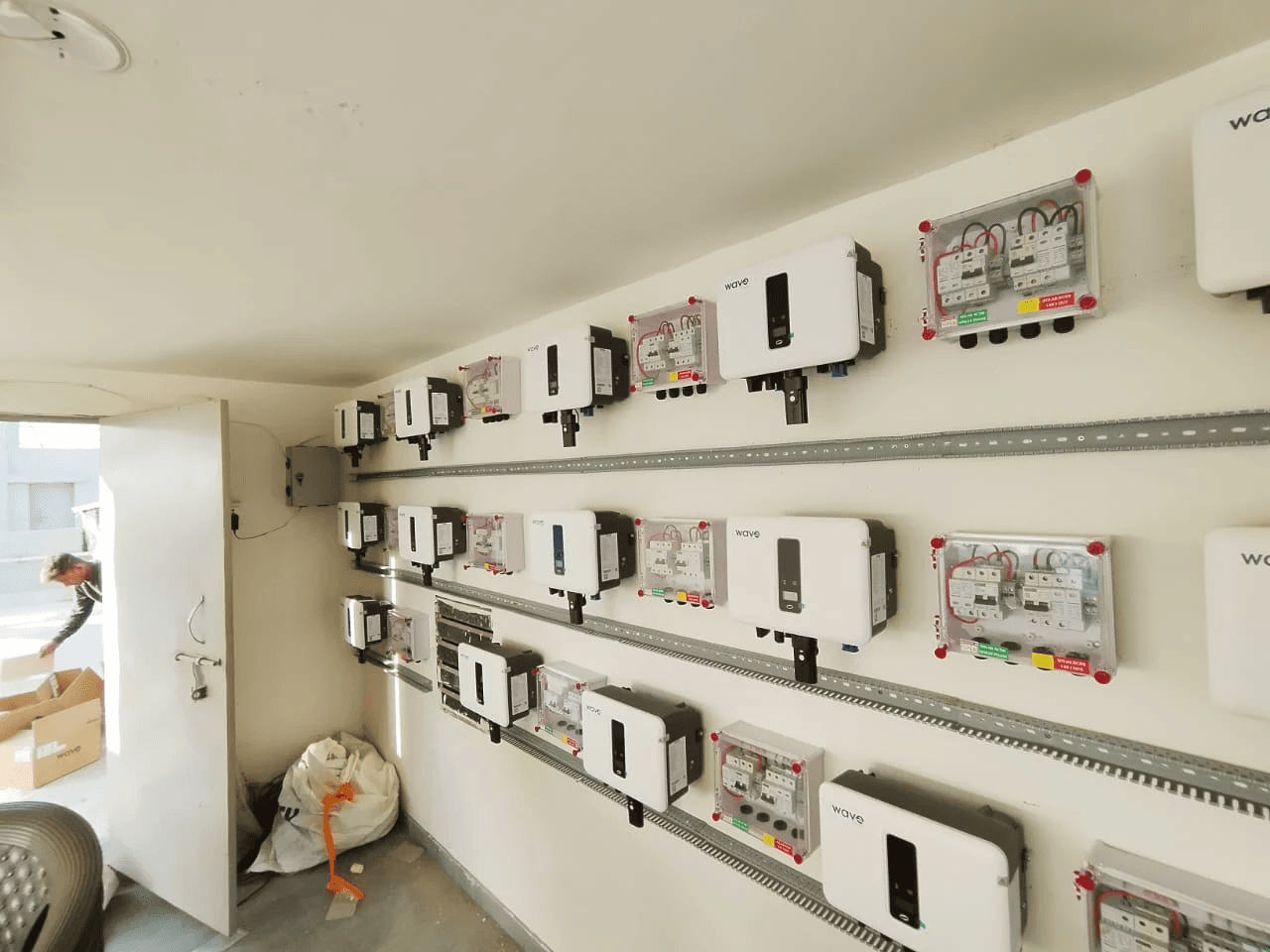
If your area gets daily power cuts, on-grid solar will go completely dark during every outage.
Hybrid solar keeps your home running on battery backup. The choice comes down to how many hours of cuts you face daily and whether the extra ₹80,000 to ₹1.5 lakh for hybrid is worth that guarantee.
On-grid solar shuts off during power cuts
by law (anti-islanding safety feature), not because of a defect
Hybrid solar stores surplus energy in batteries
and keeps running during outages
Hybrid costs ₹80,000 to ₹1.5 lakh more
than on-grid for the same panel capacity
A 3 kW hybrid system with a 10 kWh lithium battery gives 4 to 6 hours of backup
for a standard 2 BHK
On-grid still makes sense
if your grid is stable and your main goal is bill reduction
On-grid solar shuts down during outages because of a mandatory safety feature called anti-islanding protection, not because of a defect or a vendor trick.
When the grid goes down, your on-grid inverter detects the absence of grid frequency and immediately disconnects.
This is a legal requirement under Indian grid codes to protect DISCOM linemen working on the dead lines.
If your inverter kept sending power into the grid during an outage, it would create a live wire that looks dead from the outside, which is extremely dangerous.
So if you have a 4 kW on-grid system and the grid goes down at 2 PM on a sunny afternoon, your panels are generating power but your home gets nothing. Every light goes off.
This is normal behavior. It is not a defect. But if nobody told you this before you bought, it feels like a betrayal.
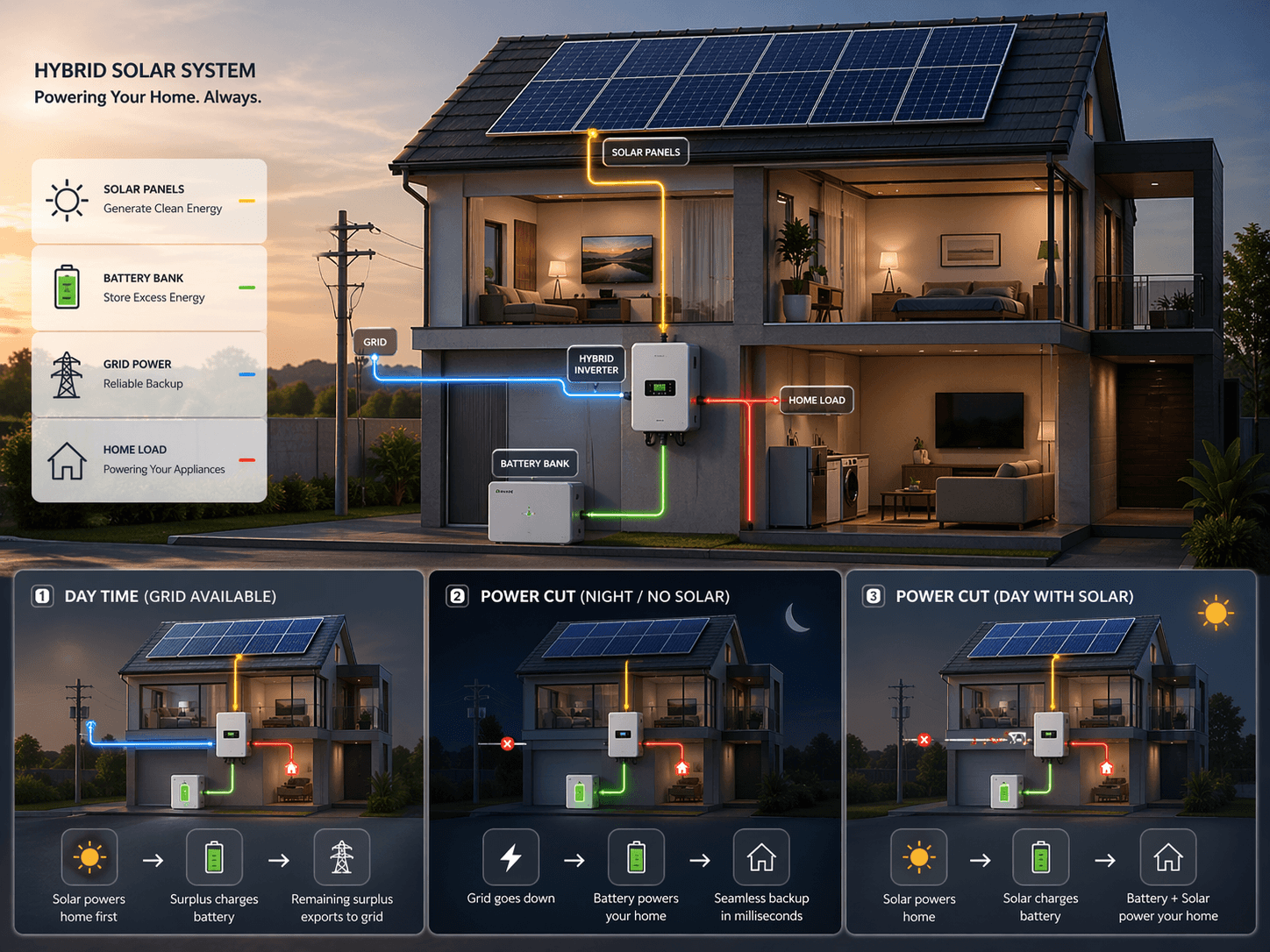
A hybrid inverter solves the power cut problem by managing three sources simultaneously**: solar panels, a battery bank, and the grid.**
Solar panels power your home first
Surplus energy charges the battery
Remaining surplus exports to the grid via net metering
The hybrid inverter switches to battery within milliseconds
Your lights, fans, and essential appliances keep running
If solar is also active, panels continue charging the battery and running your load simultaneously
The key hardware difference is that a hybrid inverter has built-in battery charging logic and an automatic transfer switch. An on-grid inverter has neither.
Read the detailed comparison of on-grid vs off-grid vs hybrid solar systems to understand all three options before deciding.
A 3 kW hybrid system with a 10 kWh lithium battery gives 4 to 6 hours of backup for a typical 2 BHK Indian home.
Here is how to calculate it for your home:
Appliance | Wattage | Hours Used |
4 Fans | 60W x 4 = 240W | 4 to 6 hrs |
6 LED Lights | 10W x 6 = 60W | 4 to 6 hrs |
1 TV | 80W | 2 to 3 hrs |
WiFi Router | 15W | 4 to 6 hrs |
Phone Charging | 20W | 2 hrs |
Total Essential Load | ~415W |
Backup Hours=Battery Capacity (kWh)×0.85Essential Load (kW)Backup Hours=Essential Load (kW)Battery Capacity (kWh)×0.85
For a 10 kWh lithium battery running a 415W load:
10×0.850.415=≈20 hours0.41510×0.85=≈20 hours
In practice, with actual usage spikes and inverter losses, expect 10 to 14 hours from a 10 kWh battery for a light load home.
For a heavier 2 kW load (AC running plus appliances), a 10 kWh battery gives 4 to 5 hours of backup.
Daily Cut Duration | Recommended Battery | Approx Battery Cost |
1 to 2 hours | 5 kWh lithium | ₹60,000 to ₹80,000 |
2 to 4 hours | 10 kWh lithium | ₹1.1 to ₹1.4 lakh |
4 to 6 hours | 15 kWh lithium | ₹1.6 to ₹2 lakh |
6+ hours | 20 kWh+ lithium | ₹2.2 lakh+ |
Hybrid solar costs ₹80,000 to ₹1.5 lakh more than on-grid for the same panel size, primarily because of the battery and upgraded inverter.
Component | On-Grid 3 kW | Hybrid 3 kW |
Solar Panels (3 kW) | ₹60,000 to ₹75,000 | ₹60,000 to ₹75,000 |
On-Grid Inverter | ₹25,000 to ₹35,000 | N/A |
Hybrid Inverter | N/A | ₹45,000 to ₹70,000 |
Battery (10 kWh lithium) | N/A | ₹1.1 to ₹1.4 lakh |
Installation and BOS | ₹20,000 to ₹30,000 | ₹25,000 to ₹35,000 |
Total System Cost | ₹1.1 to ₹1.4 lakh | ₹2.3 to ₹3.2 lakh |
The battery alone accounts for 45 to 50% of a hybrid system's total cost. Lithium iron phosphate (LFP) batteries cost more upfront but last 3,000 to 5,000 cycles versus 500 to 800 cycles for older lead-acid options.
Want to compare panel options before finalizing your system? Read our guide on the best solar panels for home in India and the latest solar panel costs in India 2026.
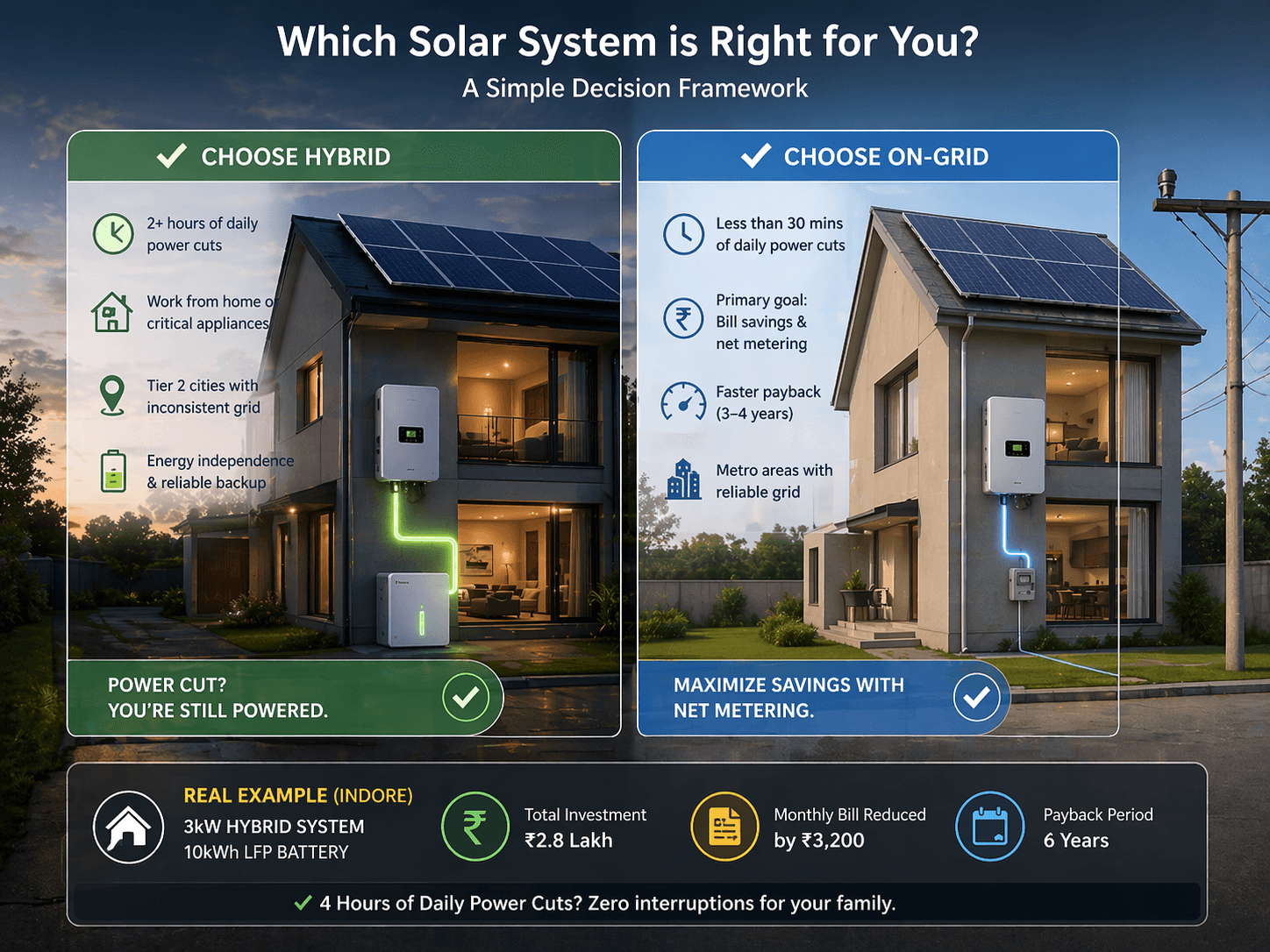
Hybrid solar is worth the extra investment if your area has 2 or more hours of daily power cuts.
Use this framework to decide:
Your area gets 2 to 8 hours of daily power cuts
You work from home or run appliances that cannot tolerate outages
You live in Tier 2 cities like Bhopal, Indore, Nagpur, or Surat where grid reliability is inconsistent
You want energy independence and backup as a long-term asset
Your grid is stable with less than 30 minutes of cuts per day
Your primary goal is bill reduction and net metering income
You want the fastest payback period (on-grid pays back in 3 to 4 years versus 5 to 7 years for hybrid)
You live in metro areas with reliable DISCOM supply
Real example from Indore: A homeowner with a ₹4,500 monthly bill and 4-hour daily cuts chose a 3 kW hybrid system with a 10 kWh LFP battery at ₹2.8 lakh total.
His essential load runs uninterrupted during cuts. Bill dropped by ₹3,200 per month. Payback period: 6 years. But zero power cuts for 4 hours daily made the premium worthwhile for his family.
See how solar reduces electricity bills across Gujarat homes: reduce electricity bill with solar in Gujarat.
For a deeper look at payback calculations, read our guide on solar payback period for Indian homes in 2026.
Yes, you can upgrade an existing on-grid system to hybrid, but you will need to replace the inverter and add a battery bank.
Your existing solar panels, mounting structure, and DC wiring are compatible. The inverter is the part that cannot be upgraded; it must be replaced.
Replace on-grid inverter with a hybrid inverter: ₹40,000 to ₹70,000
Add lithium battery bank (10 kWh): ₹1.1 to ₹1.4 lakh
Rewiring and integration: ₹10,000 to ₹20,000
Total upgrade cost: ₹1.5 to ₹1.9 lakh for a 3 to 5 kW system
If you are starting fresh and evaluating solar for the first time, read our complete guide on how to get solar panels for your home in India.
Gujarat homeowners can also check the latest solar subsidy available in Gujarat 2026 before budgeting.
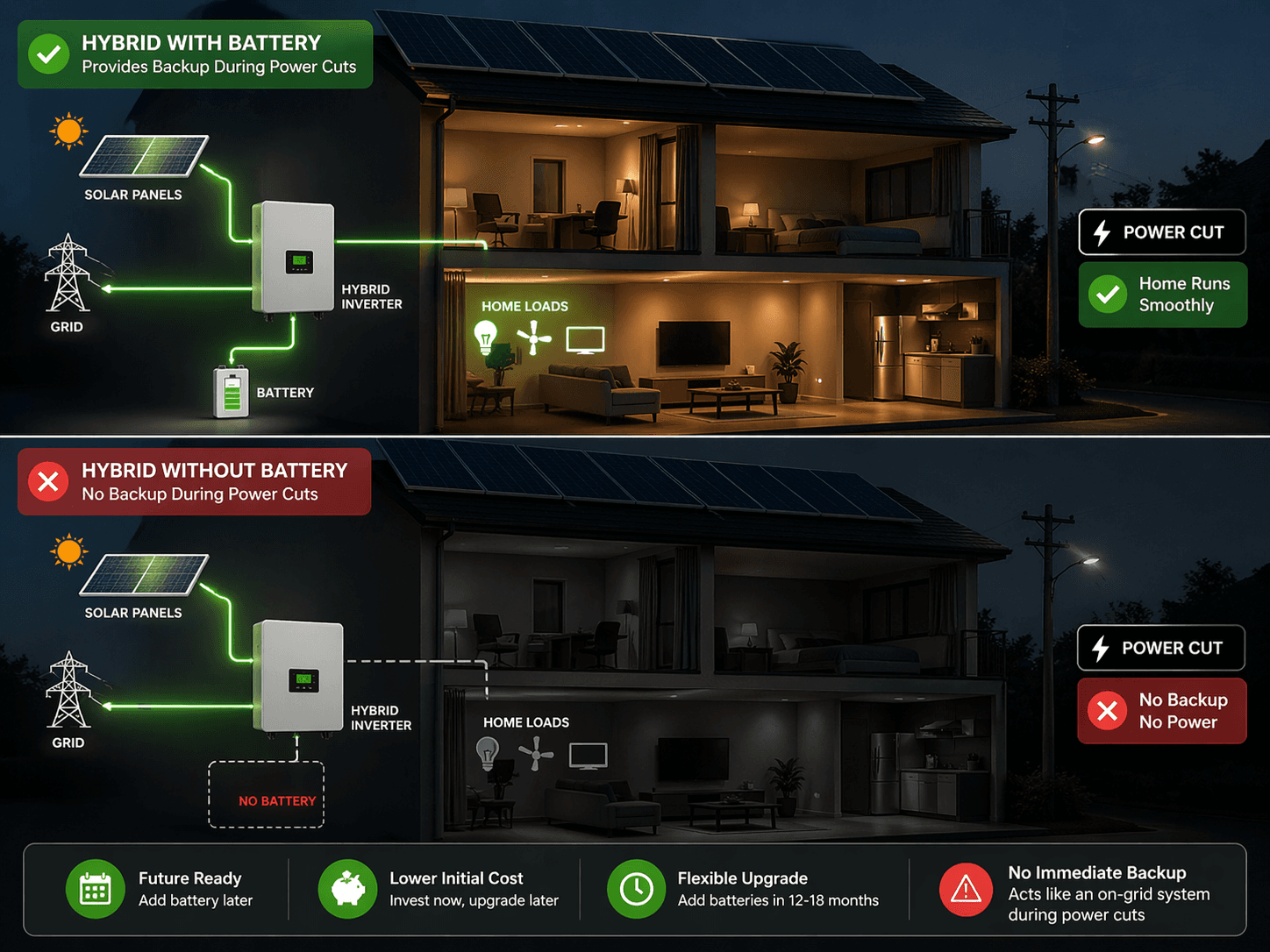
A hybrid inverter without a battery acts exactly like an on-grid inverter during power cuts.
Some vendors sell "hybrid-ready" inverters without the battery to lower upfront cost. This gives you the flexibility to add batteries later but provides zero backup today.
You want to buy the hybrid inverter now and add batteries in 12 to 18 months
Your budget is tight today but you want future-readiness
Your power cuts are infrequent now but increasing
You need backup immediately
A vendor is upselling you a hybrid inverter label without explaining that no battery means no backup
Before committing to any configuration, read our balanced look at the advantages and limitations of solar energy to set the right expectations.
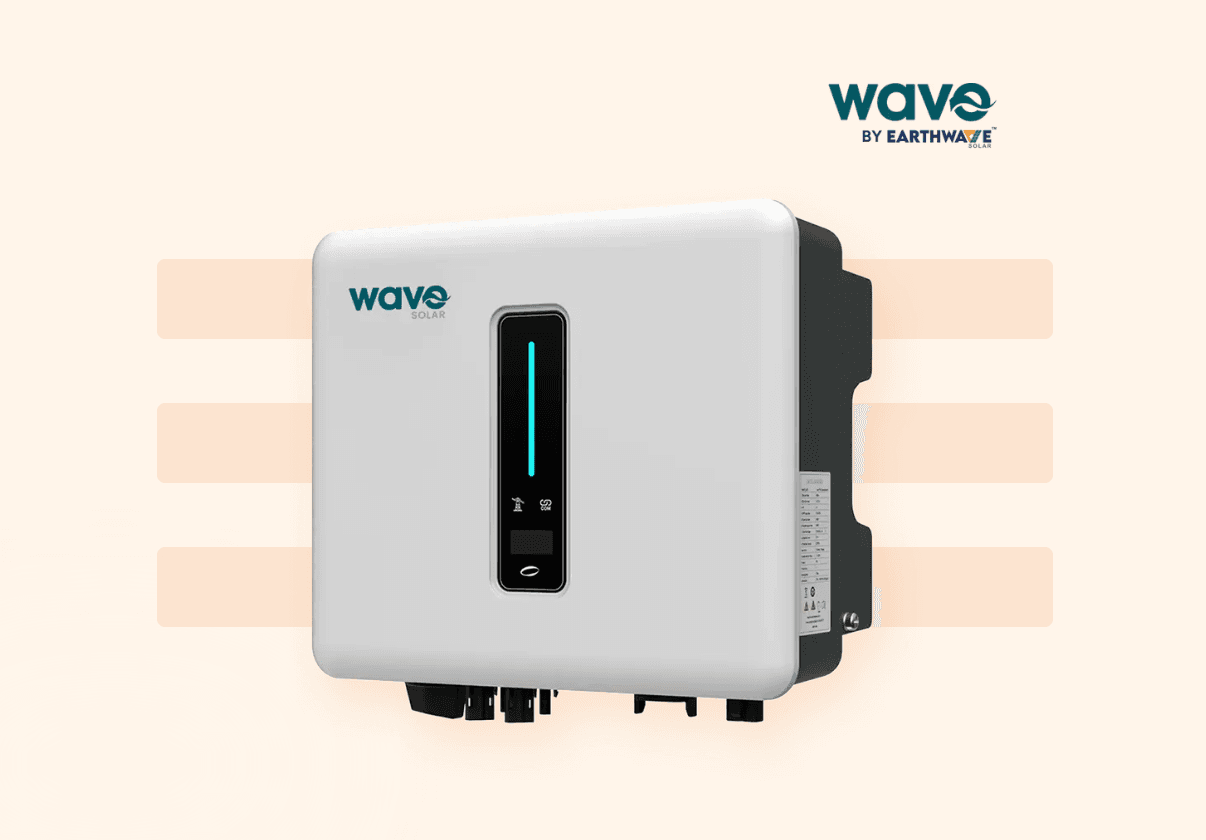
Earthwave Solar's Wave On Grid inverter range (2.5 kW to 125 kW) delivers 97% efficiency with built-in battery management and a 10-year warranty.
The Wave inverter line supports both string and micro-inverter configurations, making it suitable for 1 BHK apartments all the way to large bungalows and commercial rooftops.
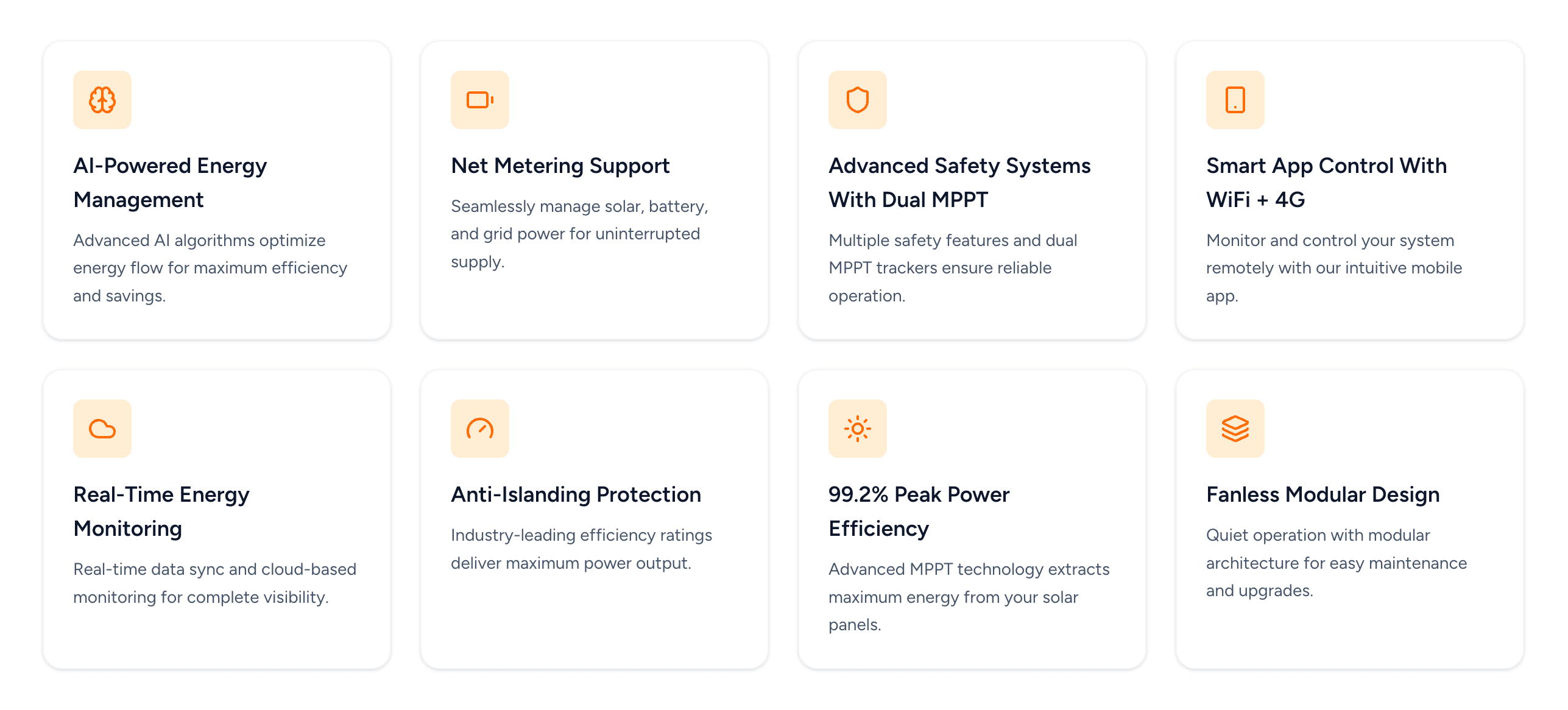
Smart monitoring via smartphone gives you real-time visibility of generation, battery state, and grid consumption.
Key specifications relevant for homeowners:
Efficiency:
Up to 97%
Capacity range:
2.5 kW to 125 kW
Battery compatibility:
Lithium and lead-acid supported
Monitoring:
Real-time smartphone dashboard
Warranty:
10 years on inverter
Download the full Wave inverter technical datasheets to compare models before your consultation.
Also check out our full guide on the best solar inverter brands in India to understand where Wave stands in the competitive landscape.
Compare Wave inverters against other leading brands: Wave Inverters vs Leading Brands in India.

Earthwave Solar is a full-spectrum EPC company that handles your entire hybrid installation from site assessment to handover, with no subcontracting.
Their process for residential hybrid solar:
Free Consultation:
Load analysis and power cut pattern assessment to size battery correctly
Site Visit:
Roof or ground space evaluation, shading analysis, and existing wiring check
System Design:
Custom hybrid design with exact panel count, battery size, and inverter model
Transparent Quote:
Component-level pricing, no hidden charges
Installation:
Certified technicians handle structure, wiring, battery integration, and inverter setup
Handover and Monitoring:
Smart dashboard activation, full usage walkthrough
Earthwave operates across Gujarat (Surat HQ) and Madhya Pradesh (Bhopal) with expansion into North India. They have delivered ground-mount and rooftop projects ranging from residential apartments to 80 MW utility-scale systems.
Explore their residential solar solutions and hybrid inverter service page for full details.
Living in an apartment? Read the complete apartment solar installation guide to understand what is possible for your housing society.
Already planning a rooftop install? Read the complete guide on how to plan rooftop solar for your home.
No. On-grid solar shuts down completely during grid outages. This is a mandatory anti-islanding safety feature required by Indian grid regulations, not a defect. If you need power during cuts, you need a hybrid or off-grid system with battery storage.
With a 10 kWh lithium battery running essential loads of 400 to 500W (fans, lights, TV, WiFi), you get 10 to 14 hours of backup. If you run heavier loads like an AC (1.5 kW), the same battery lasts 5 to 6 hours. Match battery size to your average cut duration and essential load.
A 3 kW hybrid solar system with a 10 kWh lithium battery costs between ₹2.3 lakh and ₹3.2 lakh fully installed. The battery alone accounts for ₹1.1 to ₹1.4 lakh. On-grid at the same capacity costs ₹1.1 to ₹1.4 lakh without battery.
You cannot simply plug a battery into an on-grid inverter. You need to replace the on-grid inverter with a hybrid inverter and then add a compatible battery bank. Total upgrade cost ranges from ₹1.5 to ₹1.9 lakh for a 3 to 5 kW system. Your existing panels and wiring remain usable.
Lithium iron phosphate (LFP) batteries are the better choice for Indian home use in 2026. They last 3,000 to 5,000 cycles versus 500 to 800 for lead-acid, require zero maintenance, charge faster, and perform better in high temperatures. They cost 2 to 2.5x more upfront but deliver a lower total cost over 10 years.
If you get daily power cuts and are comparing quotes right now, the answer depends on your specific load, cut hours, and budget.
A 15-minute site assessment by a certified engineer gives you exact numbers without guesswork.
Earthwave Solar offers a free home visit and a custom hybrid vs on-grid cost report for your location.
Book Your Free Consultation with Earthwave Solar
Gujarat:
+91 90336 07212
Madhya Pradesh:
+91 90336 02156
Email:
Website:
FAQS
Can't find the answer you're looking for? Our team is here to help.
SUBSCRIBE NEWSLETTER
Switching to solar is easier than you think. Let us guide you to cleaner, more affordable energy.
