industrial solar efficiency
Is Solar Power Efficient for Industrial Machinery?
2026-04-01T00:00:00.000Z•8
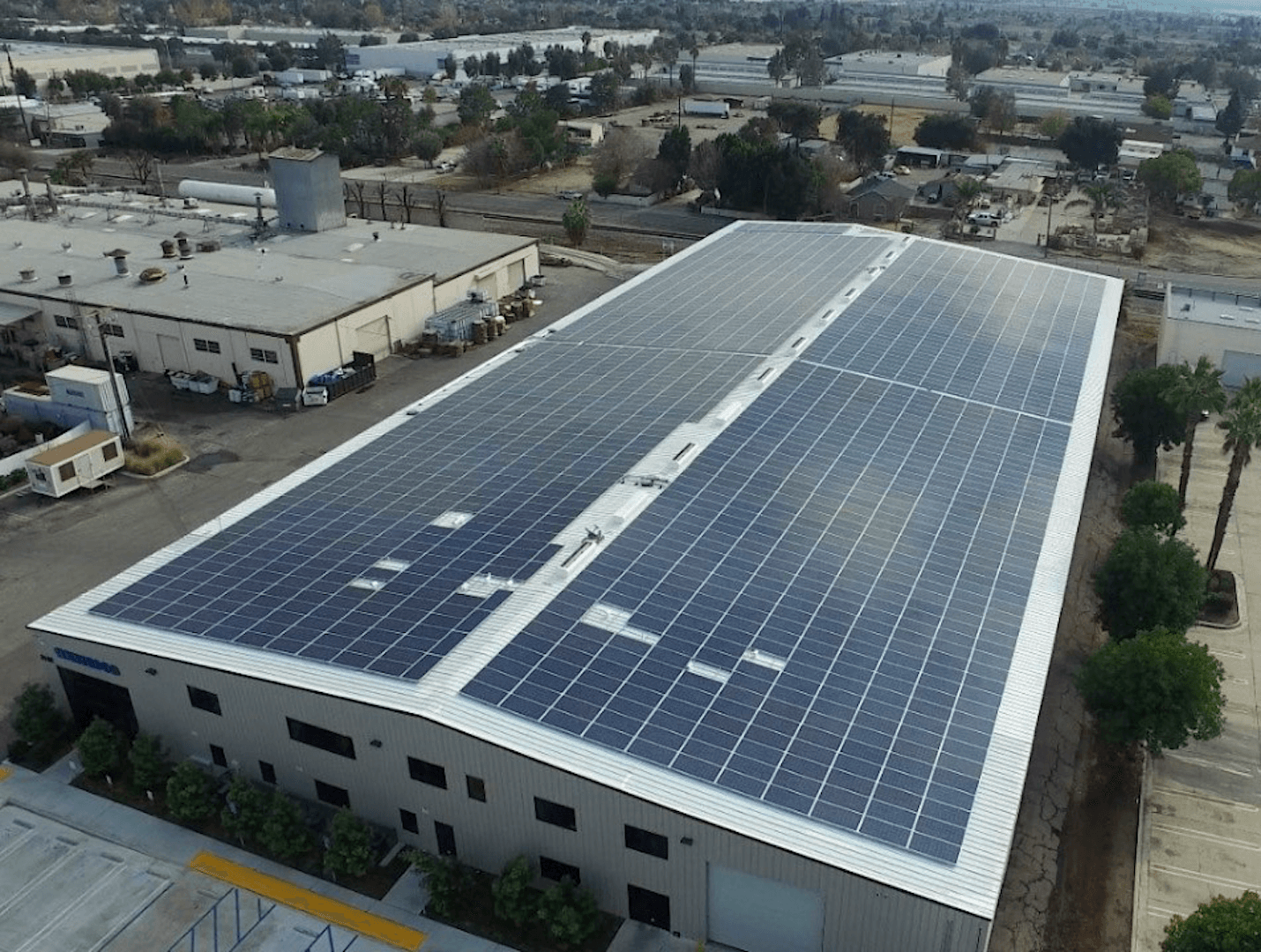
Yes, solar can power heavy industrial machinery.
When a system is correctly sized and designed with 3-phase on-grid architecture, it can meet 70% to 90% of daytime energy demand for motors, compressors, hydraulic presses, and conveyor systems.
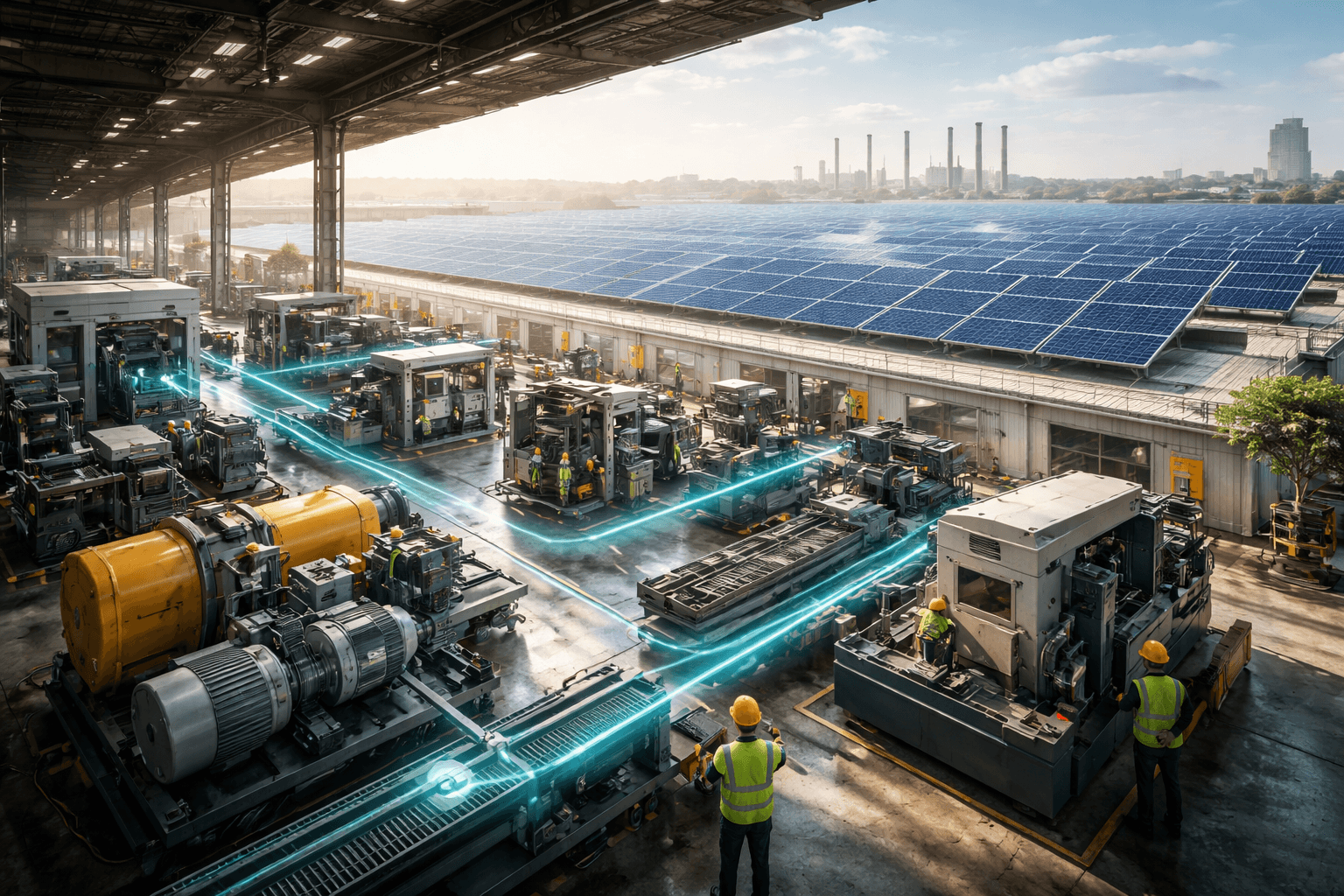
Solar directly powers high-load machines when system kW capacity matches your actual connected load
Industrial electricity tariffs in India range from ₹8 to ₹16 per unit; solar locks in effective cost at under ₹0.50 per unit post payback
Payback period for industrial solar in India: 3 to 6 years, with 25+ years of system life. Learn how
on-grid vs off-grid vs hybrid solar
architectures compare before you decide
40% accelerated depreciation benefit in Year 1 reduces effective project cost by 15% to 20%
Textile mills, steel units, chemical plants, and auto component factories across Gujarat, Pune, and Coimbatore are already running on solar
Industrial electricity costs in India have risen 8% to 12% annually over the last decade, and this trend is not stopping.
For a plant spending ₹10 to ₹50 lakhs on electricity every month, that annual tariff hike compounds into crores of lost profit over five years.
Grid instability adds to this: unplanned outages directly disrupt production schedules, spoil material in process, and waste machine startup cycles.
The question factory owners are now asking is not "should we go solar?" It is "can solar actually handle our machine load?" The answer is yes, with the right engineering behind it.
See how factories are cutting power costs by 40% with the right solar setup.
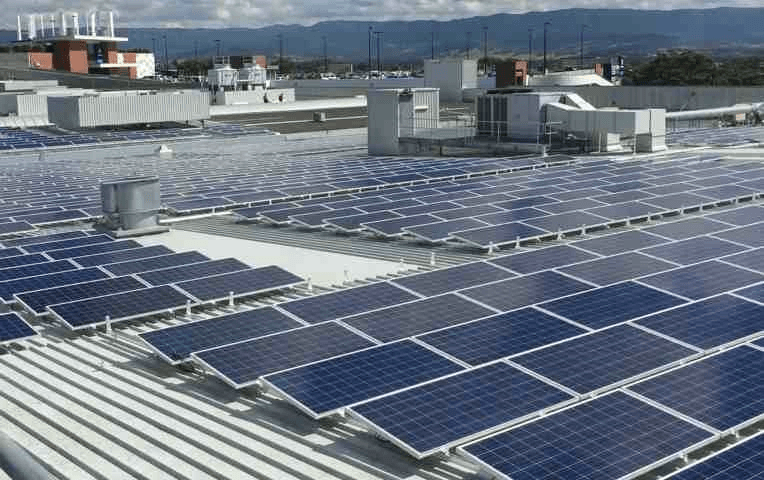
Heavy industrial machinery runs on 3-phase power with high starting currents, and solar systems are fully capable of supporting this when sized correctly.
High-load machines do not consume the same power every second. They draw surge current at startup (often 5 to 7 times the running current) and then stabilize.
A properly engineered solar system accounts for both the peak surge demand and the steady-state running load.
Common high-load equipment in Indian factories:
3-phase induction motors
(ranging from 15 HP to 200 HP)
Industrial compressors
(air, hydraulic, refrigeration)
Conveyor systems and material handling equipment
CNC machines, presses, and stamping units
Chillers, cooling towers, and HVAC systems
Welding machines and furnaces in metal processing units
Each of these can be powered by solar during daylight hours with the right inverter and panel configuration.
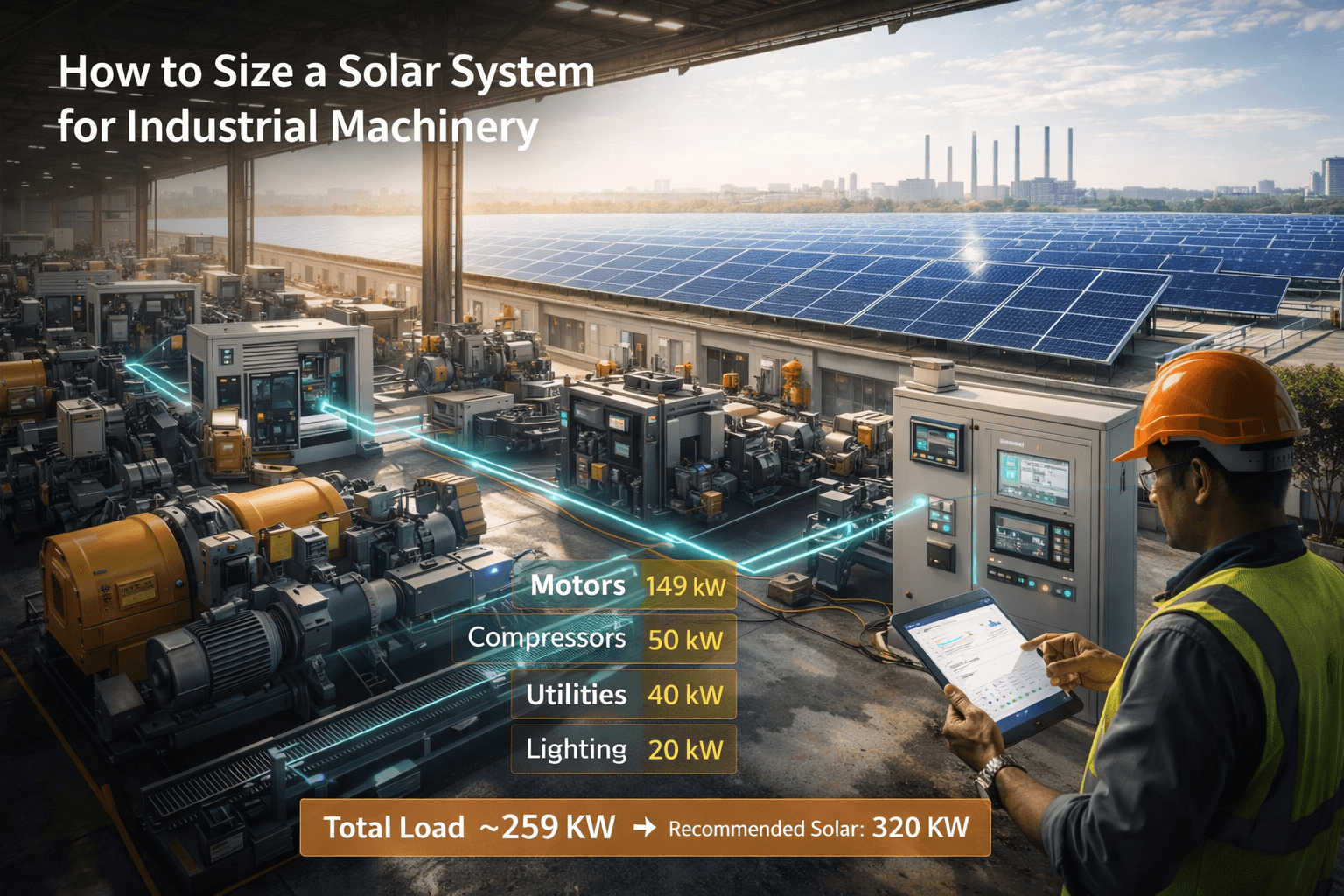
Get the load analysis right first. System sizing is the most critical step and the one most factory owners skip.
Follow this four-step process before you speak to any EPC vendor:
List all connected loads
- Record every machine, motor, and utility equipment with its rated kW or HP
Identify running hours
- Map which machines run between 6 AM and 6 PM (peak solar generation hours)
Calculate total daytime load
- Add up the kW of all simultaneously running equipment
Add a 20% buffer
- For surge current, future expansion, and conversion losses
Quick conversion to remember: 1 HP = 0.746 kW
Before finalizing your system design, review our solar EPC company checklist to avoid costly mistakes during procurement.
If your factory runs the following during daytime:
10 motors of 20 HP each = 149 kW
Compressors: 50 kW
Conveyors and utilities: 40 kW
Lighting, fans, office load: 20 kW
Total running load = 259 kW. Add 20% buffer. You need a 310 kW to 330 kW solar system.
A system in this range uses roughly 700 to 750 solar panels of 440 Wp each and multiple 25 kW three-phase string inverters in parallel configuration.
A 3-phase on-grid solar system is the standard and most cost-effective architecture for industrial machinery in India.
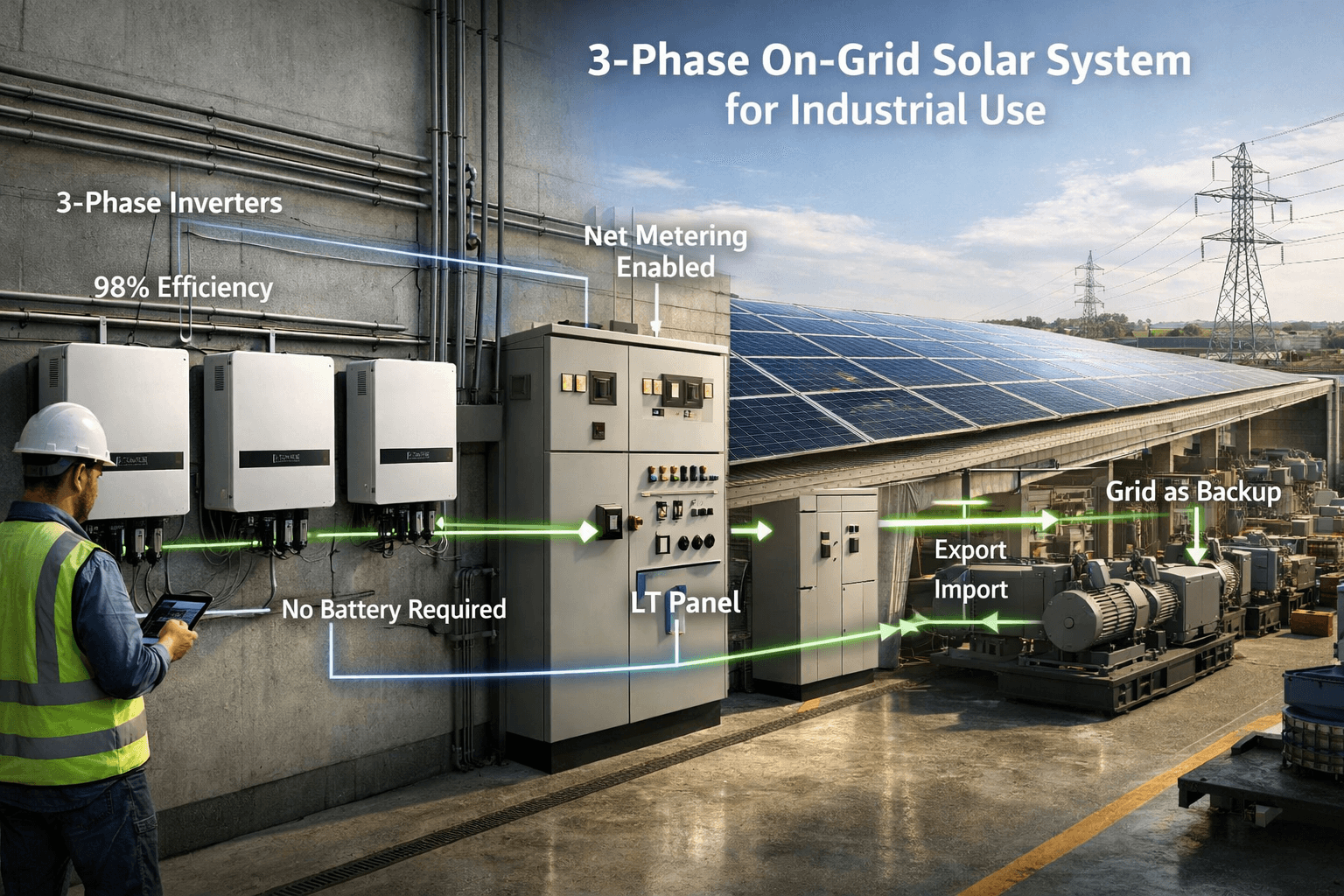
On-grid systems use the grid as a virtual battery through net metering
They eliminate the cost of physical battery storage (which adds 30% to 40% to project cost)
Any surplus generation exported to the grid earns credits on your electricity bill
Critical night-time and monsoon loads continue on grid power seamlessly
For a full comparison of system types, read our guide on on-grid vs off-grid vs hybrid solar before finalizing your architecture.
Your inverter choice directly impacts reliability:
Use
three-phase string inverters
rated at 5 kW to 25 kW per unit (multiple units in parallel for large systems)
Look for
98%+ conversion efficiency
to minimize losses at high load
MPPT (Maximum Power Point Tracking)
ensures maximum output even during partial shading
IP65 rating
is minimum for industrial rooftop environments
The Earthwave Solar EWOS series (5 kW to 25 kW) delivers 98.6% maximum efficiency and supports 2 to 3 independent MPPT inputs, making it suitable for large industrial rooftops with multiple array orientations.
See how Wave inverters compare against leading brands on efficiency and reliability.
Also read: How net metering in Gujarat works and what credits your plant can earn on surplus generation.
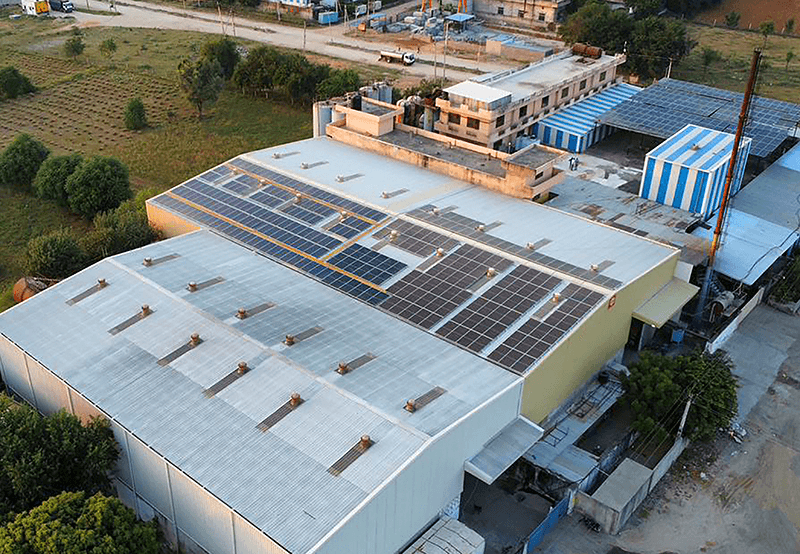
A 500 kW industrial solar installation generates annual savings of ₹45 lakhs to ₹90 lakhs, depending on your current tariff rate.
Parameter | Value |
System size | 500 kW |
Estimated project cost | ₹1.75 Cr to ₹2.5 Cr |
Monthly electricity bill (current) | ₹12 lakhs |
Monthly savings with solar | ₹7.2 lakhs (60% reduction) |
Annual savings | ₹86.4 lakhs |
Payback period | 2.5 to 3.5 years |
System lifespan | 25+ years |
Post-payback power cost | Under ₹0.50 per unit |
For a facility spending ₹2 crore annually on electricity, solar can save ₹60 lakhs to ₹1.4 crore per year.
Want to understand exactly how long your investment takes to recover? Read our detailed guide on industrial solar payback period in India.
You can also explore our completed solar projects to see real installations across Gujarat and beyond.
The government-backed financial incentives for industrial solar make the effective cost significantly lower than the sticker price.
40% Accelerated Depreciation (AD):
Claim in Year 1 on the full system cost. On a ₹2 crore installation, this saves ₹20 to ₹25 lakhs in tax at standard corporate rates. Full breakdown in our guide on
GST reduction on solar equipment:
GST on renewable energy equipment was cut from 12% to 5%, directly reducing procurement cost
Net Metering:
Surplus units exported to the grid are credited against your bill, ensuring zero wastage of generated power
Annual ROI:
Most industrial solar projects in India deliver 18% to 30% annual ROI
Not sure whether to invest upfront or go asset-light? Compare your options in our CAPEX vs RESCO solar financing guide.
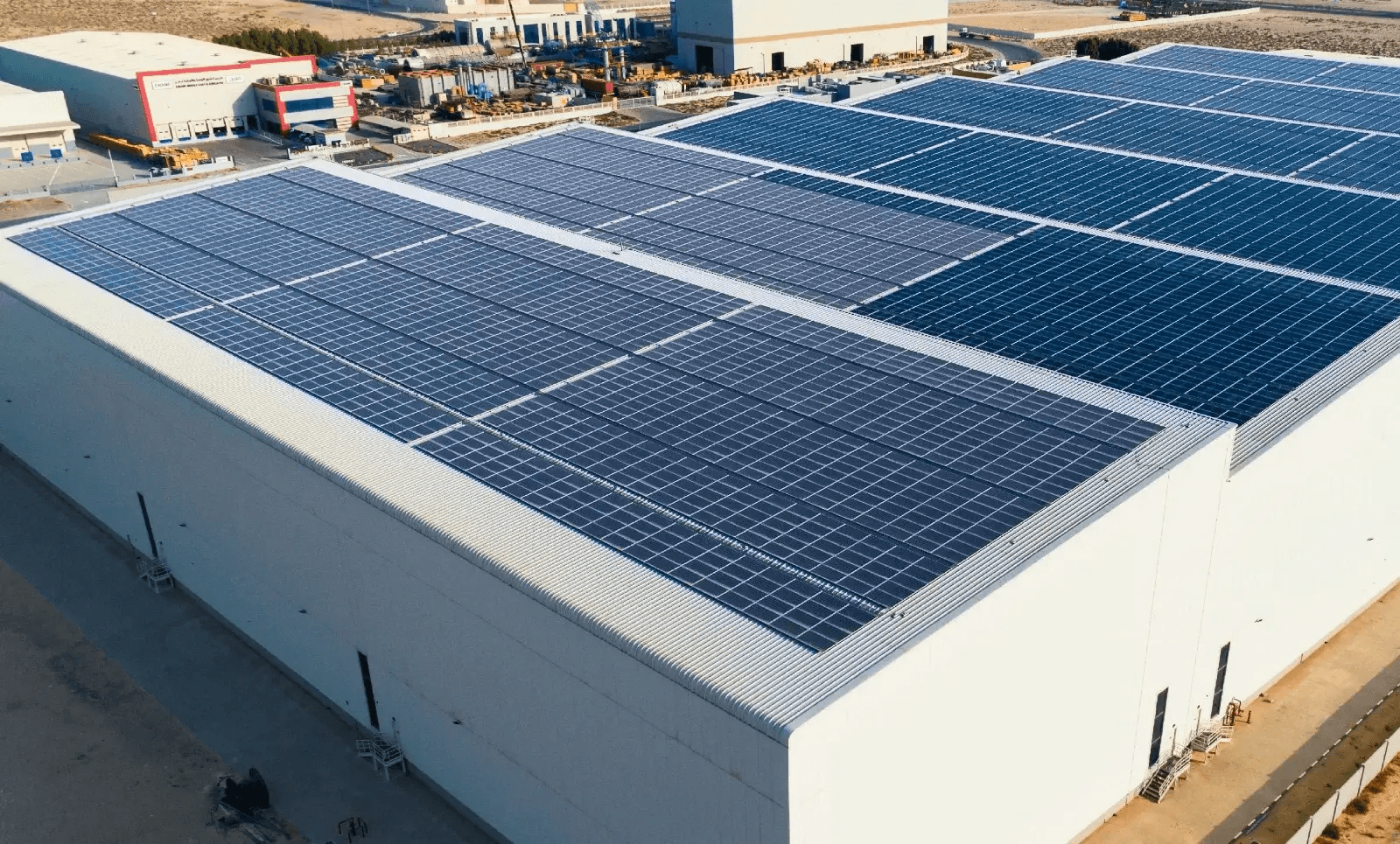
Factories with high daytime energy consumption and predictable load profiles get the fastest payback from solar.
Top sectors by solar ROI in India:
Textile and garment manufacturing
(Surat, Ahmedabad): Continuous day-shift operations align with peak solar hours. Read the detailed case study on
Steel fabrication and metal processing:
Peak demand during daylight reduces grid dependency by 60% to 70%
Chemical and pharmaceutical plants:
Continuous process loads with stable demand profiles achieve fastest paybacks
Auto component manufacturing
(Pune, Coimbatore): Multi-shift operations maximize solar utilization
Food processing and cold storage:
Refrigeration loads match solar output cycles, maximizing self-consumption
A solar system built on wrong assumptions fails to perform. Verify these four things before signing any EPC contract.
Roof structural capacity
- Industrial buildings constructed before 2010 may need structural assessment. Read our comparison of
rooftop vs ground-mounted solar for industrial units
to understand your best option
Sanctioned load and connected load gap
- Solar sizing must be based on connected load, not just sanctioned load from the utility
Shadow-free roof area
- Rule of thumb: 1 kW of solar requires approximately 8 to 10 sq ft of shadow-free roof
Grid compatibility
- Confirm your DISCOM allows net metering at your contracted demand level and check the application timeline (typically 4 to 8 weeks)
Before you sign anything, use our solar EPC company checklist to evaluate vendors properly.
Yes. A 3-phase on-grid solar system feeds power into your existing 3-phase electrical infrastructure. Your motors, compressors, and machines draw from this combined solar and grid supply seamlessly, without any modification to the equipment itself.
The grid automatically supplements your power supply in real time. On-grid systems switch between solar and grid power within milliseconds. Production does not stop; you simply draw more from the grid on low-solar days and less on high-solar days.
A 500 kW system requires approximately 40,000 to 50,000 sq ft (about 4,000 to 4,500 sq m) of shadow-free roof or ground area. Most large industrial sheds and warehouses easily accommodate this.
Yes, with a practical note. Solar generates power from roughly 6 AM to 6 PM. Your first shift runs almost entirely on solar. The second shift draws from the grid. The combined effect still reduces your monthly bill by 40% to 60% depending on shift load distribution.
Factories spending ₹2 lakhs or more per month on electricity are strong candidates for solar. Below that threshold, the project size becomes too small to attract competitive EPC pricing. Most high-ROI industrial solar projects in India start at 100 kW system size.
Your electricity bill carries a number that solar can cut permanently.
The technical feasibility for running heavy industrial machinery on solar is proven, and the financial case in India's current tariff environment is compelling.
Get a free load analysis and system sizing estimate for your facility.
Share your monthly electricity bill and connected load details with the Earthwave Solar team, and receive a plant-specific solar assessment within 48 hours.
FAQS
Can't find the answer you're looking for? Our team is here to help.
SUBSCRIBE NEWSLETTER
Switching to solar is easier than you think. Let us guide you to cleaner, more affordable energy.
