Solar mounting structure ROI
Best Solar Mounting Structure ROI in India (2026)
2026-04-22T00:00:00.000Z•8
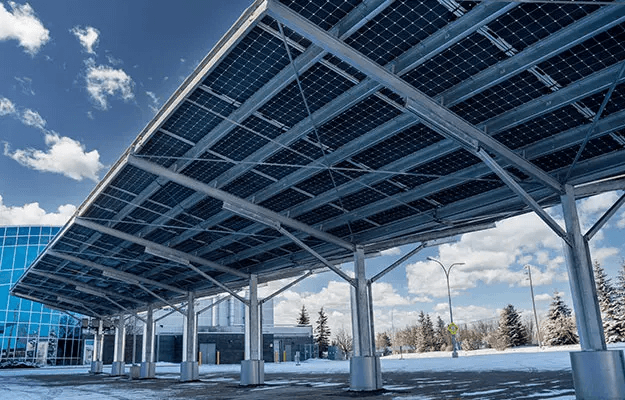
Fixed mounting structures deliver the best ROI for most rooftop and commercial solar projects in India.
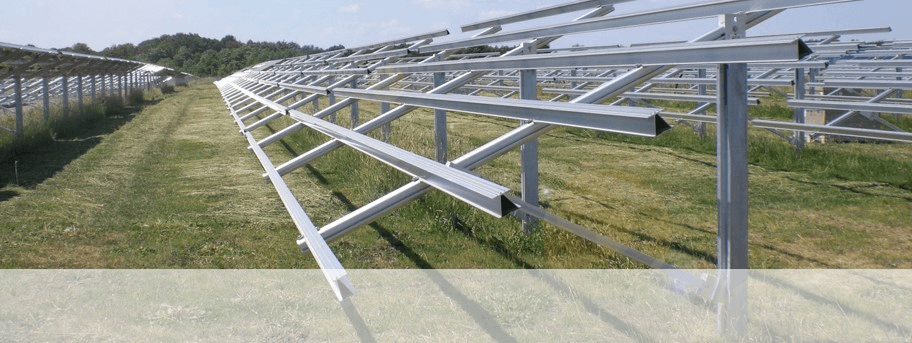
For utility-scale ground-mounted systems with high land availability, single-axis trackers outperform both on long-term energy yield and lifecycle cost efficiency.
Fixed structures cost ₹60 to ₹100 per watt
and suit most rooftop and commercial projects
Adjustable tilt adds only 1.5 to 3% more energy over fixed, rarely worth the extra cost
Single-axis trackers generate 15 to 23% higher energy yield than fixed tilt in India
Trackers reduce LCOE by up to 9% for large ground-mounted projects
Structure choice directly affects your
, maintenance budget, and on-grid solar system performance
Your solar structure is not just a support frame. It determines how much sunlight your panels capture every hour across 25 years.
A poorly chosen solar mounting system costs you in three ways:
Lower energy generation, which reduces annual savings
Higher maintenance costs over the project life
Suboptimal land use, which increases effective cost per unit
Your structure choice is often a bigger ROI lever than choosing between panel brands.
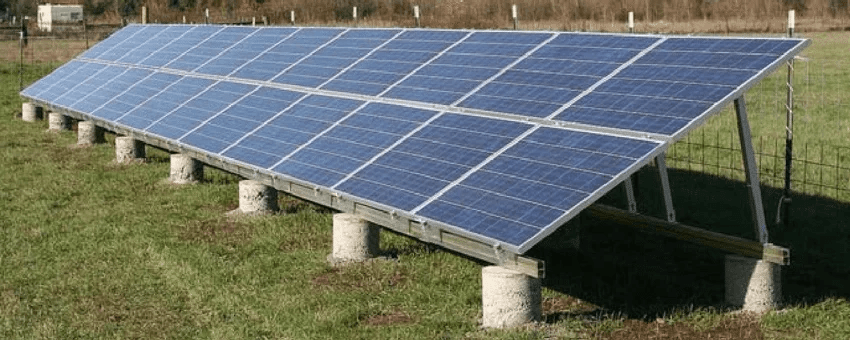
Fixed tilt is the most widely deployed solar structure across India.
Panels sit at a pre-set angle, typically matching the site's latitude, and stay there for the system's entire life.
Best for: Rooftop solar systems, commercial rooftops, budget-focused industrial projects
Key numbers:
Solar mounting structure price
: ₹60 to ₹100 per watt for rooftop
fixed tilt: ₹100 to ₹150 per watt
No moving parts, lowest maintenance cost
Payback period: 3 to 4 years for residential, faster for commercial
Learn how payback is calculated: Solar Payback Period India 2026
Practical example: A 170 kW industrial rooftop system in Gujarat (similar to Earthwave's Pari Textile project) on fixed tilt delivers consistent savings with zero mechanical maintenance over 25 years.
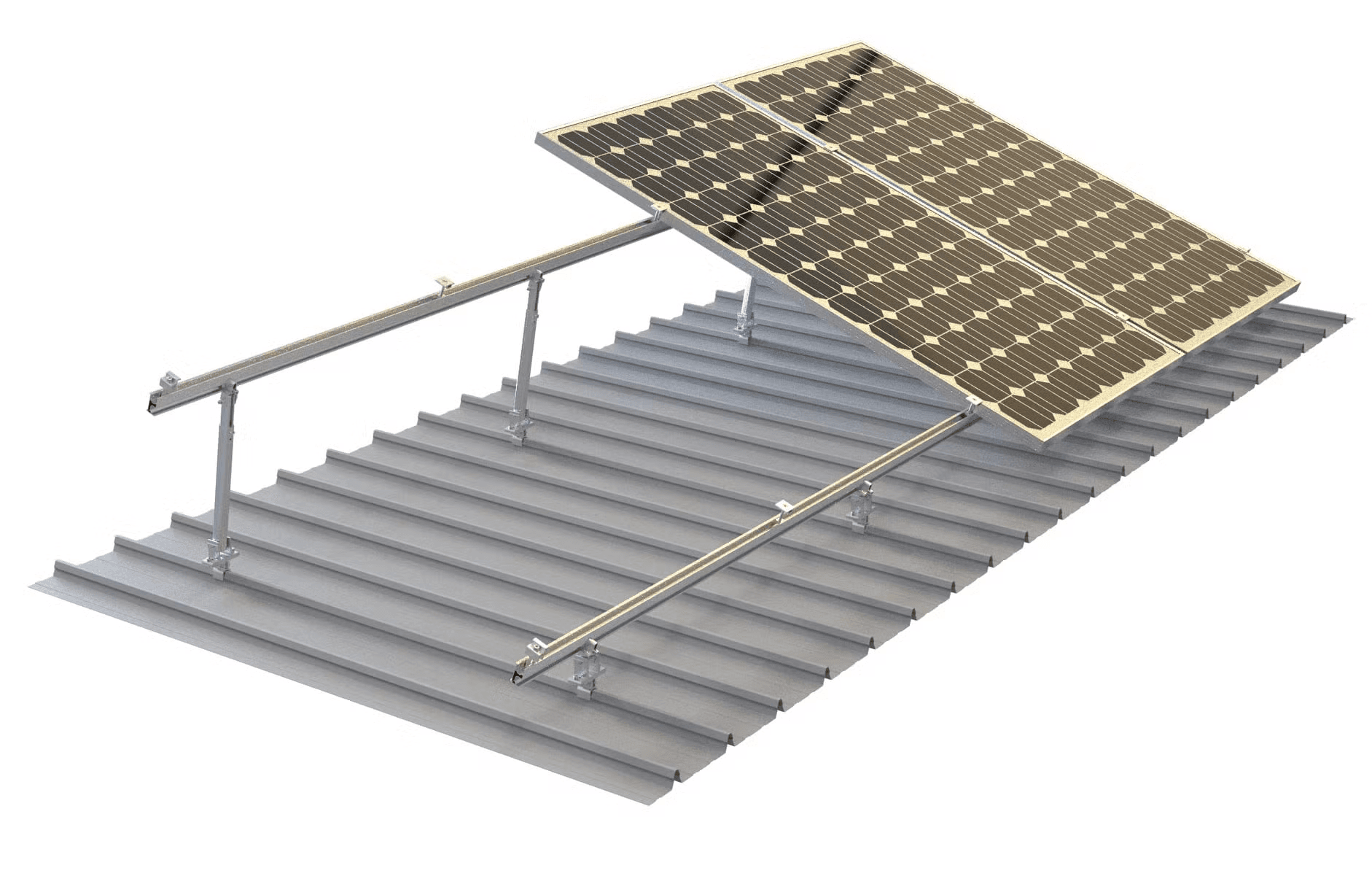
Adjustable structures let you manually change the panel angle seasonally, usually twice a year.
The logic is simple. India's sun angle shifts between summer and winter. Adjusting the tilt twice a year theoretically captures more irradiance.
Energy gain vs. fixed tilt is only 1.5 to 3%
Labor cost for seasonal adjustment often offsets the marginal energy gain
Higher capex and opex than fixed tilt
No automation, no real-time optimization
Best for: Remote agricultural solar setups or specific cases where every unit of energy matters and labor cost is minimal.
For most commercial and industrial decision-makers, adjustable tilt rarely justifies its premium over fixed. The ROI math simply does not work for most Indian projects.
See a full cost breakdown before you decide: Solar Panel Cost in India 2026
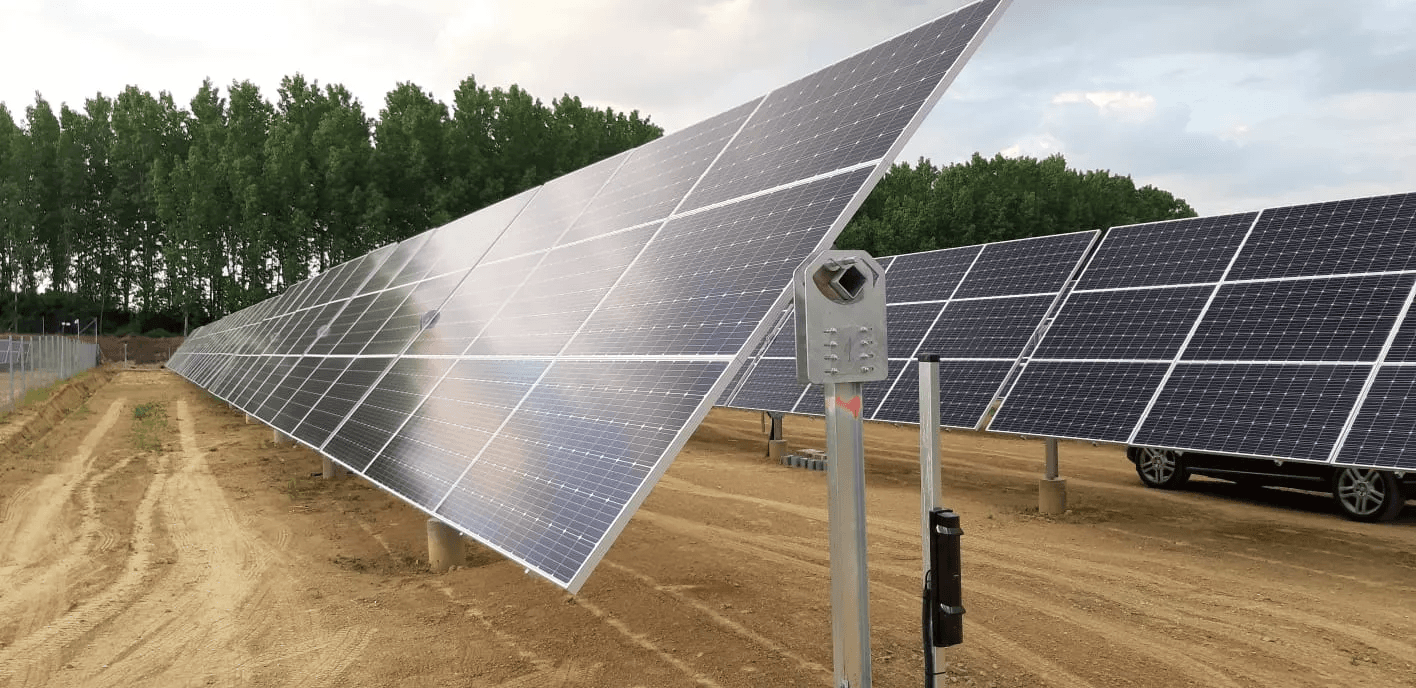
Solar trackers follow the sun's movement throughout the day, keeping panels at the optimal angle continuously.
Moves east to west, following the daily solar path
Increases energy yield by 15 to 23% vs. fixed tilt in India
Achieves 3 to 5 percentage points higher Capacity Utilisation Factor
Can deliver the same CUF with 14 to 18% lower installed DC capacity
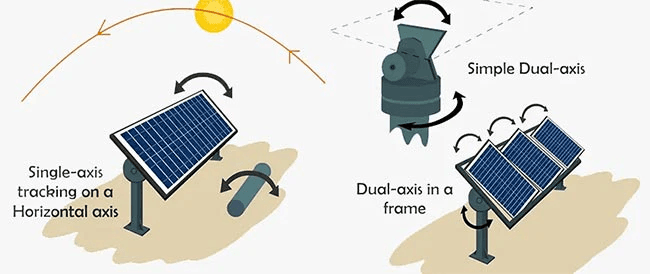
Adjusts both tilt and azimuth
Boosts yield by 35 to 40% in optimal conditions
Highest capital cost, highest maintenance complexity
Best suited for southern Indian states with high Direct Normal Irradiance
Best for: Utility-scale ground-mounted projects in high-DNI zones like Rajasthan, Andhra Pradesh, and Madhya Pradesh
Learn how Earthwave designs and delivers ground-mounted solar projects: Ground Mount Solar Solutions
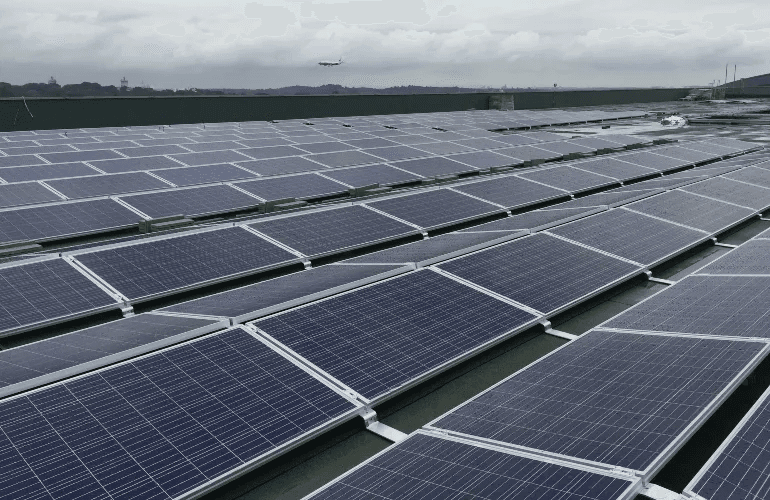
E-W racking sits panels back-to-back at low tilt angles facing east and west instead of south.
Fits 30 to 40% more capacity on the same rooftop area
Reduces structural wind load, which lowers foundation cost
Generates more morning and evening output, which matches commercial load profiles
Slightly lower peak yield per panel but significantly higher total system output per sqft
Best for:
Large flat RCC rooftops, commercial complexes, warehouses
See how commercial rooftop systems are designed for maximum output: Commercial Solar Solutions
Parameter | Fixed Tilt | Adjustable Tilt | Single-Axis Tracker |
Structure Cost (per watt) | ₹1.5 to ₹3.5 | ₹2 to ₹4 | ₹4 to ₹7+ |
Energy Gain vs. Fixed | Baseline | +1.5 to 3% | +15 to 23% |
Maintenance Complexity | Low | Medium | Medium to High |
Moving Parts | None | Manual | Motorized |
Best Project Type | Rooftop, C&I | Agricultural | Utility ground-mount |
Payback Period | Fastest | Moderate | Longer upfront, better lifetime ROI |
Land Requirement | Compact | Compact | Requires inter-row spacing |
For a deeper look at rooftop versus ground-mount economics: Rooftop vs Ground Mounted Solar for Industrial Use
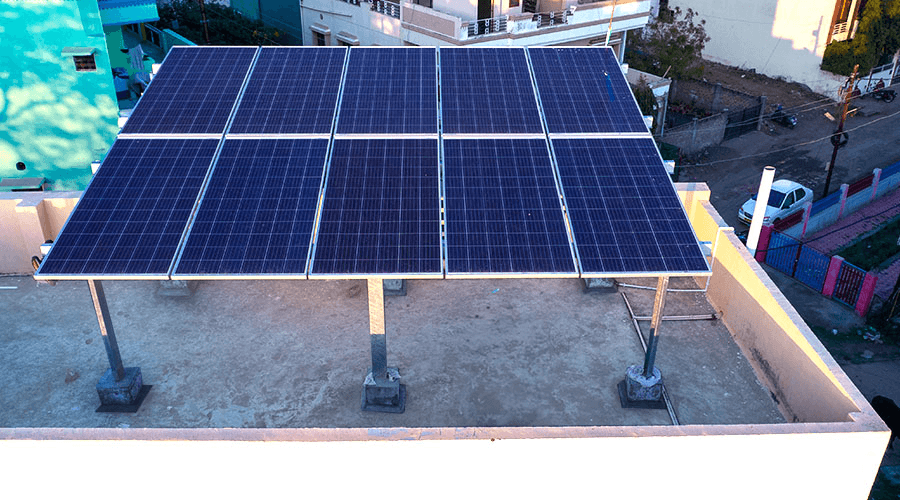
Fixed tilt wins every time for residential projects.
The roof area is limited, the load is predictable, and there is no spare space to install tracker mechanisms.
A well-designed fixed tilt rooftop solar system in India delivers 3 to 4 year payback for most homeowners before enjoying free electricity for decades.
Trackers on a residential rooftop add unnecessary complexity and cost with marginal return.
Planning a solar system for your apartment or housing society? Apartment Solar Installation Guide
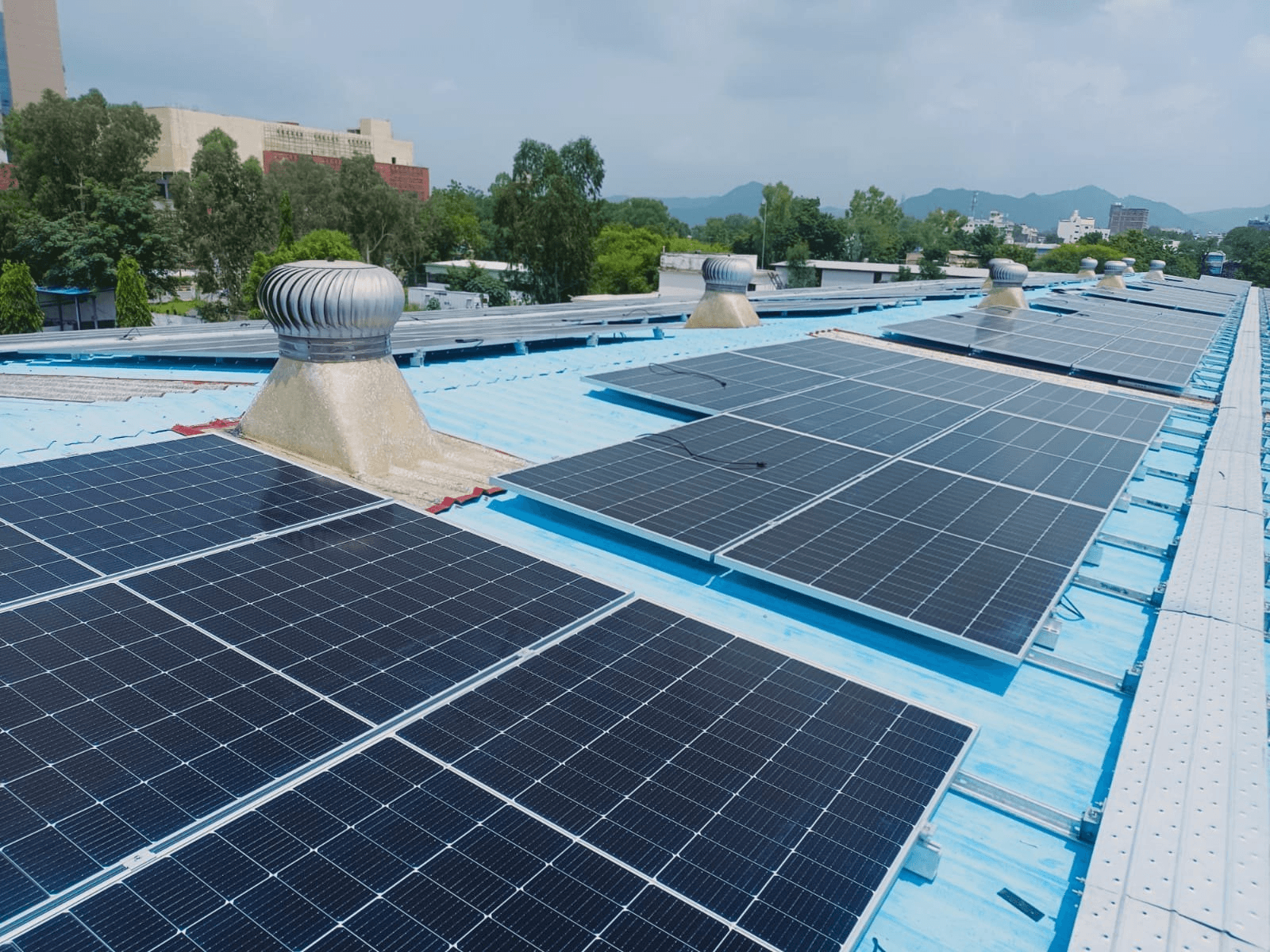
Fixed tilt is the dominant choice, and the right one for most C&I sites.
A 120 kW to 500 kW factory or warehouse rooftop system on fixed galvanized steel structures is cheaper to install, faster to commission, and requires virtually no mechanical upkeep.
For C&I projects, the primary ROI driver is reducing your per-unit power cost, not chasing marginal yield gains.
Fixed tilt with a high-efficiency
does exactly that, reducing operational power costs by 30 to 40%.
See how factories in Gujarat cut power costs by up to 40%:
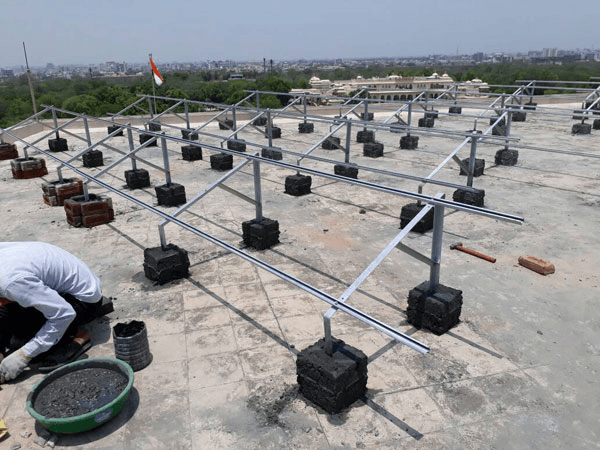
Single-axis trackers deliver better long-term ROI for utility and large ground-mount projects.
If you have land, high DNI, and a long investment horizon, trackers make financial sense.
The 15 to 23% higher energy yield translates to higher generation revenue per rupee of capex over a 25-year project life.
The key condition is land availability. Trackers require wider row spacing than fixed tilt systems to prevent inter-row shading as panels rotate.
For ground mount projects in Gujarat, Rajasthan, and Madhya Pradesh, the solar panel payback period with trackers shortens when electricity tariffs are high.
Explore Earthwave's commercial solar service: Commercial Solar Solutions
Roof Type | Recommended Structure | Key Reason |
Flat RCC / Concrete | Ballast or bolt-down fixed tilt | No roof penetration needed |
Metal Sheet / IBR | Clamp-based fixed tilt | Clips to purlins without drilling |
Sloped Tile/Concrete | Flush-mount rail system | Follows existing slope |
Open Ground / Land | Fixed tilt or tracker | Based on project scale |
Structure cost is not flat. Several factors move the price.
Material:
Hot-dip galvanized steel costs more than painted steel but lasts longer
Load design:
Wind zone, seismic zone, and soil conditions affect foundation depth and beam thickness
Tilt angle:
Higher tilt angles require heavier cross members
Tracker mechanism:
Motor drives, controllers, and sensors add significant cost per MWp
Project scale:
Larger projects get lower per-watt structure pricing through bulk procurement
For commercial and industrial buyers in India, per-watt structure pricing typically ranges from ₹1.5 to ₹3.5 for standard fixed tilt designs.
Get a detailed cost breakdown by system size: Solar Panel Cost in India 2026
Understand how commercial savings are calculated: Commercial Solar: Reducing Energy Costs
Before choosing your solar structure, answer these three questions:
What is your project size and location?
Below 500 kW on a rooftop: fixed tilt. Above 1 MW on ground with land surplus: evaluate single-axis trackers.
What is your investment horizon?
Shorter payback needed: fixed tilt wins. Long-term 25-year horizon with high electricity cost: trackers can justify capex.
What are your maintenance capabilities?
No in-house O&M team: fixed tilt minimizes risk. Professional O&M available: trackers are manageable.
Understand tax benefits that improve your ROI:
Earthwave Solar is a full-service EPC (Engineering, Procurement, and Construction) company based in Surat, Gujarat, with proven execution across rooftop, commercial, industrial, and ground-mounted solar projects.
Since 2018, Earthwave has delivered solar installations ranging from 30 kW residential systems to an 80 MW ground-mount project for Mahindra Susten, one of India's largest independent power producers.
See our full project portfolio: View Earthwave Projects
Rooftop and residential solar installations that recover investment within 3 to 4 years
Commercial and industrial solar systems that reduce power costs by 30 to 40%
Ground-mounted solar with durable steel structures optimized for maximum sun exposure
Wave Inverters from 2.5 kW to 125 kW with 97% efficiency and a 10-year warranty
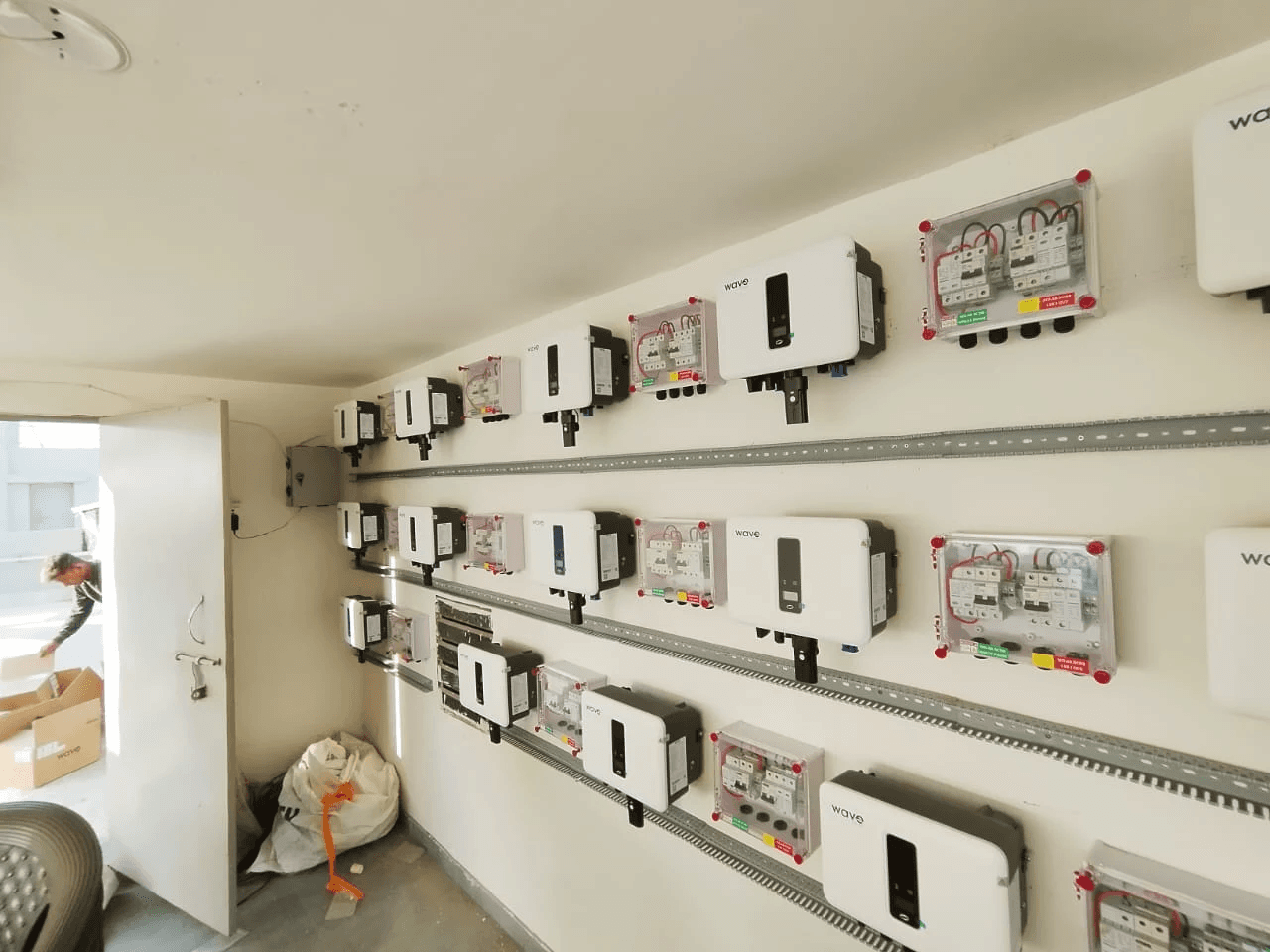
Complete transparency from design to handover, including documentation, subsidy claims, and DISCOM approvals
Site-specific structure recommendations based on actual roof condition, sun exposure, and electrical setup
Certified technicians who handle structure, wiring, and system commissioning end to end
Trusted by clients including Goldi Solar, DGVCL, Torrent Power, and Mahindra Susten
Know what to look for before hiring an EPC company: Solar EPC Company Checklist India
You are not sold a tracker if a fixed tilt structure gives better ROI for your project.
Fixed tilt galvanized steel structures are the best choice for most factory rooftops. They deliver reliable performance, require minimal maintenance, and reduce industrial power costs by 30 to 40%. Adding a tracker to a factory rooftop adds unnecessary cost without meaningful yield improvement on constrained roof space.
Standard fixed tilt structures cost ₹1.5 to ₹3.5 per watt depending on material, load design, and project size. Rooftop systems typically range from ₹60 to ₹100 per watt, while ground-mounted structures cost ₹100 to ₹150 per watt. Tracker-based systems carry a significantly higher per-watt cost.
Generally no. At this scale, the additional capex and O&M cost of trackers does not produce enough incremental yield to shorten payback. Fixed tilt systems at this size deliver faster ROI, lower lifecycle cost, and simpler maintenance. Trackers become economically viable at utility-scale ground mount projects above 1 to 2 MWp.
The structure directly impacts both energy generation and system cost. A well-angled fixed tilt structure on a rooftop can achieve payback in 3 to 4 years in India. Choosing an oversized or overengineered structure unnecessarily increases upfront cost and extends payback. Getting the structure design right is part of the EPC expertise that experienced installers like Earthwave provide.
For most projects, no. Adjustable tilt structures add only 1.5 to 3% more energy over fixed tilt. The additional capex and twice-yearly manual adjustment labor typically cancel out that marginal gain. Fixed tilt with the correct latitude-optimized angle delivers nearly the same annual output at lower cost and zero ongoing effort.
Talk to Earthwave Solar before you finalize your system design.
Their team assesses your site, recommends the right mounting structure for your use case, and delivers complete EPC execution from design through handover.
Before you call, you might find these useful:
Contact Earthwave Solar:
Website:
Phone (Gujarat): +91 90336 07212
Phone (Madhya Pradesh): +91 90336 02156
Email:
FAQS
Can't find the answer you're looking for? Our team is here to help.
SUBSCRIBE NEWSLETTER
Switching to solar is easier than you think. Let us guide you to cleaner, more affordable energy.
