Solar for Healthcare
Solar for Hospitals in India: Cut Costs & Reliability
2026-05-28T00:00:00.000Z•9
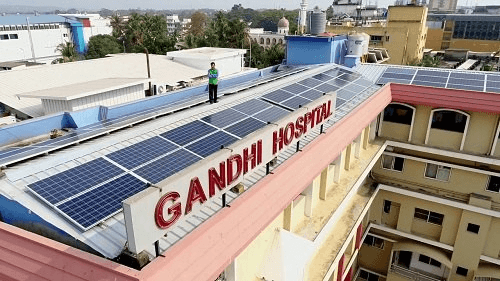
Hospitals can cut electricity costs by 40 to 60% with a well-designed solar system while maintaining uninterrupted power supply for critical medical operations.
The right solar setup for a hospital combines rooftop solar panels, grid connectivity, and backup support to deliver both cost savings and operational continuity.
Hospitals in India pay some of the highest commercial electricity tariffs, making solar one of the fastest-ROI investments available
A solar system sized correctly for hospital
load can cut monthly electricity bills by 40 to 60%
Solar does not replace backup power; it works alongside your existing DG sets and UPS to reduce fuel and grid dependency
Payback period for hospital solar in India typically ranges from 3 to 5 years depending on system size and tariff rate
Earthwave designs and installs commercial solar systems for hospitals, diagnostic centers, and healthcare campuses across India
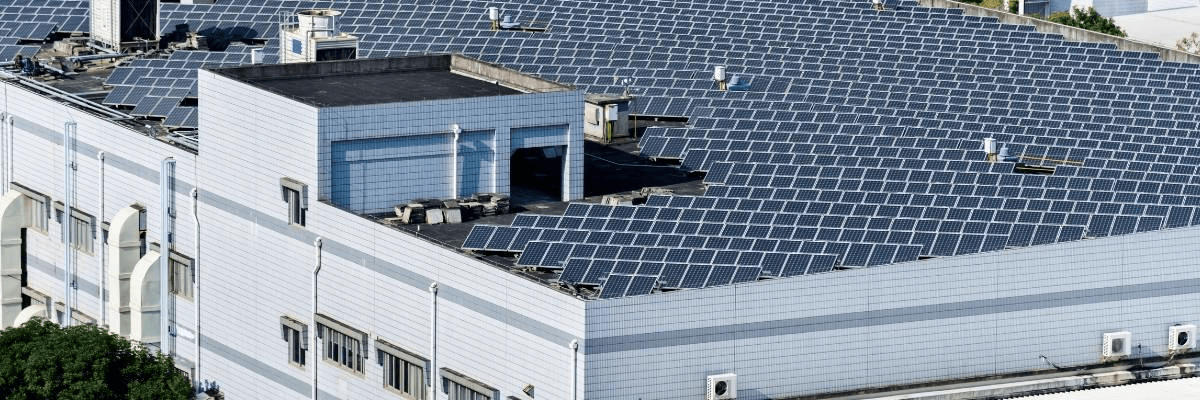
Hospital electricity bills are among the highest of any commercial category, and rising tariffs make this problem worse every year.
Most private hospitals in Tier 1 and Tier 2 cities pay commercial tariffs between Rs. 8 to Rs. 12 per unit.
A 100-bed hospital can consume anywhere from 50,000 to 1,50,000 units per month.
That translates to electricity bills of Rs. 5 lakh to Rs. 15 lakh or more every single month.
Solar changes that equation permanently.
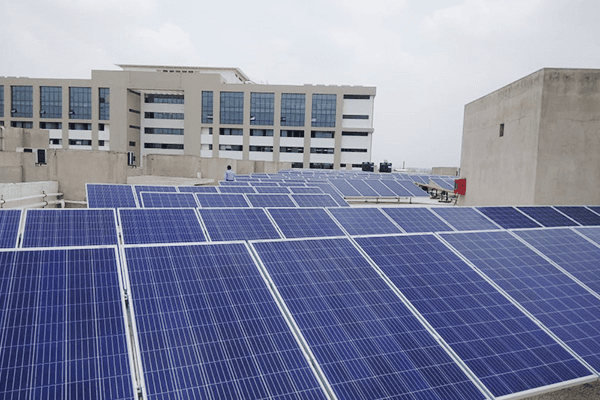
Yes. Solar is reliable for hospitals when designed with the right system architecture and backup integration.
The concern most hospital decision-makers raise is: what happens when there is no sunlight? That is a fair question and the answer is straightforward.
Layer 1:
Solar panels generate power during daylight hours and supply it directly to the building load
Layer 2:
The grid acts as a continuous backup when solar generation is insufficient
Layer 3:
Existing DG sets and UPS systems remain in place for critical load protection during grid failure
Solar does not replace your backup systems. It reduces how often and how long those backup systems run.
That means less diesel consumption, less generator wear, and lower maintenance cost on your DG sets.
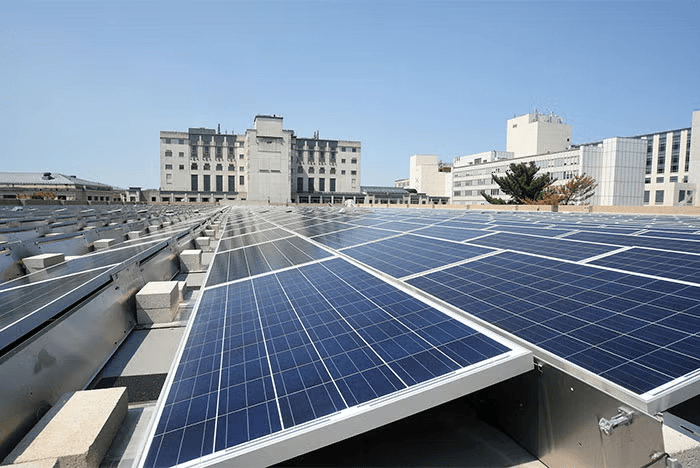
Solar cuts hospital electricity costs by replacing expensive grid units with zero-cost solar units during peak generation hours.
Here is how the math works in a typical hospital scenario:
Parameter | Before Solar | After Solar |
Monthly grid consumption | 1,00,000 units | 45,000 units |
Average tariff per unit | Rs. 9 | Rs. 9 |
Monthly grid bill | Rs. 9,00,000 | Rs. 4,05,000 |
Solar generation cost | Zero | Zero |
Estimated monthly saving | Zero | Rs. 4,95,000 |
Over 12 months, that is nearly Rs. 60 lakh in savings from a single installation.
The actual numbers vary based on system size, location, shading conditions, and local tariff rates.
Want to see how this translates to long-term returns? Read our detailed breakdown of solar payback period in India for 2026 with realistic financial projections.
The right solar system size for a hospital depends on sanctioned load, roof space, daytime consumption pattern, and budget.
Here is a general sizing reference for hospital solar systems in India:
Hospital Type | Approximate Load | Recommended Solar Capacity |
Small clinic or nursing home | 20 to 50 kW | 15 to 40 kW |
50 to 100 bed hospital | 100 to 200 kW | 75 to 150 kW |
100 to 300 bed hospital | 200 to 500 kW | 150 to 400 kW |
Multi-specialty or large campus | 500 kW to 2 MW | 400 kW to 1.5 MW |
Available rooftop or land area for panel installation
Daytime load profile of the hospital (what runs during 8 AM to 6 PM)
Monthly electricity consumption and current bill
Net metering eligibility in the state
A qualified solar engineer will conduct a load analysis and site survey before recommending a system size. Never size a hospital solar system without this step.
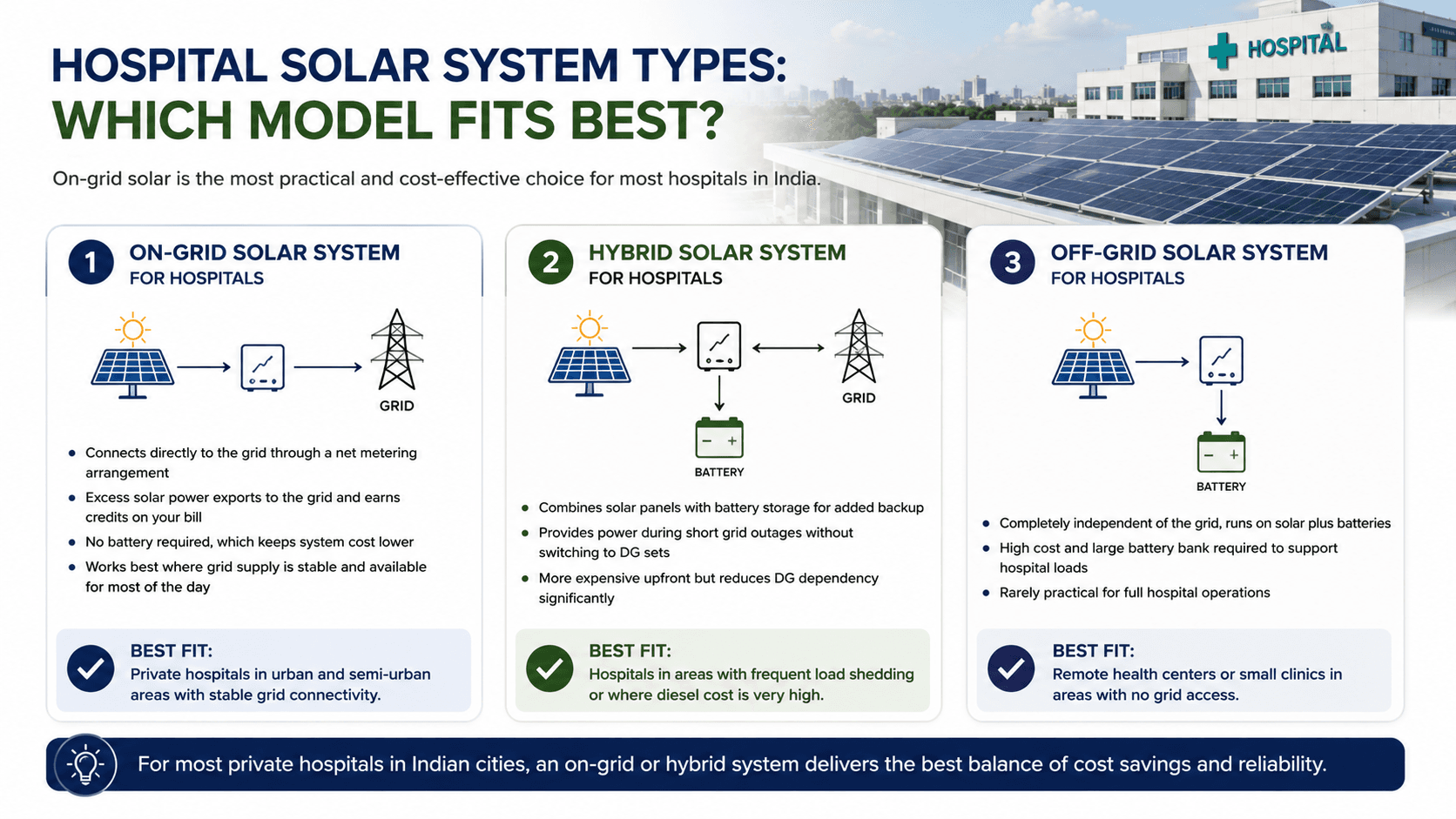
On-grid solar is the most practical and cost-effective choice for most hospitals in India.
For a full comparison of all three system types, read our guide on on-grid vs off-grid vs hybrid solar before finalizing your model.
Connects directly to the grid through a net metering arrangement
Excess solar power exports to the grid and earns credits on your bill
No battery required, which keeps system cost lower
Works best where grid supply is stable and available for most of the day
Best fit for: private hospitals in urban and semi-urban areas with stable grid connectivity
Combines solar panels with battery storage for added backup
Provides power during short grid outages without switching to DG sets
More expensive upfront but reduces DG dependency significantly
Best fit for: hospitals in areas with frequent load shedding or where diesel cost is very high
To understand which inverter works best for a hybrid setup, read our comparison of hybrid vs on-grid inverters in India.
Completely independent of the grid, runs on solar plus batteries
High cost and large battery bank required to support hospital loads
Rarely practical for full hospital operations
Best fit for: remote health centers or small clinics in areas with no grid access
For most private hospitals in Indian cities, an on-grid or hybrid system delivers the best balance of cost savings and reliability.
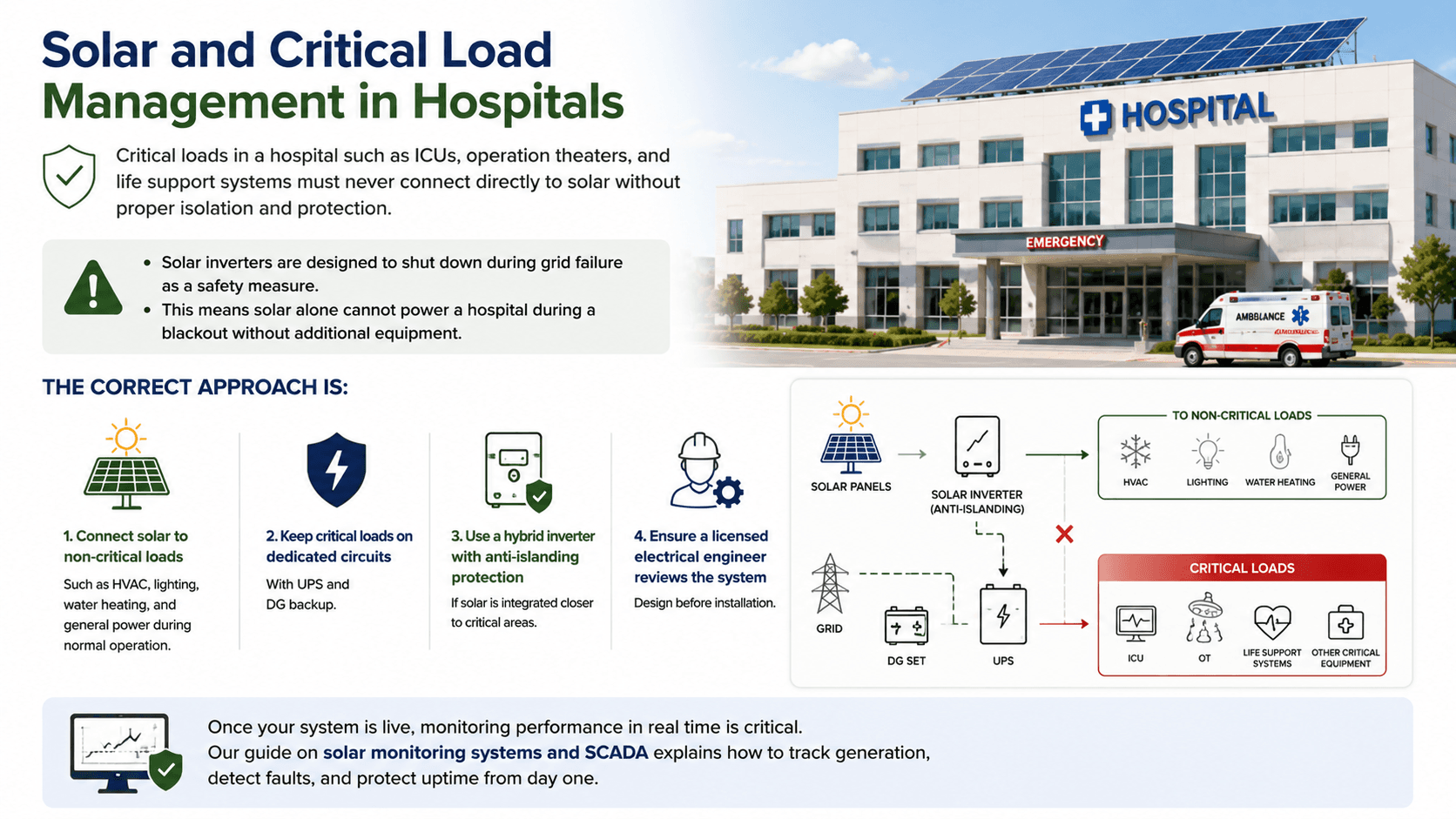
Critical loads in a hospital such as ICUs, operation theaters, and life support systems must never connect directly to solar without proper isolation and protection.
This is the most important technical point for hospital solar planning.
Solar inverters are designed to shut down during grid failure as a safety measure.
This means solar alone cannot power a hospital during a blackout without additional equipment.
Connect solar to non-critical loads such as HVAC, lighting, water heating, and general power during normal operation
Keep critical loads on dedicated circuits with UPS and DG backup
Use a hybrid inverter with anti-islanding protection if solar is integrated closer to critical areas
Ensure a licensed electrical engineer reviews the system design before installation
Once your system is live, monitoring performance in real time is critical. Our guide on solar monitoring systems and SCADA explains how to track generation, detect faults, and protect uptime from day one.
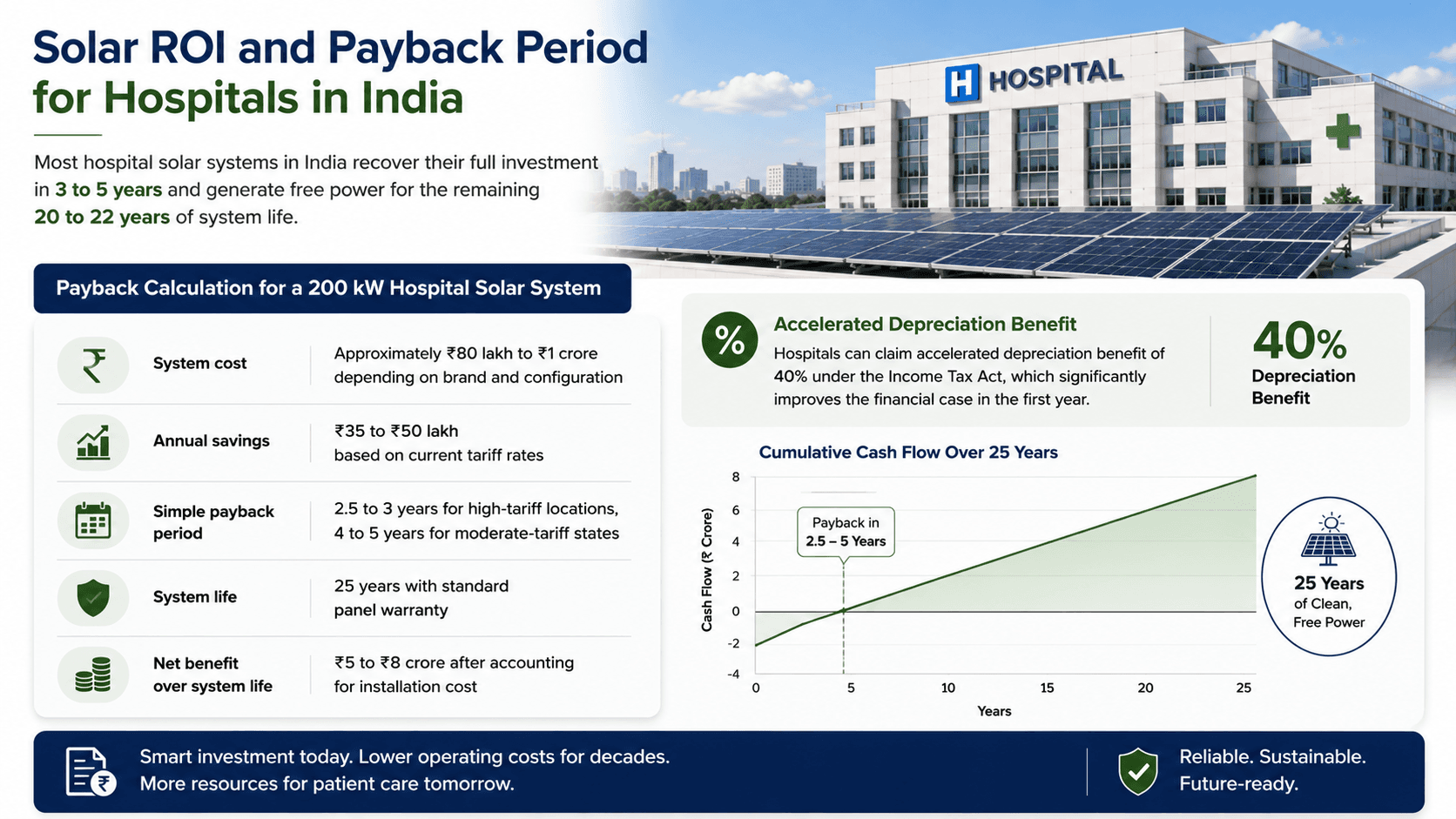
Most hospital solar systems in India recover their full investment in 3 to 5 years and generate free power for the remaining 20 to 22 years of system life.
Here is a realistic payback calculation for a 200 kW hospital solar system:
System cost: approximately Rs. 80 to Rs. 1 crore depending on brand and configuration
Annual savings: Rs. 35 to Rs. 50 lakh based on current tariff rates
Simple payback period: 2.5 to 3 years for high-tariff locations, 4 to 5 years for moderate-tariff states
System life: 25 years with standard panel warranty
Net benefit over system life: Rs. 5 to Rs. 8 crore after accounting for installation cost
Hospitals can also claim accelerated depreciation benefit of 40% under the Income Tax Act, which significantly improves the financial case in the first year.
For a complete breakdown of how accelerated depreciation works for commercial solar buyers, read our guide on solar tax benefits and accelerated depreciation in India.
Hospitals installing solar in India benefit from multiple policy supports that reduce upfront cost and improve financial returns.
Net Metering:
Export surplus power to the grid and receive credits on electricity bills. Available in most states including Gujarat, Maharashtra, Rajasthan, Karnataka, and Tamil Nadu.
See how
Accelerated Depreciation:
Claim 40% depreciation in Year 1 under Income Tax Act Section 32, reducing tax liability significantly
GST Input Credit:
Hospitals registered under GST can claim input credit on solar equipment purchase
MSME and SIDBI Financing:
Preferential loan rates available for solar investments under certain healthcare and green energy schemes
State-Level Incentives:
Several states offer additional subsidies or reduced wheeling charges for commercial solar adopters
Regulations change periodically by state. Always verify current incentive status with a local solar consultant before finalizing your financial model.
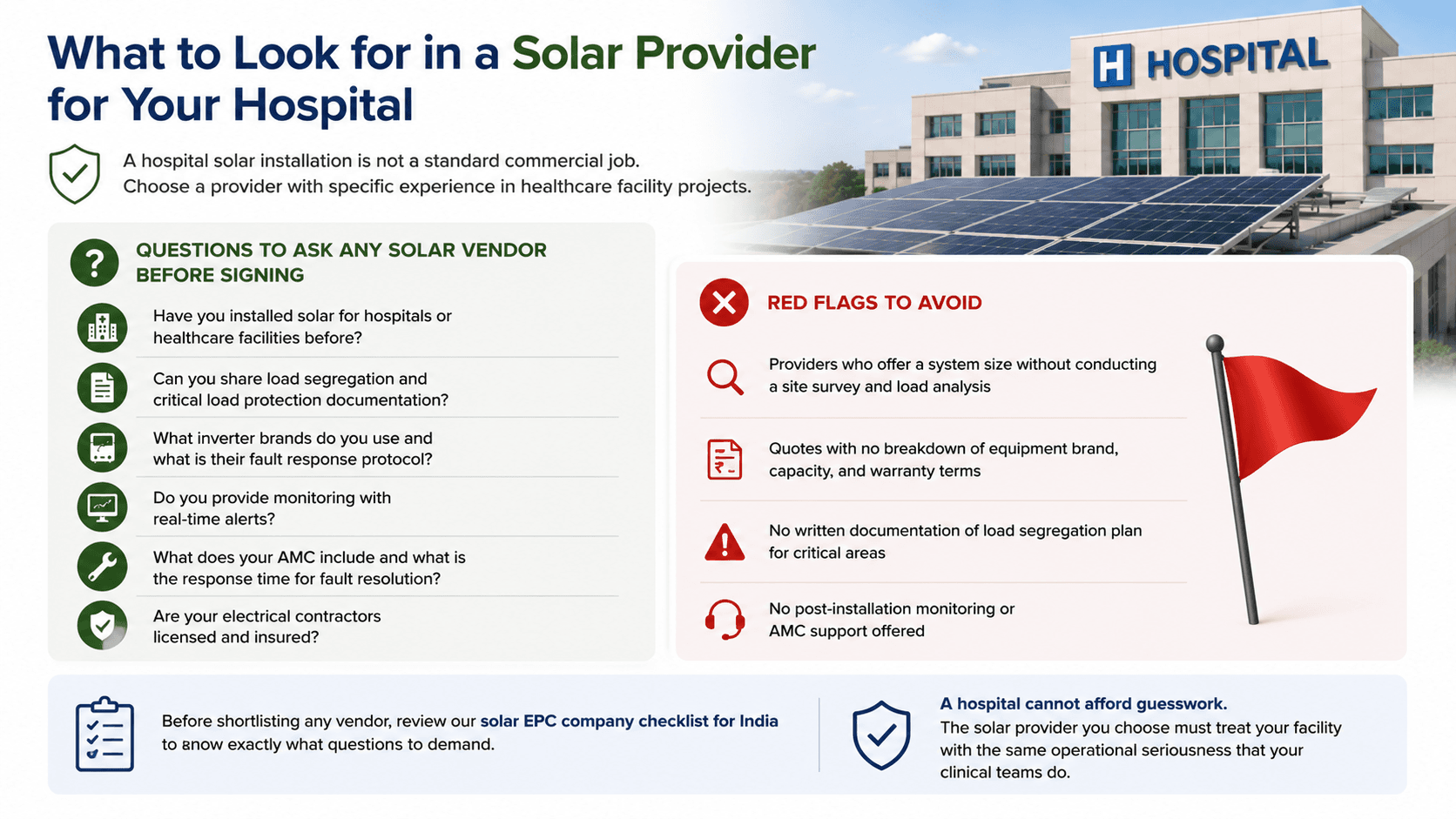
A hospital solar installation is not a standard commercial job. Choose a provider with specific experience in healthcare facility projects.
Have you installed solar for hospitals or healthcare facilities before?
Can you share load segregation and critical load protection documentation?
What inverter brands do you use and what is their fault response protocol?
Do you provide monitoring with real-time alerts?
What does your AMC include and what is the response time for fault resolution?
Are your electrical contractors licensed and insured?
Providers who offer a system size without conducting a site survey and load analysis
Quotes with no breakdown of equipment brand, capacity, and warranty terms
No written documentation of load segregation plan for critical areas
No post-installation monitoring or AMC support offered
Before shortlisting any vendor, review our solar EPC company checklist for India to know exactly what questions to ask and what documentation to demand.
A hospital cannot afford guesswork. The solar provider you choose must treat your facility with the same operational seriousness that your clinical teams do.
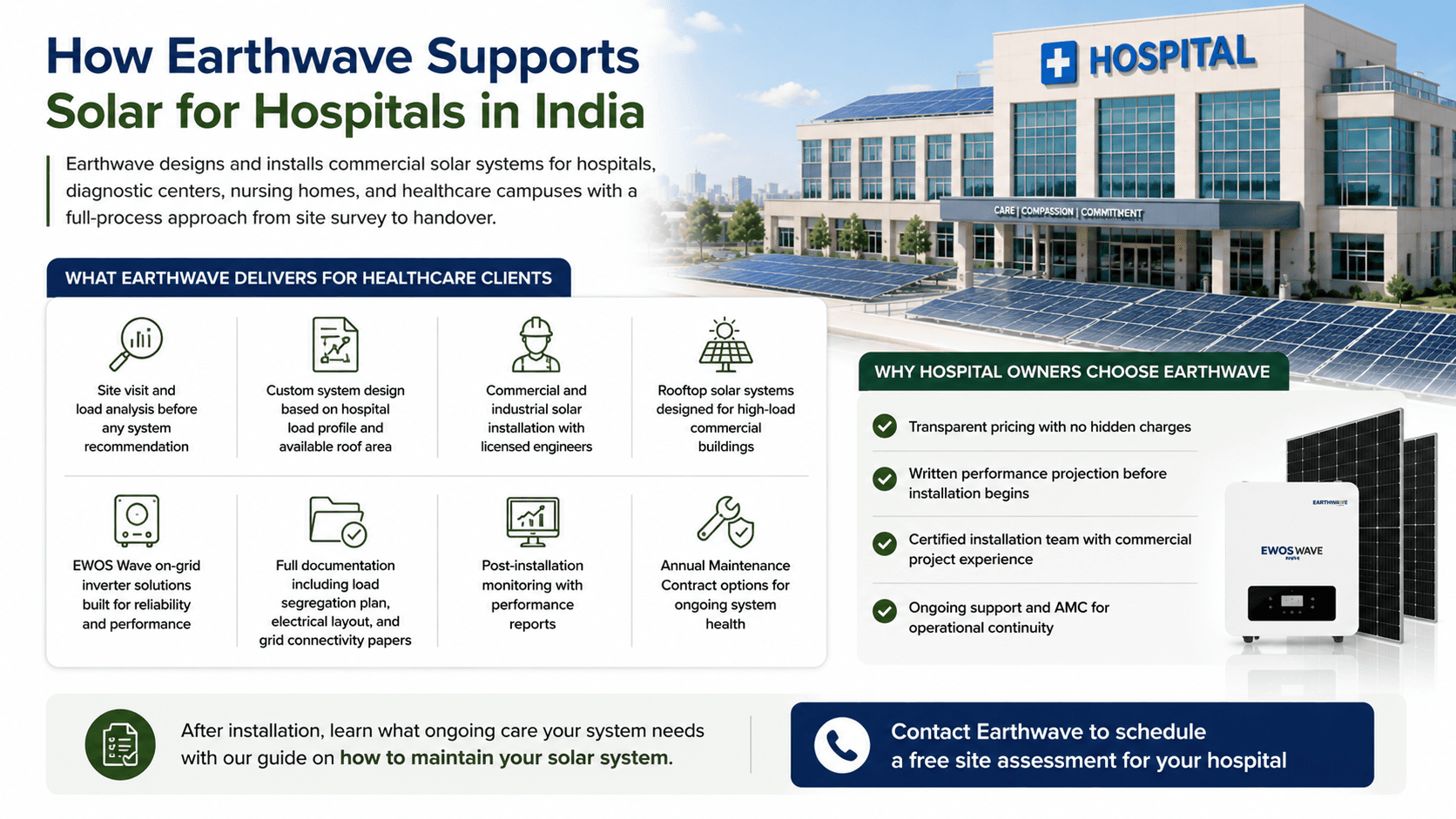
Earthwave designs and installs commercial solar systems for hospitals, diagnostic centers, nursing homes, and healthcare campuses with a full-process approach from site survey to handover.
Earthwave's commercial solar service covers everything a hospital decision-maker needs.
Site visit and load analysis before any system recommendation
Custom system design based on hospital load profile and available roof area
Commercial and industrial solar installation
with licensed engineers
designed for high-load commercial buildings
EWOS Wave on-grid inverter solutions built for reliability and performance
Full documentation including load segregation plan, electrical layout, and grid connectivity papers
Post-installation monitoring with performance reports
Annual Maintenance Contract options for ongoing system health
Transparent pricing with no hidden charges
Written performance projection before installation begins
Certified installation team with commercial project experience
Ongoing support and AMC for operational continuity
After installation, learn what ongoing care your system needs with our guide on how to maintain your solar system.
Contact Earthwave to schedule a free site assessment for your hospital
A: Yes, when installed correctly. Critical loads such as ICUs and operation theaters must stay on dedicated UPS and DG circuits. Solar connects to non-critical loads and reduces overall grid dependency. A qualified solar engineer designs the load segregation to protect all sensitive equipment.
A: System cost depends on capacity. A 100 kW system typically costs Rs. 40 to Rs. 55 lakh and a 300 kW system ranges from Rs. 1.1 to Rs. 1.4 crore. Prices vary by brand, location, and installation complexity. A site-specific quote from a qualified provider gives the most accurate number.
A: Standard on-grid solar does not generate power at night. Hospitals use the grid or DG sets for nighttime load. A hybrid system with battery storage can supply some load during the night or short outages, reducing DG dependency, but full night-time solar operation requires a very large battery bank.
A: Most hospital solar systems in India recover their investment in 3 to 5 years. High-tariff states like Gujarat, Maharashtra, and Tamil Nadu tend to deliver faster payback. After recovery, the system generates essentially free power for the remaining 20-plus years of its life.
A: Hospitals need standard approvals for grid-connected solar including DISCOM net metering application, electrical inspector clearance, and structural certification for rooftop installations. Some states may require additional clearances for large commercial systems above 100 kW. Your solar provider should guide you through the complete approval process.
Solar is not a future consideration for Indian hospitals. It is a financial and operational decision that pays for itself within years and protects cost structure for decades.
The electricity savings alone justify the investment. When you add reduced DG runtime, lower maintenance costs, and improved energy security, the case becomes even stronger.
Earthwave offers a free site assessment and financial model for hospitals and healthcare facilities across India.
Reach out today and get clarity on what solar can actually deliver for your facility, in numbers, before you commit to anything.
FAQS
Can't find the answer you're looking for? Our team is here to help.
SUBSCRIBE NEWSLETTER
Switching to solar is easier than you think. Let us guide you to cleaner, more affordable energy.
